

Pathogens that cause infectious diseases are usually the biggest burden during the housing season, but the risk of infections could be on the rise again.
Plenty of farmers will have slacked off with preventative measures for infectious lameness now that cows are at pasture, and farmers are busy with breeding.
However, given the volume of rain we have had this month, places are still quite mucky, with pathogens easily spreading and lameness issues prevailing.
Infectious diseases such as digital dermatitis (mortellaro) or ‘foul in the foot’ are the most common issues.
These infections can prove to be extremely costly at this time of the year too, as they can affect the animal’s milk production as well as their ability to show oestrus or go back in calf, which is far from ideal in the midst of breeding.
Lame cows in the herd can have lower submission rates, delayed ovarian cyclicity, reduced conception rates, increased calving intervals, and higher chances of ovarian cysts forming.
This would end up being a huge cost in a year where margins are already razor thin.
Therefore, regular foot bathing is needed to reduce the risk of these diseases spreading, even though cows are out at grass.
Foot bathing
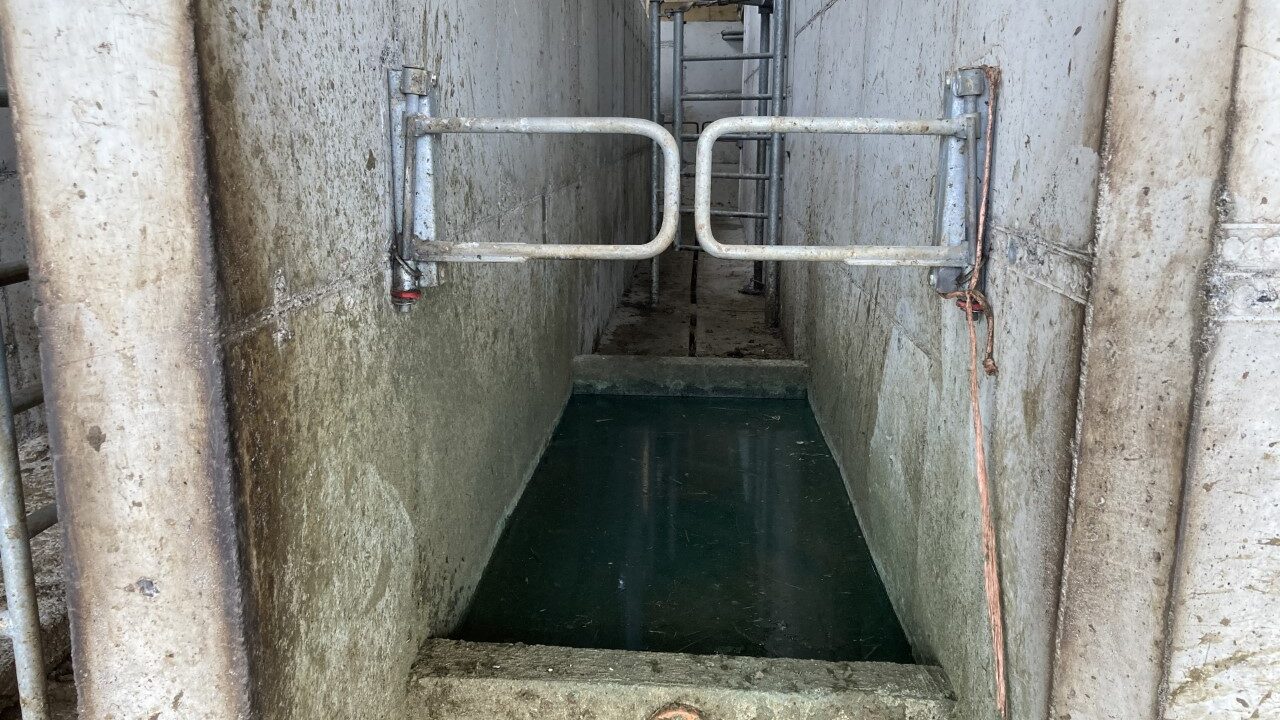
Foot baths allow for a disinfectant solution to be applied to each cow’s hooves at milking time, killing infectious agents, and improving hoof hygiene, which is why foot bathing should be kept as a regular practice throughout the year.
Farmers who have had or do have mortellaro know how quickly it can spread through the herd, and how hard it is to eradicate.
Any farmers who have dealt with the disease would agree that the time and money involved in foot bathing is well worth it to keep the disease out.
If you are not used to foot bathing, or even if you are but are only chancing it, it is important to remember that incorrect bathing is as good as or worse than no bathing.
That is why it is important to get everything set up properly, with the first step being cow flow.
The foot bath should be level with the ground, with no steps up or down, to further ensure good cow flow and that the cows are not damaging their feet going into the bath.

The bath should have a minimum width of 700-800mm for a herd of up to 250 cows.
For herds of over 250 cows, a foot bath should be at least 2m wide to allow for two cows to pass through simultaneously.
A length of 2.5-3m will allow for each foot to be sufficiently immersed in the solution.
Solution depth should be 100-125mm, with the volume of solution equating to 1L/cow, meaning in a 120-cow herd, you will need 120L of solution to do the whole herd at once.
It is important to change your solution regularly. The 1L of solution per cow should be changed after one cow goes through.
Multiplying foot bath length X width X depth of solution, measured in metres, will give you the volume of your foot bath in cubic metres, which will help you get the right concentrations.
You should consult your vet to get the most appropriate solution for your herd.
The frequency with which cows need to be foot bathed depends on how common or severe the disease is within your herd.
Herds where mortellaro is a major problem should be foot bathed after every milking until the disease is under control.
It is important to not substitute good management practices with foot bathing – a foot bathing programme will not solve a mortellaro problem if your yard and facilities are not in good order.