Burnham vows govt 'will continue to back British farming'

British Prime Minister Andy Burnham marked Back British Farming Day by paying tribute to British farmers in parliament today (September 9).
Ahead of this week's Prime Minister Questions session, he said: "I know that the whole House will join me in paying tribute to everyone working around the clock to feed our country.
"Food security is national security, and we will continue to back British farming as a government."
However, a National Farmers Union (NFU) report has revealed that the UK's self-sufficiency in everyday foods have fallen since 1996.
According to the report, released today for Back British Farming Day, the UK's self-sufficiency in 10 out of 11 everyday foods - such as wheat, vegetables, beef, poultry and eggs - has fallen in the last 30 years.
According to the 'Ready to Grow' report, the country's "reliance on imported food continues to grow", with agri-food import volumes up 70% over the period while export volumes have stalled.
The NFU is now calling on the government to set "ambitious targets" for homegrown food.
It added that its report is offering the government a "clear alternative and a route away from a growing food security crisis".
Economic struggles
The report underlined the need for farmer supports to ensure they can meet public demand.
According to the report, 65% of wheat and barley grown on cereal farms came from businesses operating at loss, while only 26% of some sheep products came from profitable farm groups.
The NFU says these factors come at a time when Britain experienced its "worst drought in 50 years" which it says is going to cost wheat growers £370 million.
It added that the UK's "largest-ever bluetongue outbreak" and the rise in fuel, fertiliser and energy costs linked to the conflict in the Middle East are "pushing farm finances to breaking point".
Despite these hurdles, the NFU says that agriculture "continues to deliver for the economy".
Gross value added has risen by 57% in England and 55% in Wales.
According to the NFU, the food and drink sector is "the UK's largest manufacturing sector", worth £162.3 billion and supporting 4.1 million jobs.
Reliance on imports
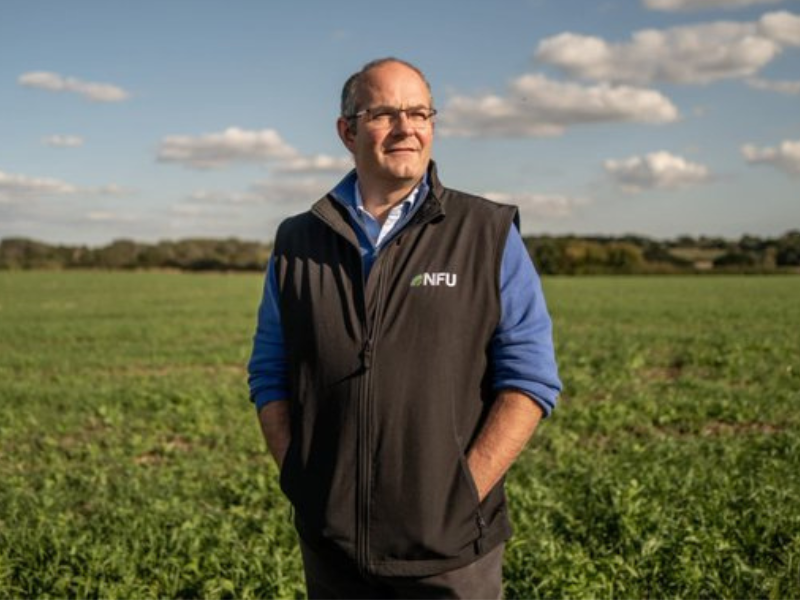
NFU president Tom Bradshaw said: "Our report today paints a stark picture of falling production and an increasing reliance on imported food while at the same time the world is becoming more unstable.
"Successive governments have sleepwalked into making it much harder to produce food at home, leaving Britain increasingly reliant on imports produced to standards that would be illegal here.
"Farmers are battling devastating drought, disease outbreaks and soaring costs.
"At the same time, policy uncertainty, chronic under-investment and a restrictive planning system are eroding Britain's ability to produce its own food.
"This must and can be reversed," Bradshaw said.
Resilience
According to Bradshaw, UK agriculture receives less government support than farmers in the EU, US, Canada and New Zealand.
Despite the pressures faced, British farmers continue to "deliver jobs, growth and food, while playing a crucial role in supporting rural communities", Bradshaw said.
"With the right backing, they can do even more. Clearly defined targets for food production and a set of core standards are the start.
"A planning system that enables growth and a tax system that recognises the need to invest are crucial," he added.
The report found that 93% of British households felt it is important to maintain or increase UK food self-sufficiency.
Bradshaw said: "We want to work with Defra's Farming and Food Partnership Board to build a competitive sector, one that realises its ambitions and unlocks growth in every part of the country.
"This matters today on Back British Farming Day, and it matters for tomorrow and the 29 million households needing affordable, safe food."