Can smarter feeding help beef farmers boost output by 30%?

Could a smarter feeding strategy deliver faster growth, quicker finishing and higher throughput for Irish beef farmers?
One UK producer who has increased cattle growth rates by 30% and cut finishing times by up to 75 days may be proof that this could be one method to employ.
For farmers limited in terms of how they can grow their herd or farm, adapting their feeding strategy could be an alternative option to help them increase beef production.
Chris Webb, who farms near Westbury-on-Severn in Gloucestershire with his brother Dave and daughter Millie, runs a high-input, high-output beef enterprise alongside the family’s 275-cow Holstein dairy herd.
The farm currently finishes around 800 cattle a year, with plans to increase this to 1,000 head within the next 12 months as part of continued investment in new housing and infrastructure.
Chris said: “We are trying to maximise the investment we have already made in the business.
“The feeding system has given us the confidence to expand the beef enterprise without needing to buy more land.”
The beef system includes both homebred dairy beef calves and bought-in cattle.
Around 15 Aberdeen Angus dairy-cross calves are born from the farm’s dairy herd each month and are reared alongside dairy replacements until they reach around 300kg, when they move onto the dedicated beef ration.
The remainder of the cattle are bought in and reared on a separate tuberculosis (TB)-restricted unit, including 40–50 calves aged between four and six months from TB-restricted farms, alongside around 30 store cattle each month.
Most bought-in cattle are dairy beef crosses.
Finished cattle are sold deadweight, with around 80–85 animals leaving the farm each month at 17–18 months-of-age.
They typically finish at around 600kg, grading between 'O+' and 'R'.
Feeding strategy
Four years ago, before changing the feeding strategy, cattle were achieving average growth rates of around 1.2kg/day on a forage and concentrate-based ration.
However, since introducing a ration based mainly around co-products, growth rates have increased to between 1.4kg and 1.8kg/day.
This has reduced finishing times by 60–75 days and increased throughput by around 30%, allowing the business to increase output without requiring additional land.
Chris said: “We saw a massive difference when we started feeding co-products.
“The biggest benefit is the consistency it gives us.”
The cattle are fed a three-stage ration, with diets adjusted according to growth stage.
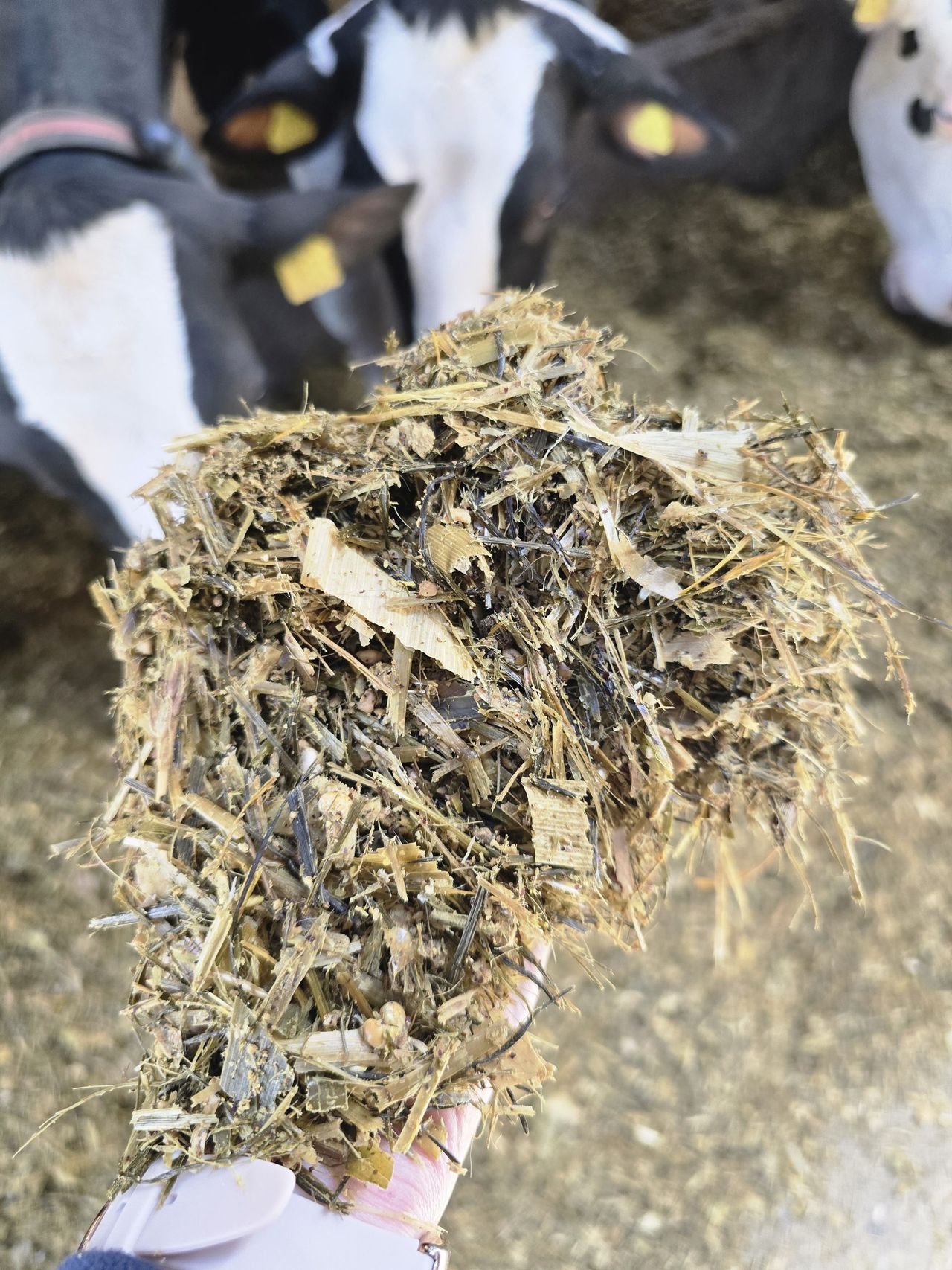
Youngstock are initially fed a higher concentrate starter ration before moving onto a grower diet containing grass silage, cooked chips, mash and a co-product feed.
From around 450kg onwards, cattle move onto a finishing ration based around grass silage, maize, wheat, cooked chips, and the co-product.
Apart from grass and maize silage, much of the ration is made up of co-products, which Chris says have helped improve intakes and maintain performance.
“Moist feeds help drive intakes, and they work well in the ration," he said.
Limited land
The feeding strategy has also helped overcome one of the farm’s biggest challenges – limited land and unpredictable forage availability.
With the dairy herd taking priority for available forage and land in short supply locally, increasing forage production is not a realistic option.
“Land is the biggest limiting factor here,” Chris explained.
“We cannot simply go and rent another block of land to grow more forage, so we have had to look at other ways of producing more beef efficiently.”
In 2025, following a dry spring and lower silage yields, the farm had just enough forage available for the dairy herd.
However, only around 30% of the beef ration consisted of forage, with the remainder made up through co-products.
According to Chris, having a consistent ration is particularly valuable in years when forage availability is uncertain.
“Although we had a good first and second cut this year, with yields around 40% higher than last year, grass growth has slowed and we may not get much more silage.
"Having consistency in the ration gives us confidence.”
Beef production
The move into beef began in 2010 when the family invested in four robotic milkers for the dairy herd.
Rather than reducing labour requirements, they chose to expand into beef production.
The farm supplies milk under a specialist contract with Sainsbury’s, limiting opportunities to increase dairy cow numbers, so the family has focused on growing the beef enterprise instead.
The business is now investing in additional beef housing, with two new sheds allowing the farm to increase finishing capacity from 700 to 900 beef cattle over the next 12 months.
Chris believes the improvements in growth rates and feeding efficiency will help the business continue to develop.
He said: “The improvements we have seen give us the confidence to expand.
"We can produce more beef from the resources we already have, which is a huge benefit in our situation.”