Scientists to tackle TB and methane in €4.3m island-wide projects

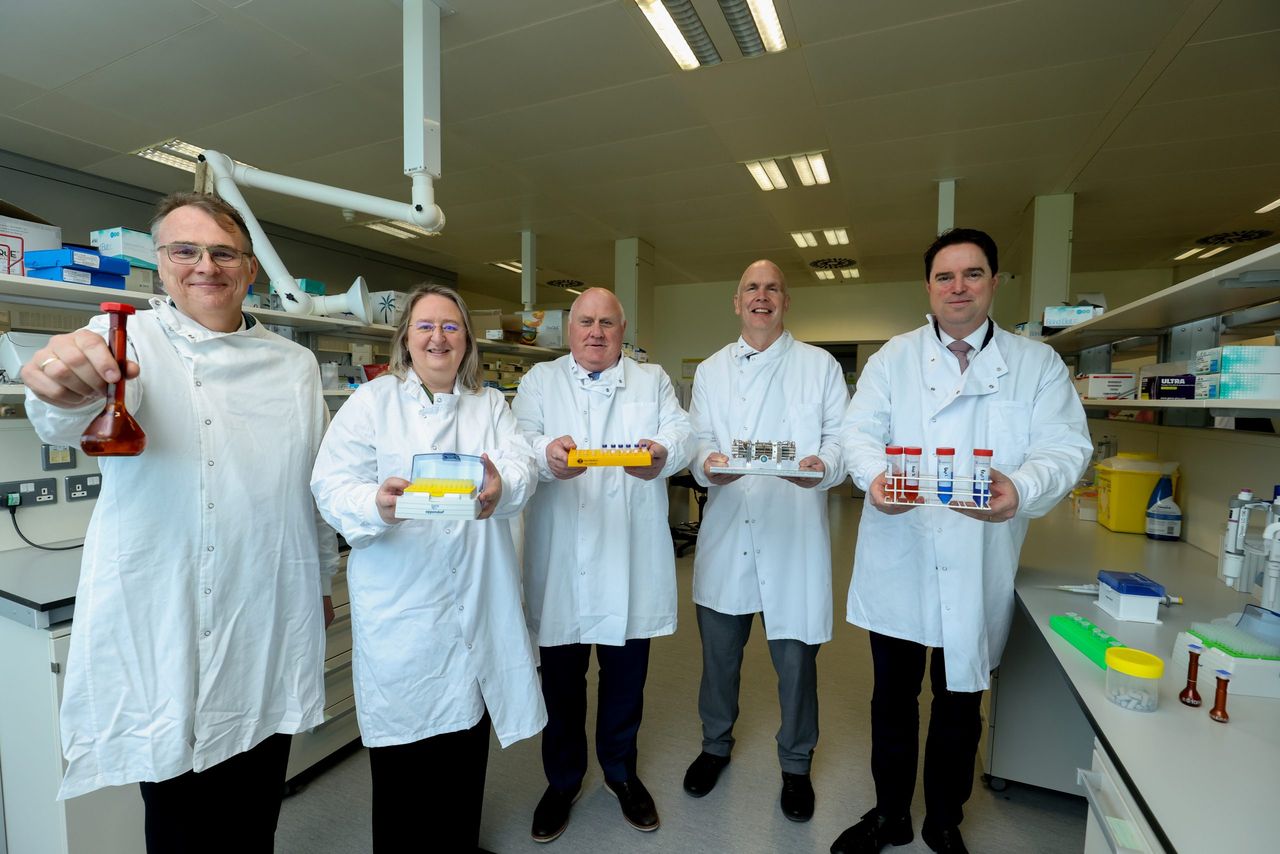
Scientists north and south are launching ambitious cross-border projects aimed at strengthening disease preparedness, combating TB and reducing methane emissions from cattle.
The Agri-Food and Biosciences Institute (AFBI) in Northern Ireland will play a key role in the new research projects
A total of four projects, worth around €4.3 million, will be carried out with partners across Ireland.
This follows a €37.5 million funding investment from the Irish government and €3.1 million from the Department of Agriculture, Environment and Rural Affairs (DAERA) for research on the island.
The ALLIES-Z-Path project will focus on preparing for potential pandemics caused by emerging infectious diseases - particularly fast-mutating viruses which spread from animals to humans.
The project will look at tracking respiratory diseases like bird flu and swine flu and monitoring viral diseases spread by mosquitos or ticks, such as Louping ill, tick-borne encephalitis and West Nile virus, which are becoming more common in northern regions due to climate change.
The project will also focus on preparing for unknown future diseases which could cause a pandemic.
AFBI head of virology, Prof. Louise Cosby said: “ALLIES-Z-Path aims to help the island of Ireland become a leader in preparing for future pandemics by improving monitoring systems, using advanced testing methods, training staff, and strengthening cross-border co-operation.
“The project aims to detect threats early, assess risks quickly, and respond effectively.”
bTB
Staying on the health theme, the bovisSNP project aims to improve how bTB is controlled through better understanding of how the disease spreads and why it persists.
The project will use advanced genetic testing and data on cattle movements to track how bTB spreads, identify where infections come from, and provide practical advice to help eradicate it across Ireland.
AFBI principal scientific officer in bacteriology, Dr. Adrian Allen said the project aims to "offer practical, evidence-based recommendations which will strengthen national bTB eradication programmes across the island".
Diseases
The third project, SENTINEL, will look at increasing threats from exotic and re-emerging diseases.
These diseases pose a significant threat to animal health, food security, trade and farmers’ livelihoods.
The project will use artificial intelligence and both existing and new data sources, including information such as texts and images, to develop predictions to strengthen and expand early disease warning systems.
Finding diseases early allows action to be taken sooner, helping to reduce their impact.
AFBI principal scientific officer, Dr. Francis Lively explained: "SENTINEL will provide useful feedback for farmers and vets to encourage ongoing data sharing, while analysing behaviours and disease trends.
“The project ultimately aims to deliver practical tools which will support and enhance disease surveillance across the island.”
Methane emissions
Lastly, RU-MIT-LESS will focus on practical ways in which farmers can reduce methane emissions from cattle.
The project will look at a range of areas including testing new tools to see how well they detect and measure emissions from dairy-origin beef cattle which have been given feed designed to reduce methane.
Scientists will assess how accurate and sensitive the new tools are in both outdoor grazing and indoor housing over an animal’s life cycle.
AFBI senior scientific officer in ruminant nutrition, Dr. Omar Cristobal Carballo said: “RU-MIT-LESS aims to produce a clear, practical guide for using methane-reducing feed additives in cattle systems across the island of Ireland.
“The project will help inform policy and support farmers in reducing emissions, while still maintaining Ireland’s grass-based beef production system.”
The projects will be carried out with partners including Teagasc, Queen’s University Belfast, University College Dublin (UCD), Technological University Dublin, and the Department of Agriculture, Food and the Marine.