UK market data on consumer awareness of different beef breeds

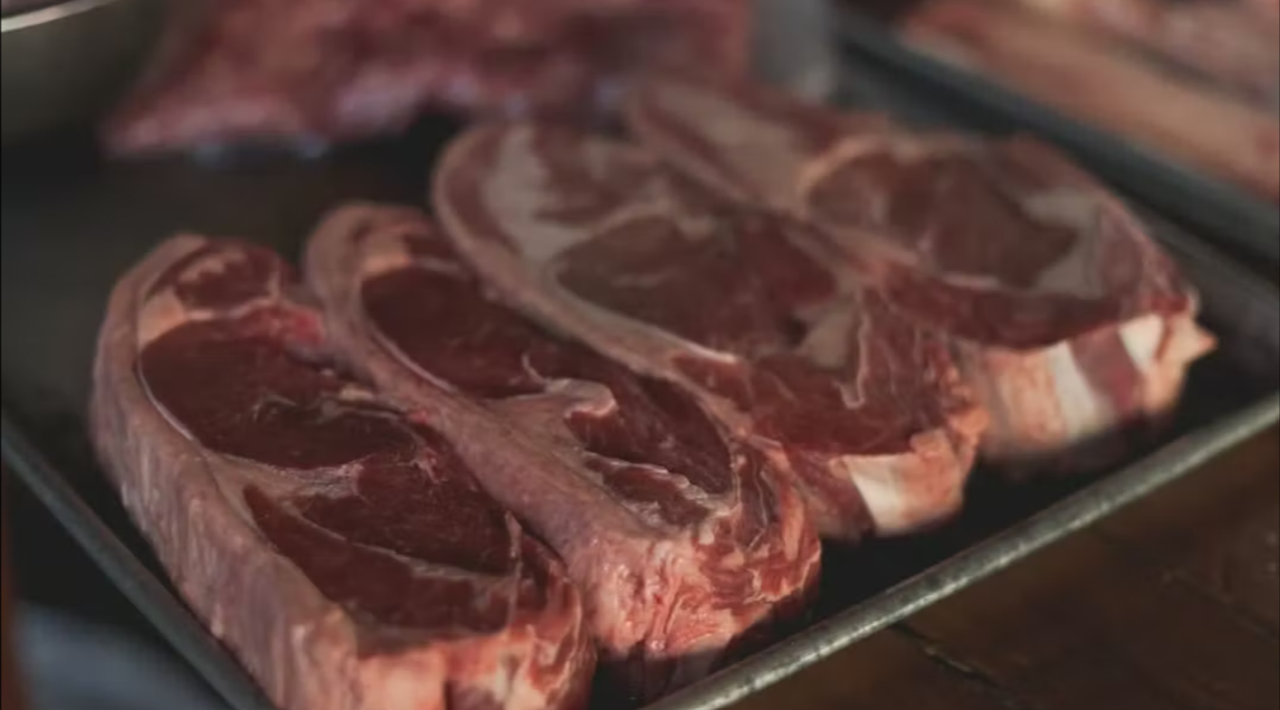
Named beef breeds, including Angus, Wagyu, Hereford and Native Breed, accounted for 2.6% of all retail beef sales in the UK over the past year, equivalent to 15,700t.
This is according to recent analysis from the Agriculture and Horticulture Development Board (AHDB).
While still a high volume, this figure represents a 11.7% year-on-year decline, outpacing the 6.5% decline seen in total beef sales, according to the AHDB.
AHDB's retail and consumer insight analyst Charlotte Forkes-Rees highlighted that Angus and Wagyu remain the most widely recognised breeds on pack, with consumers consistently regarding them well.
Angus remains the largest contributor, representing 1.9% of total beef volumes.
While still the largest contributor, it has also seen the greatest reduction in stock keeping unit (SKU) listings compared with 2025, indicating that "the wider challenges beef has experienced due to inflationary pressures over the last year has resulted in rationalisation of ranges", according to AHDB.
Wagyu has grown rapidly in the UK, up 50.2% year on year, but is still a smaller part of the named breed market at 0.5% of total beef volumes.
Wagyu most often is used for steaks and burgers, where its distinctive fat marbling enhances moisture and flavour.
Consumer awareness of beef breeds varies with with 85% of consumers aware of the Aberdeen Angus breed, the highest level in four years, according to AHDB research.
Wagyu has seen the fastest rise in awareness over the last four years, up 12 percentage points to 75%.
Named breeds and quality credentials
Named breeds are also used as a way to differentiate and communicate quality credentials.
"Named breed proteins are used on menus to communicate provenance and elevate dish credentials. We see this in foodservice," Forkes-Rees explained.
"In retail, we see this most notably for primary beef, where named breed descriptors over index within the premium own label tier, accounting for 57.8% of product.
"This suggests that breed descriptors can play an effective role in communicating quality and justifying premium positioning.
"Ready meals and added value products are far less likely to specify breed or be premium tier, likely because shoppers choose these items for convenience or restaurant-style meals, rather than for the specific characteristics associated with a particular breed."
Consumer breed awareness on cattle supplies
Senior livestock analyst at AHDB Becky Smith said that British Cattle Movement Service (BCMS) data gives some foresight into how trends in supplies correspond to those on shelf.
She said that Angus and Angus-cross cattle numbers have "grown consistently over the past five years, contributing to a growing proportion of total prime kill".
In 2025, 29% of prime aged cattle (12-29 months-of-age) killed in Britain were Aberdeen Angus or Aberdeen Angus X (AA/AAX), making it the most popular breed.
Just over half (57%) of these cattle were dairy-beef animals, with the remainder suckler bred.
Registrations data shows continuing growth in AA/AAX calves, across both the dairy and suckler herds, indicating this growth in popularity of the breed is likely to continue.
Meanwhile, registrations of Wagyu and Wagyu X (WA/WAX) have grown significantly in the last five years, from 13,500 head in 2021, to peak at 45,500 head in 2024, with declines following in 2025 and into the beginning of 2026.
Despite this boost in registrations in the past five years, WA/WAX cattle made up only 2% of total prime kill in 2025, with 90% of these supplies made up dairy-beef animals.
According to trends in registrations data, AHDB says it "could expect that Wagyu supplies will peak in 2026 before easing back over the following two years".