When is the optimal time to harvest forage maize?

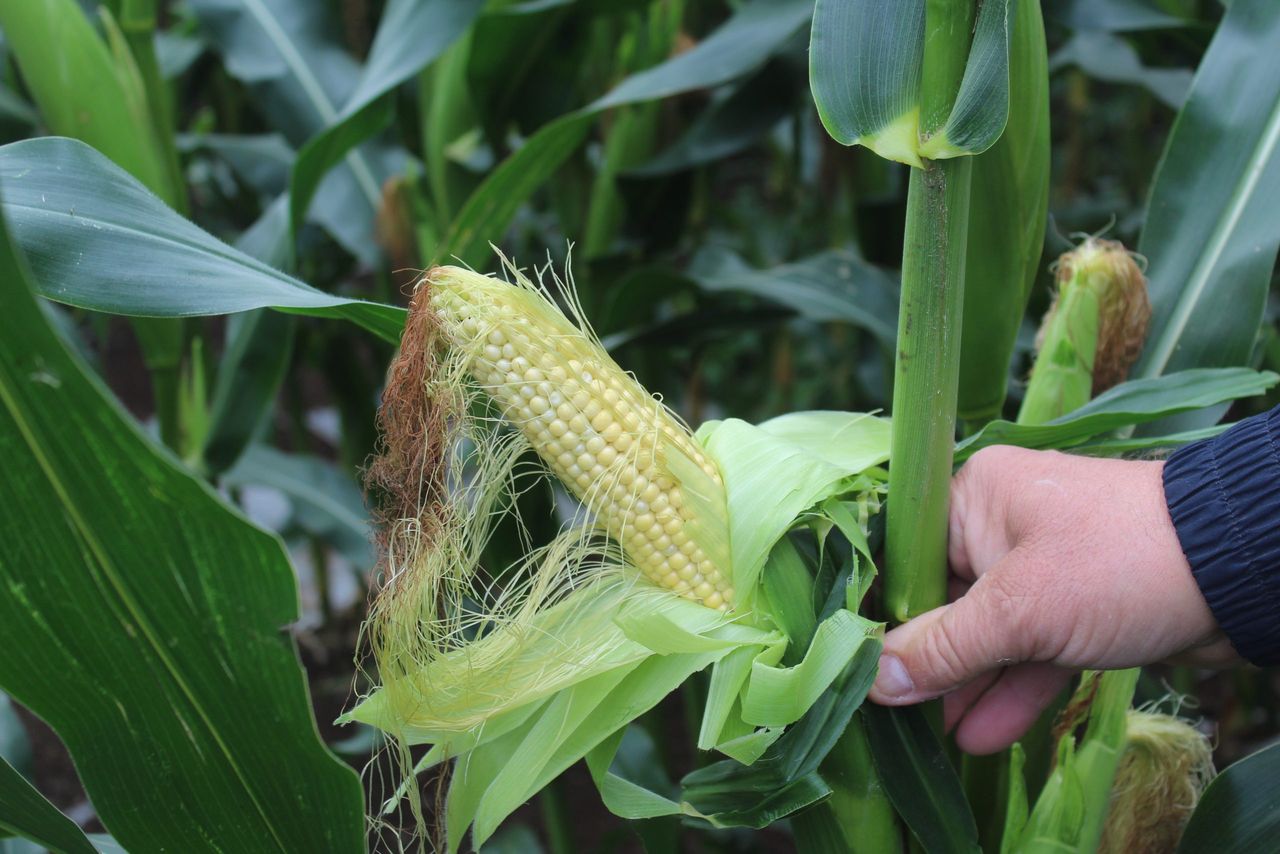
This year’s forage maize harvest could well be one of the earliest on record.
In contrast to cereals, maize is a deep rooting crop. It is well capable of finding moisture at lower levels within a soil profile.
And, of course, heat is that all-important driver of maize performance.
There is also strong evidence confirming that crops established under film will get that better start, making their ability to withstand periods of extremely dry weather all the stronger.
But when is the optimal time to actually harvest forage maize?
Maizetech’s Robert Duncan recently took time out to walk crops growing on his own Co. Antrim farm in order to highlight the steps that should be taken to fully capture the potential of maize at harvest time.
His most advanced crops should be ready for the silo within the next fortnight.
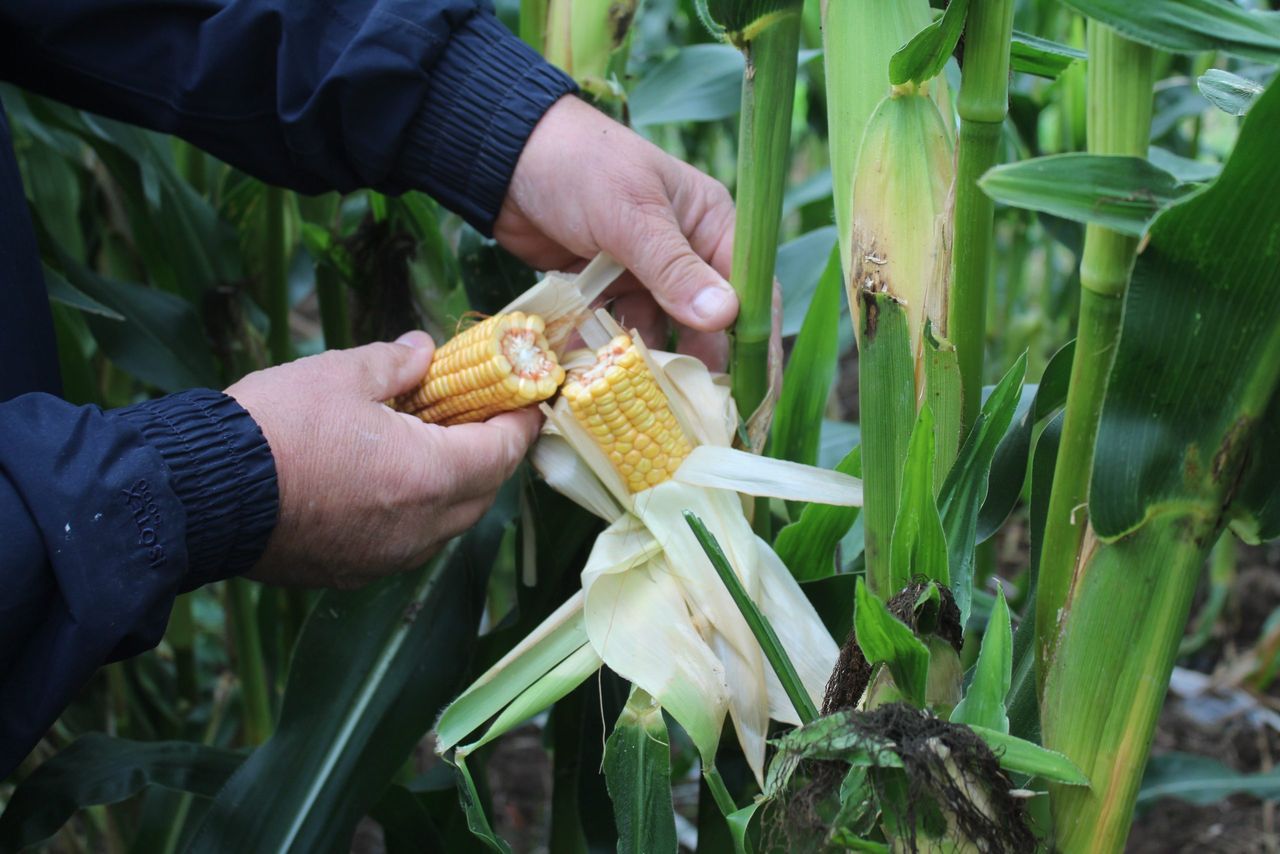
Duncan commented: “Growers should pay little or no attention to cobs on the outside of a crop.
"This is because they have been exposed to all the sunshine that has hit that location over the previous week."
According to the Maizetech representative, the "real test" is assessing what is happening within the crop itself.
“So, it’s very much a case of walking into the crop and finding an average cob that represents what’s really going on.
“The principle or top cob should be selected: this is the one that should be judged."
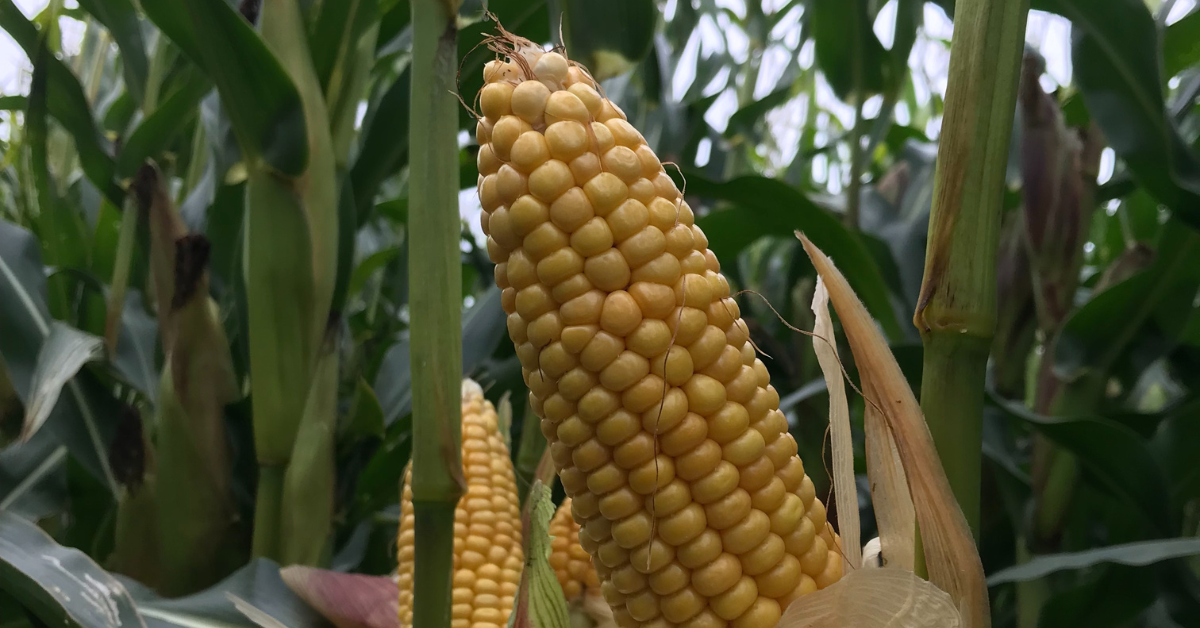
When assessing the crop, the first order of business is to peel back the sheath and expose the grain.
Duncan explained: "When a crop is fully dried out, the inside leaf touching the kernels should feel like tissue paper.
“At that stage the dry matter should exceed 30%. This will also coincide with the plant having stopped transferring sugars into the cob."
Once a cob has been initially inspected, it should be broken in half. It is then a case of taking an individual kernel and squeezing it.
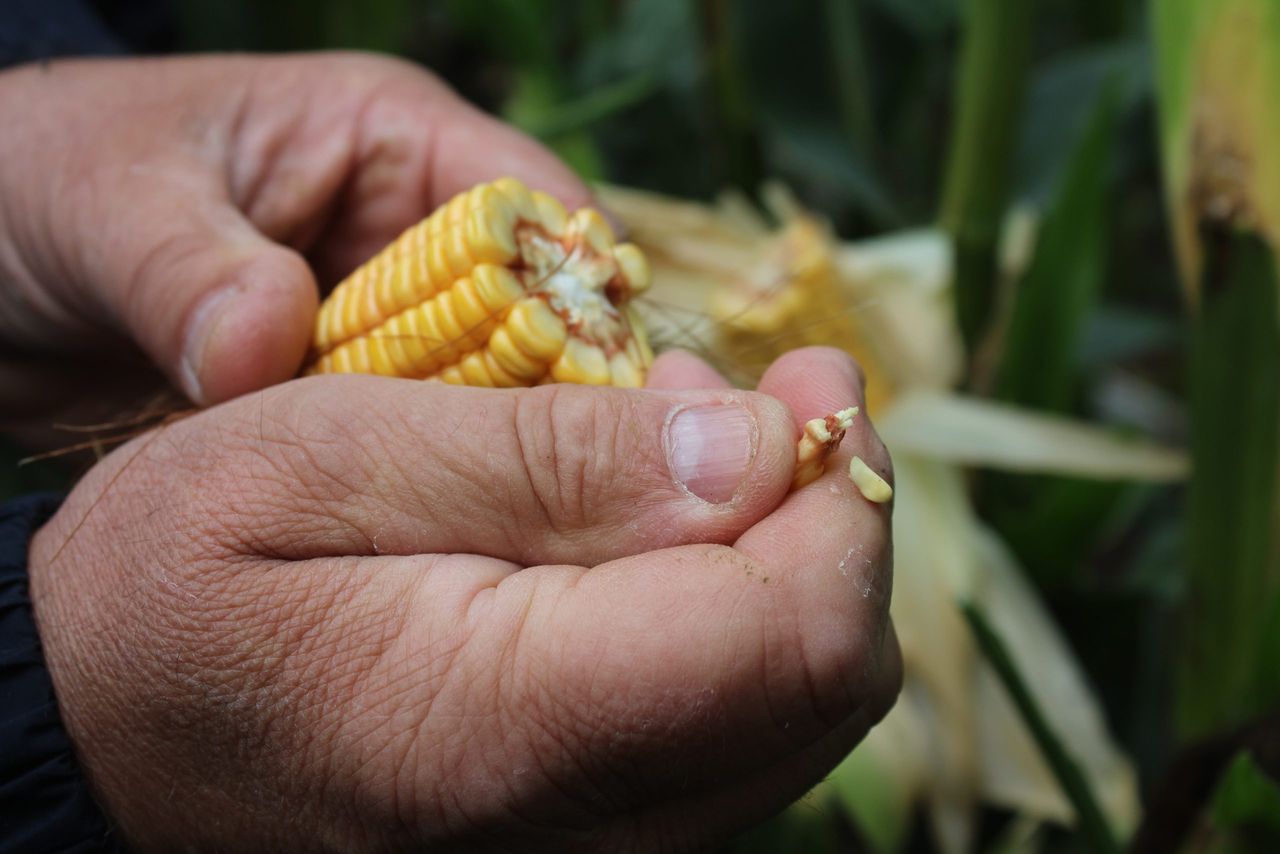
Duncan continued: “You do not want to see any moisture coming out of the seed at that stage.
“In my own case, crops of the Pioneer 7034 variety should be ready for harvest in two weeks’ time.”
Dent or flint
According to Robert Duncan, varieties of forage maize come in one of two categories: dent or flint.
He explained: “In a dent variety, the starch within it is available almost immediately from a fermentation perspective.
"In other words, silage made from dent maize varieties could be ready for feeding within a week of cutting.
"Full digestibility of the starch within the crop would be achieved within that time period.”
According to Duncan, where flint varieties are concerned, digestibility will be "that bit slower".
"We could be talking three or four weeks.
“So anyone wanting to start feeding maize early in the season, the option there would be to place forage made from dent maize varieties at the front of the pit," he said.
Varieties
Maize growers are becoming much more aware of the varieties now available to them.
“The 7034 variety has been a phenomenal success in this part of the world,” the Maizetech representative confirmed.
He added that the dent varieties, on the whole, will be slightly later maturing than their flint counterparts.
Duncan said: “For many years dent varieties of maize were not available in Ireland.
"However, Pioneer has done a lot of work in developing earlier maturing dent varieties that perform well under Irish growing conditions.
“This is the third year that 7034 has been available in Northern Ireland. And farmers have fully recognised its value as a very high-performing maize variety.”
Robert Duncan points out that the key criteria to be met in determining the harvest date of a maize crop are: full maturity in terms of starch content; and 30% plus dry matter in tandem with plants that are not fully desiccated.
He added: “It’s very much a case of maximising the digestible fibre levels within the plant as a whole.
“Years ago when we were working without plastic, it was a case of leaving maize crops in the ground until November.
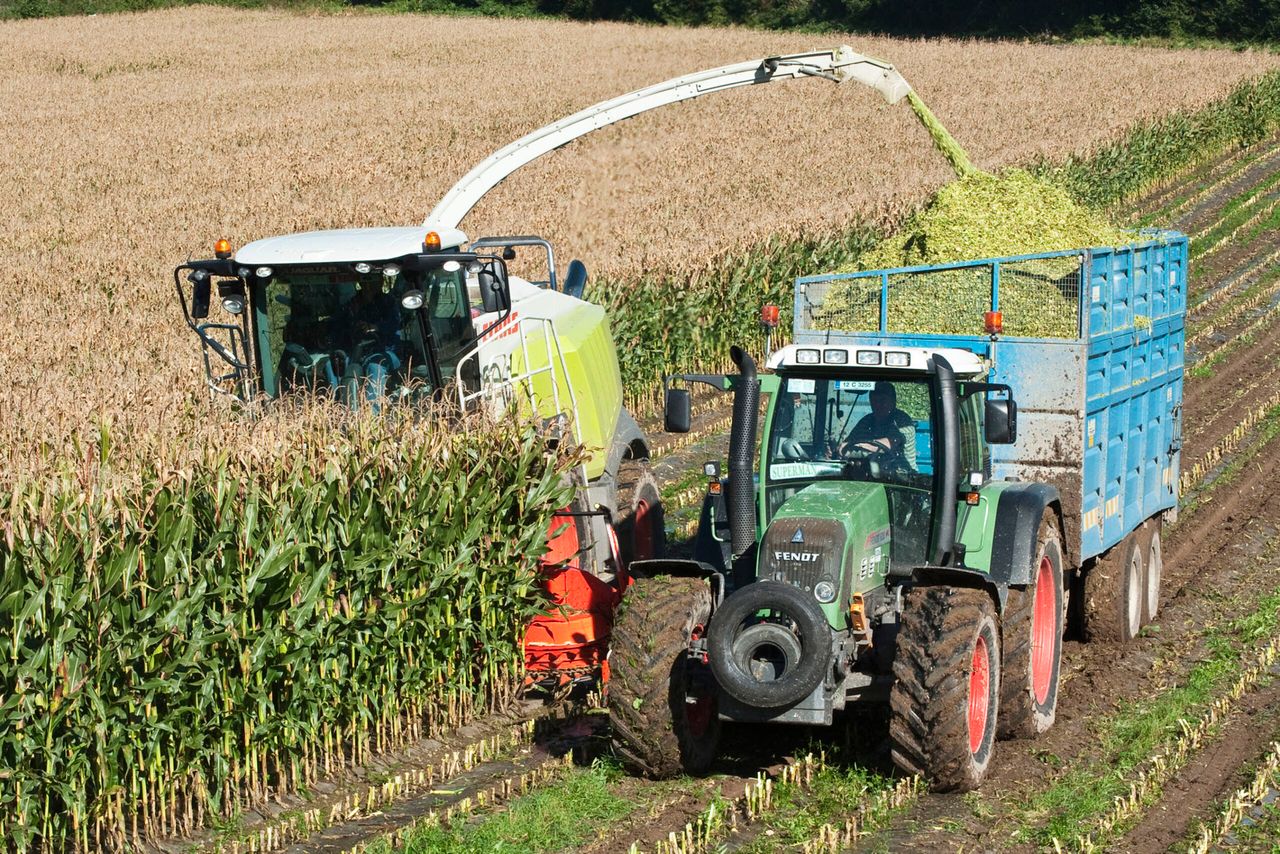
“At that stage you would have thought the crop had been sprayed with glyphosate.
“But now we are able to harvest maize plants containing high levels of green material.
"This means that the overall digestibility of the forage is so much higher at feed-out.”
September harvest date
It is now envisaged that a significant acreage of forage maize will be harvested in Northern Ireland during the last few days of September.
“And these crops will be fully mature at that stage,” Duncan stressed.
“In many ways, this is quite remarkable. In a lot of cases, sowing dates were quite late this year."
He noted that the spring weather was "very troublesome" for growers, which was followed by a "challenging" June.
“By the end of that month, quite a lot of maize crops looked very backwards.
“But, the dry warm conditions that followed in July and August turned that situation around completely.
“Across the board we are looking at the prospect of a slightly earlier harvest in 2026. But the key for growers is to walk crops thoroughly prior to harvest," he advised.
Silage additives
Significantly, Robert Duncan endorses the use of a silage additive on maize crops.
But this is not to boost fermentation levels with the crop.
“Rather it is to stabilise the maize at feed out,” he explained.
“This is especially the case for farmers who are keeping maize though to the spring when air temperatures can be that bit warmer.”
Meanwhile, fresh weight yields are not the Holy Grail of forage maize production.
The real game changer is the dry matter and starch levels continued with the crop that is actually ensiled.
Duncan said: “Maize crops ensiled prior to achieving full maturing could deliver a yield of between 18-20t per acre on a fresh weight basis.
"That assessment is based on crops that I am seeing around the country at the present time.
“However, crops will full starch maturing, coming in with dry matters at 30% plus will deliver a final fresh weight yield of around 17t.
"But the feeding value of these forages will be immense.”
Currently maize crops are in the final phase of converting sugars produced by photosynthesis in the leaves to starch in the cobs.
This process will continue while ambient air temperatures remain above 10°C.
The stem of the maize plant also represent a valuable source of digestible fibre for livestock.
“And again, it’s important this resource is captured,” Duncan confirmed.
“I am not asking contractors to be skimming the soil. In my opinion, a cutting height of between 8-10in is optimal.”
Nitrogen requirement of maize crops
The years of experience working with forage maize managed under Irish conditions has allowed crop specialists to fine tune the way in which fertiliser nitrogen and trace elements can be applied it the most efficient way possible.
Adding to this expertise has been the emergence of foliar feeding systems, a point picked up by Duncan.
He said: “Previously, it was a case of making available the crop’s full fertiliser requirement prior to planting."
Slurry and farmyard manures would have been applied to recommended levels with bagged nitrogen added as required into the seed bed.
“However, extensive trial work has since highlighted the benefit of holding back a proportion of the all the crop’s fertiliser and trace element requirement at the outset.
“The deficit can then be applied as a foliar feed when the crop is knee-high.
"It’s a case of providing active nitrogen to the pant just prior to its major growth stage. And it really has been a major step forward.
“Taking this approach has been shown to be a much more efficient way of growing crops of forage maize," Duncan explained.