

As a majority of spring-calving suckler herds move beyond the main calving period, College of Agriculture, Food and Rural Enterprise (CAFRE) has said management attention must now focus on the suckler cow in early lactation.
CAFRE beef and sheep adviser Jack Friar said: “The weeks immediately after calving are critical in determining whether cows return to breeding promptly and maintain a compact calving pattern within the herd.
“Good management during the post-calving period has a major influence on herd fertility.
“If cows fail to return to breeding quickly, calving intervals can extend and overall herd productivity will decline.”
Friar described this as “particularly relevant as farms continue into year two of the DAERA Suckler Cow Scheme (part of Beef Sustainability Payment), where reproductive performance is a key area of focus”.
He added: “One of the main herd indicators within the scheme is calving interval.
“Ideally suckler cows should produce one calf every year, giving a 365-day calving interval.
“Within year two, the maximum calving interval has reduced to 405 days, so maintaining performance below this level is essential.”
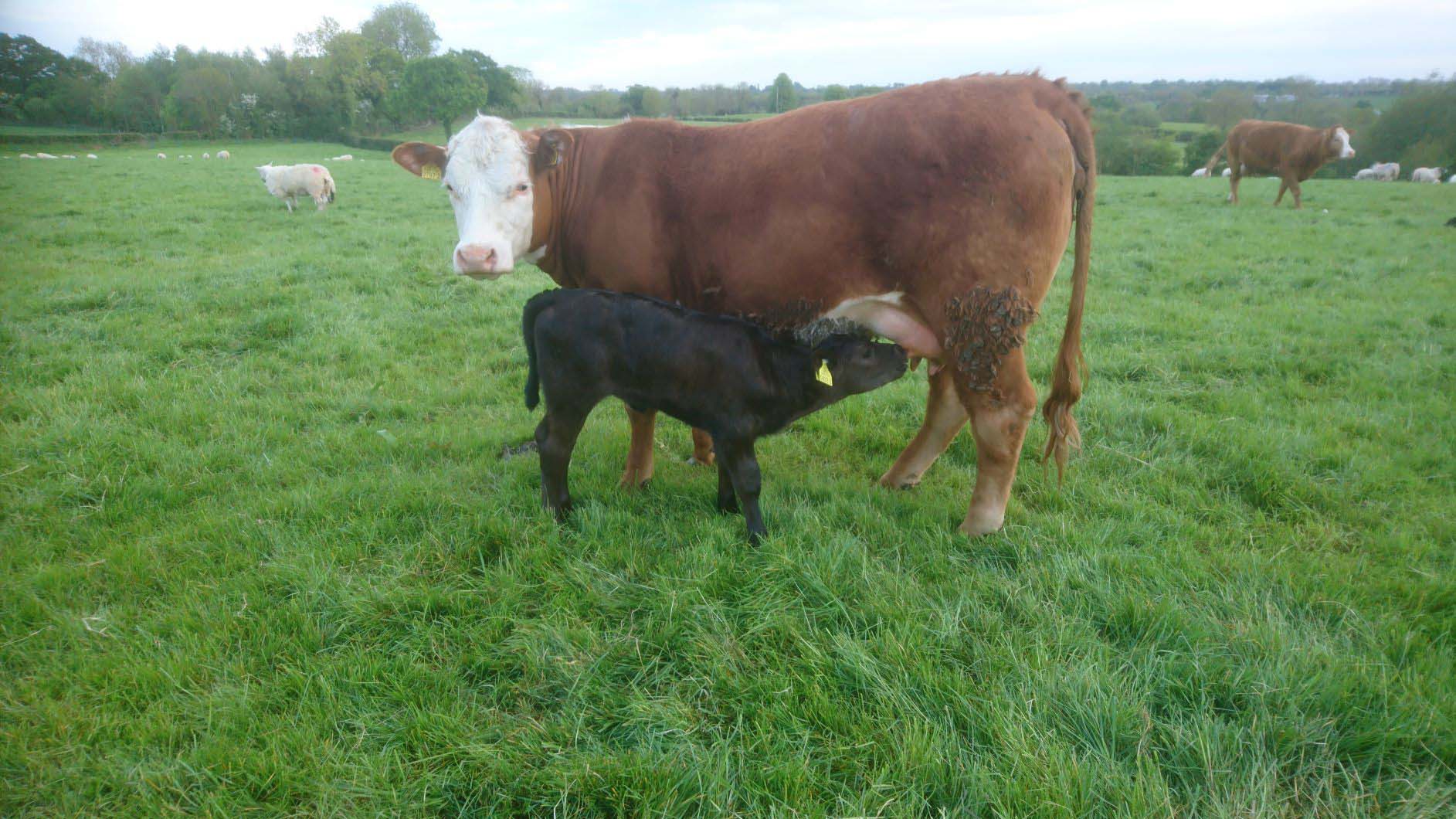
CAFRE advises that to achieve a 365-day calving interval, cows generally need to conceive again “within around 85 days after calving”.
Achieving this target, Friar said, “depends heavily on how cows are managed during early lactation”.
“Body condition score (BCS) remains one of the most useful and practical tools for monitoring cow fertility.
“Cows should ideally calve down in a body condition score of 2.5 to 3.0.”
He added that cows within this range have “adequate body reserves” to support milk production while still maintaining enough condition to begin cycling again.
“Where cows calve in poor condition, the return to oestrus may be delayed,” he said.
Under good management most cows should begin cycling within 35 to 42 days after calving.
“During early lactation cows experience very high nutrient demand due to milk production and the need to recover from calving.
“This makes the first six to eight weeks after calving one of the most nutritionally demanding periods in the suckler production cycle.”
Loss of condition
While some loss of condition is expected, Friar said that “excessive loss can delay the onset of heat”.
He said: “As a general guideline cows with a BCS of 2.5 between calving and the start of the breeding season should not lose any body condition.
“Monitoring cow condition regularly during this period can help identify thinner cows early so that action can be taken before fertility performance is affected.
“During April many suckler herds will have cows and calves turned out to grass.”
Speaking of grass, Friar said that quality spring grass can provide excellent nutrition for lactating cows, but stressed that the key is to maintain grass quality and ensure cows are grazing leafy swards rather than strong, stemmy covers.
“Grazing leafy swards at the correct stage of growth helps maximise dry matter intake, support milk production and reduce the risk of cows drawing excessively on body reserves.
“Rotational grazing systems can help maintain grass quality by ensuring paddocks have adequate recovery time between grazing.
“Maintaining leafy swards not only benefits the cow but also supports calf performance through improved milk supply,” he explained.

Friar maintained that mineral nutrition can also play a major role in reproductive performance.
“Trace elements such as copper, selenium, iodine and phosphorus are particularly important for fertility.
“Copper is involved in reproductive hormone function and immune status,” he continued.
“Selenium and vitamin E support immune function and reproductive health, while iodine is important for metabolic activity and normal reproductive performance.
“In herds where deficiencies occur, cows may show poor heat expression, reduced conception rates or increased embryonic loss.”
Mineral problems
Friar said that mineral problems are not always obvious and over-supplementation can be just as problematic as deficiency.
“For that reason, supplementation should be based on known need where possible,” he said.
“Forage analysis, blood sampling or veterinary advice should be used where deficiencies are suspected rather than relying entirely on routine blanket treatment.”
When it comes to breeding, Friar recommended ensuring cows receive adequate mineral supplementation before and during the breeding season.
This can help support fertility performance, particularly where previous issues with poor heat expression or repeat breeding have occurred.
“Some suckler herds use artificial insemination (AI) while others rely on natural service using stock bulls.
“Both systems can achieve good fertility results if managed correctly.
“AI offers opportunities for greater genetic improvement and more controlled mating, but it relies heavily on accurate heat detection and good timing of service.”

He outlined that natural service using a stock bull removes the requirement for daily insemination decisions, but it requires careful bull selection and management.
“As a guideline, a mature bull should be capable of serving around 30 to 40 cows during the breeding season, depending on age, fitness and libido,” Friar said.
“Bulls should undergo a breeding soundness examination before the breeding season begins to ensure fertility and physical soundness.
“Maintaining strong reproductive performance ultimately improves herd productivity.
“Every extra day added to calving interval creates more unproductive time within the system.”
By contrast, he said, that every additional calf weaned per cow per year significantly improves herd output and farm profitability.
“Maintaining cow condition, ensuring adequate nutrition, addressing mineral deficiencies where they exist and preparing properly for the breeding season will help cows return to breeding promptly and maintain calving intervals within scheme targets,” Friar stated.