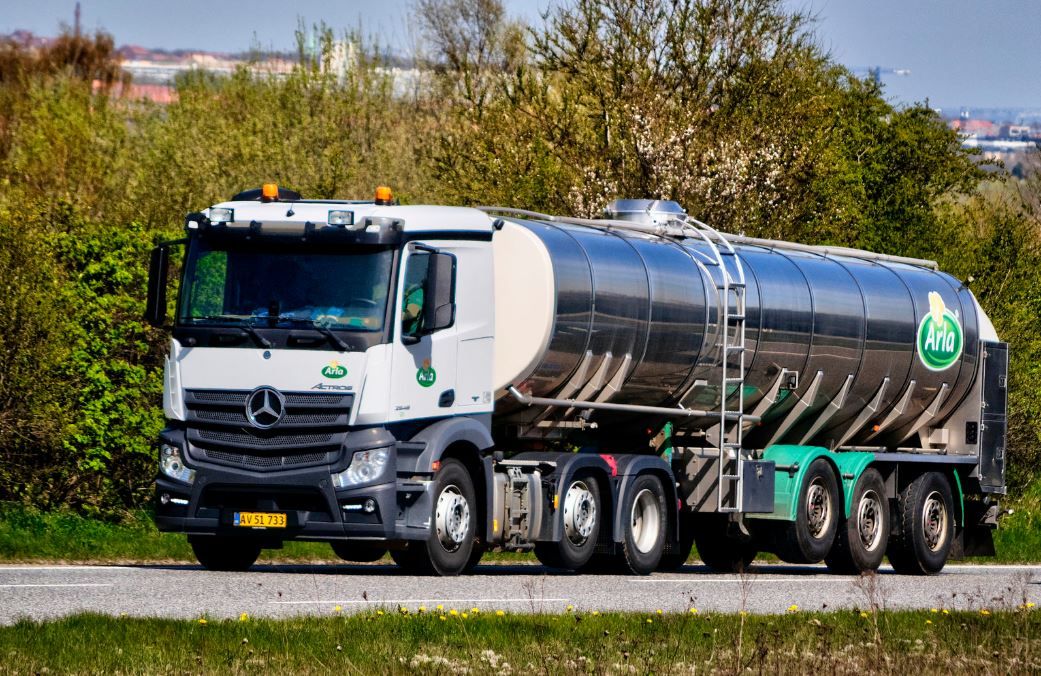
Arla Foods profits surge to €213m on global protein demand

Arla Foods has reported net profit of €213 million for the first half of 2026, up 35% from €158 million in the same period last year.
The global dairy cooperative's group revenue reached €7.6 billion up to end of June (H1 2025: €7.5 billion).
Arla said it delivered "one of the strongest half-year performances" for the co-op, driven by a global demand for protein and a marked recovery across its strategic brands.
Branded volume-driven revenue grew by 6.7%, with particularly strong momentum in protein and sports nutrition.
The co-op said lower milk price in the period level weighed on revenue, but strong brand growth and higher volumes largely offset the impact.
The period also saw Arla complete its merger with German dairy company DMK.
As the merger took effect on June 1, only one month of DMK's activities is included in Arla's first-half results, contributing €409 million to revenue.
Arla said the full effect of the combined cooperative will become visible over the coming year.
Arla
The co-op's ingredients business, Arla Foods Ingredients (AFI), delivered revenue growth of 19.3% to €867 million, supported by favourable market conditions and robust demand across key segments.
The performance was driven mainly by higher whey protein prices, linked to health and nutrition trends, including the impact of GLP-1 diets.
Revenue in Arla's European business dropped by 7.1% to €3.95 billion in H1 2026, due to lower commercial pricing as commodity markets declined.
Despite this pricing pressure, branded volume-driven revenue growth in the region remained robust at 6.4% (H1 2025: -2.4%).
In the first half of 2026, Arla's International segment delivered branded volume-driven revenue growth of 7.4% (H1 2025: 0.4%), while revenue declined by 1.6% to €1.18 billion, primarily due to lower pricing.
On the back of the results, the Arla board of directors has approved a half-year supplementary payment of 1c/kg of milk for farmer owners.
Milk price
Despite brands and demand for dairy protein strengthening, Arla said the "value of milk came under pressure during the first half".
Strong milk collections across Europe, including an increase in Arla's own milk intake, put pressure on global commodity markets and commercial pricing.
"At the same time, cost inflation, driven in part by the crisis in the Middle East, ran higher than anticipated, further lowering the value of milk across the sector," the co-op said.
Arla's performance price was 43.6c/kg, down from 57.5c/kg in the first half of 2025. The pre-paid milk price fell to 40.7c/kg.
"This is the market doing what it should," Peder Tuborgh, chief executive of Arla Foods, said.
High milk availability has brought prices down across the sector, and that is the reality our owners are navigating right now, but a lower milk price does not mean a weaker cooperative.
"Our brands are growing, our business is efficient, and we remain highly competitive.
"That is what gives me confidence that Arla remains a strong and reliable home for our owners' milk," he said.
Arla said market conditions are expected to "remain volatile", with high milk supply continuing to weigh on global dairy prices, "though early signs of stabilisation point to a possible gradual recovery later in the year".
Investment
In the first half of 2026, Arla invested €322 million across its markets.
The co-op also invested around €300 million in a new cheese dairy in Gotene, Sweden, the largest single investment in Arla's history.
The facility will roughly double the site's milk intake to around 1 billion kg per year, with production expected to begin in 2030.
On the strength of its brand recovery, Arla is raising its guidance for strategic branded volume-driven revenue growth to 4% to 6% for the full year, up from the 1% to 3% percent guided in February.
"This upgrade reflects underlying consumer demand and is a genuine, like-for-like improvement, independent of the merger," the co-op said.
Outlook
Arla's other full-year guidance has been restated to reflect the combined cooperative following the DMK merger.
Group revenue is now expected at €16.8 to 17.6 billion, reflecting seven months of DMK consolidation.
Profit share is expected to remain within the 2.8-3.2% target range.
"We are raising our expectations for our brands because the recovery we have seen is real and broad-based, and we believe it will continue.
"At the same time, the completion of the DMK merger gives our combined cooperative greater scale and resilience at exactly the moment the market demands it.
"We are entering this new chapter from a position of genuine strength, and with clear confidence in the road ahead," Tuborgh said.