

The ongoing conflict in the Middle East has revealed a critical weakness in Australia’s agricultural supply chain, with urea fertiliser prices surging by as much as 50% over the last two weeks in March.
Since February, shipping coming through the Strait of Hormuz, where are one third of the world’s seaborne fertiliser trade passes, has collapsed.
This has led to a reported one million tonnes of fertiliser being stranded in the Persian Gulf, with Australia holding no large-scale strategic reserves.
Widespread infrastructure damage in the region means that even if the Strait were to open back up tomorrow, supply would be constrained for months.
This is the backdrop to a research project led by Murdoch University’s centre for Crop and Food Innovation (CCFI), to reduce fertiliser dependency for one of the nation’s most important export crops – wheat.
The Wheat Nitrogen Use Efficiency (NUE) project is in collaboration with Australian Grain Technologies, the University of Western Australia, Curtin University, and the West Australian Department of Primary Industries and Regional Development.
The project is identifying the genetic mechanisms that allow wheat varieties to convert applied nitrogen into yield and grain protein more effectively.

According to the project, as of now, wheat crops account for less than 40% of applied nitrogen, with only 33% recovered in the grain and the rest lost to the environment.
If researchers can shift those numbers through improved genetics, growers could maintain or increase yields while using significantly less fertiliser.
This would cut input costs and reduce exposure to the kind of supply chain shocks currently in effect.
Wheat NUE Project leader and CCFI director Prof. Rajeev Varshney outlined why the research team focused on this area.
“What this conflict has shown us is that nitrogen use efficiency is no longer just a research priority; it is a national imperative.
“Enhancing NUE maximises yield, grain protein, and grower profitability, whilst limiting the environmental impact of wheat production.
“Critically, it also insulates Australian agriculture against global supply chain shocks that we simply cannot control,” the professor said.
The research team has identified genetic regions that contribute to nitrogen use efficiency, grain protein content, and yield.
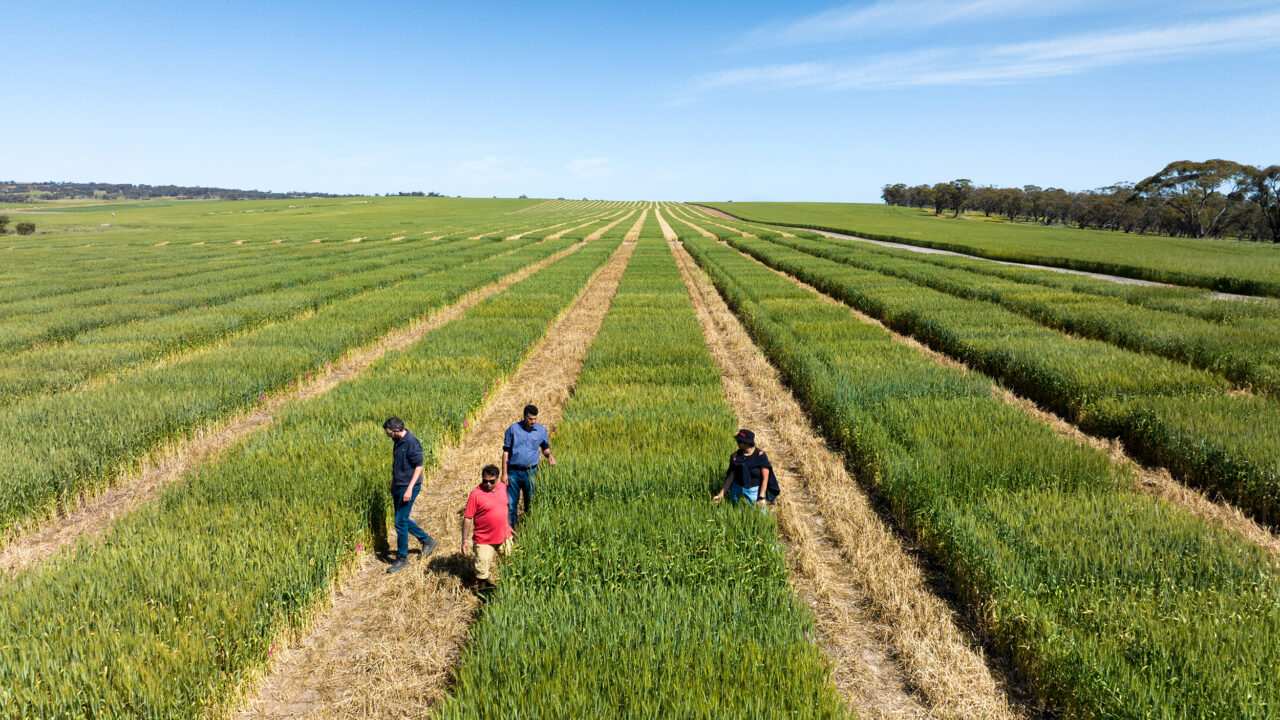
Currently, wheat lines carrying the best-performing combinations of these genetic regions are being tested across diverse Australian field environments, spanning different rainfall zones, soil types, and nitrogen treatments.
Multi-location, multi-year field evaluation data may also identify wheat lines that outperform both commercial checks and parental varieties for grain protein and yield across multiple locations.