

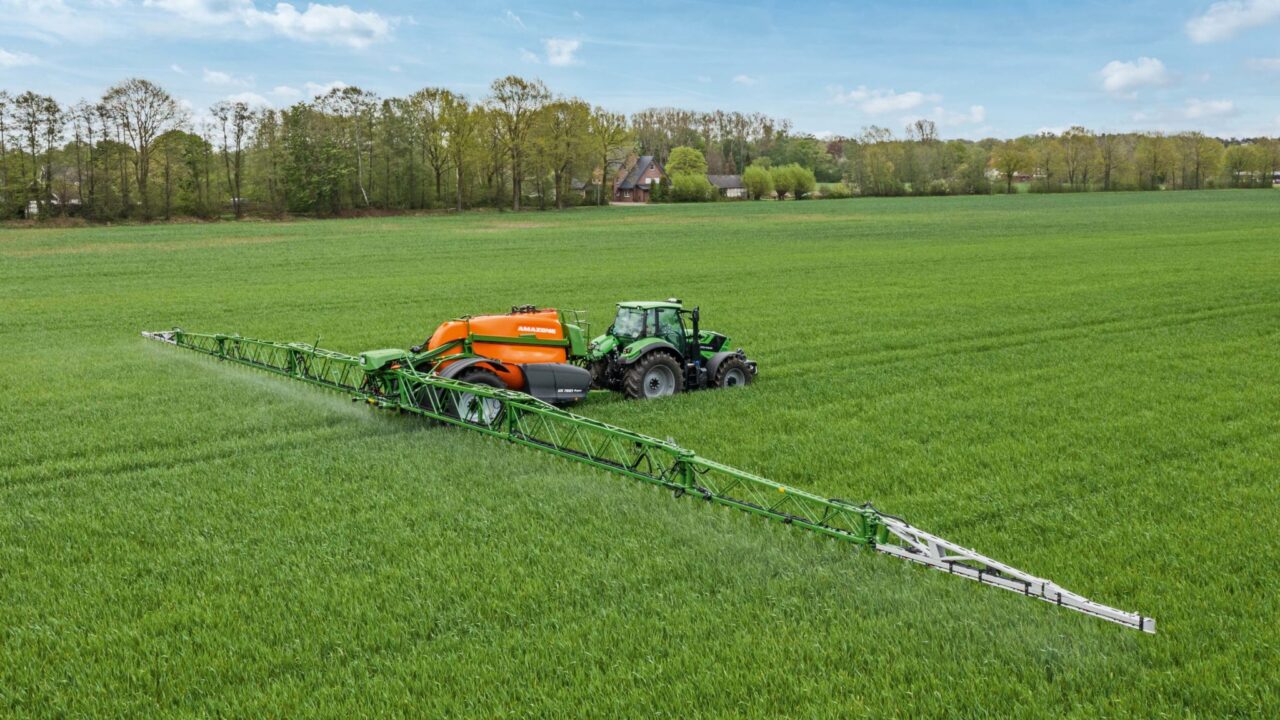
Autumn herbicide application is the most reliable way to control annual meadow grass (AMG) in winter wheat and barley.
Applying residual herbicides in autumn, up to the early tillering stage of the AMG offers the best chance of success. However, control becomes less effective as the AMG starts to tiller.
Teagasc has noted that post-emergence spring options used in wheat are not as reliable as before, as recent herbicide resistance testing saw AMG showing resistance to some herbicides.
Where a pre-emergence herbicide has not been used, growers should apply a broad-acting herbicide early post-emergence.
Herbicide selection should be based on field history, as there are very few mixes available that cover a complete range of weeds.
Priority should be given to the most competitive weeds, such as AMG, cleavers, sterile brome, charlock, chickweed, and wild oats.

Growers should be fully aware of herbicide resistance and take steps to minimise the risk of it on their farms.
Most cases of resistance occur in situations where herbicides with the same mode of action have been used repeatedly in the same field.
Full label rates should always be used where the application of herbicides is concerned.
The threat of BYDV
BYDV findings from recent Teagasc experiments on the early planting of winter barley indicate that early sowing increases disease risk.
Significantly later sowing gives a similar or better yield than early sowing where BYDV is a risk.
In addition, the use of a tolerant variety reduces the risk of yield loss to BYDV when sown early where BYDV is present.
Other important factors to consider when assessing BYDV risk include mild weather and whether a ‘green bridge’ is present or not, as volunteer cereals and grasses are host species for the grain aphid.
This has been an issue for some growers who had short-term cover crops planted ahead of winter barley this season. Insecticide application should be targeted.
Cereal crops emerging in November are at a much lower risk of BYDV than crops that emerged in October.

Growers should also check if aphids are active in crops.
Headlands should be checked first as aphids are three times more likely to land near these areas than further out in the field.
If aphids are present, it is a case of applying an insecticide at the 2-3 leaf stage of the crop.
While resistance (partial) has been detected among the grain aphid population, pyrethroids will still be effective for the majority of growers.
Multiple applications of pyrethroids should be avoided to prevent the development of full resistance.
