Four-cylinder tractors: A cost-effective choice for livestock farms?

As manufacturers continue to develop agricultural machinery producing astonishing levels of horsepower (hp), the question is: will they ever have enough?
Naturally, there will always be jobs that require high hp output from machines, such as ploughing, but for most day-to-day farm work involving a tractor, a four-cylinder model would probably suffice.
The stereotype around four-cylinder tractors for some time is that they simply do not have enough power to keep up with most jobs.
However, many manufacturers have invested in developing their four-cylinder machines over the past decade into more versatile option.
The economics of buying bigger
Apart from the performance difference between a four-cylinder and six-cylinder tractor, we also have to look at the economical difference.
For a fair comparison, let's take a Fendt 724 Vario Gen 7.1 with the 7.5L six-cylinder AGCO Power Core 75 engine and a 620 Vario with the 5L four-cylinder AGCO Power Core 50 engine; when brand new, there is a roughly €50,000 (£41,600) difference in price.
The 700 series has been a best-selling tractor line for a number of years now, with the 728 topping Germany's most registered tractor list in 2025.
Much of the hype and marketing around the 700 series (especially the 724) is based on its score in the DLG PowerMix test, where the tractor line was proved to be extremely efficient.
According to Fendt, that efficiency may provide up to €16,000 (£13,000) of savings over 5,000 operating hours.
However, the 724 is almost edged out by the 620 Vario, which, though it is 2g/kWh less efficient on diesel in field usage, is 12g/kWh more efficient on diesel in road travel.
Depreciation is a huge factor to consider in the current economic climate, and while it must be noted that Fendt tractors tend to hold their value well, the purchase that has less distance to fall may fare better when it comes time to trade it in.
Matching the tractor to the farm
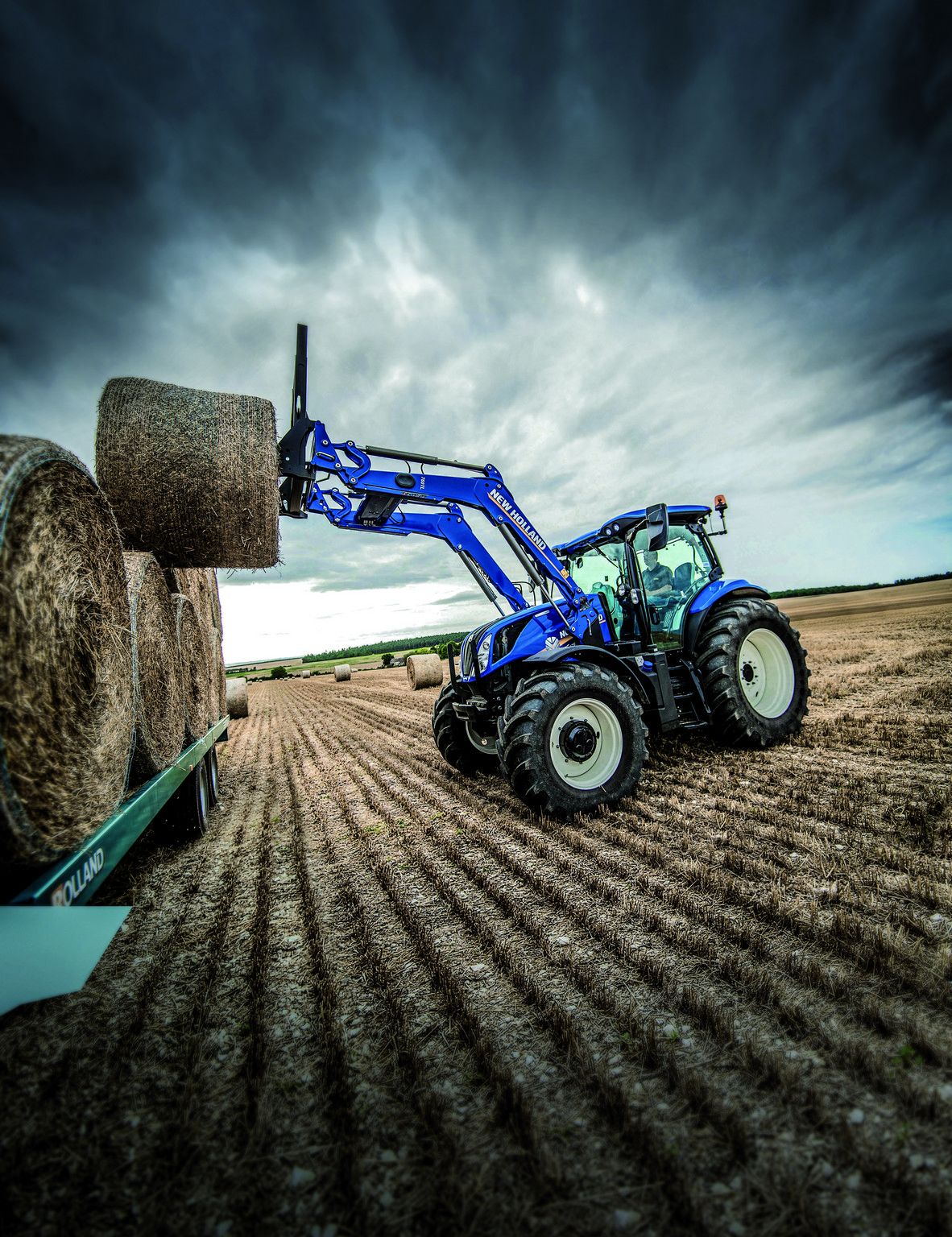
Taking New Holland tractors into consideration, we can compare the six-cylinder T7.245, which has a rated 200hp, against the four-cylinder T6.175, which has a rated 145hp.
The T6 is perfectly equipped for livestock and mixed farms, where versatility is key to operations.
Where it would struggle to fill the role of a six-cylinder is with agricultural contractor work that requires tractors to be running and racing to and from work, plowing through jobs and ready to pull a mountain.
Tillage farms would also benefit from a six-cylinder because of their greater pulling capacity, heavier chassis, higher torque, and ability to operate larger implements.
What has to be acknowledged by a lot of farmers is that they are not doing the same work as certain tillage farmers and agricultural contractors, so a different setup may suit their operation better.
Technology closing the gap
Where four-cylinder tractors previously did not get the modern features seen on six-cylinders until years later, now these tractors are all so advanced that the gap has never been closer.
The Tractor Of The Year (TOTY) awards introduced its Utility category 11 years ago, aimed at tractors with four cylinders, a maximum operating weight of 10t and power range of 70-150hp.
The winner of that category for the inaugural 2016 awards was the Massey Ferguson 5713SI, a 130hp well-balanced machine.
The difference between that machine and Massey Ferguson's 5S tractor that was unveiled at Agritechnica last year and began arriving at farms this summer is night and day.
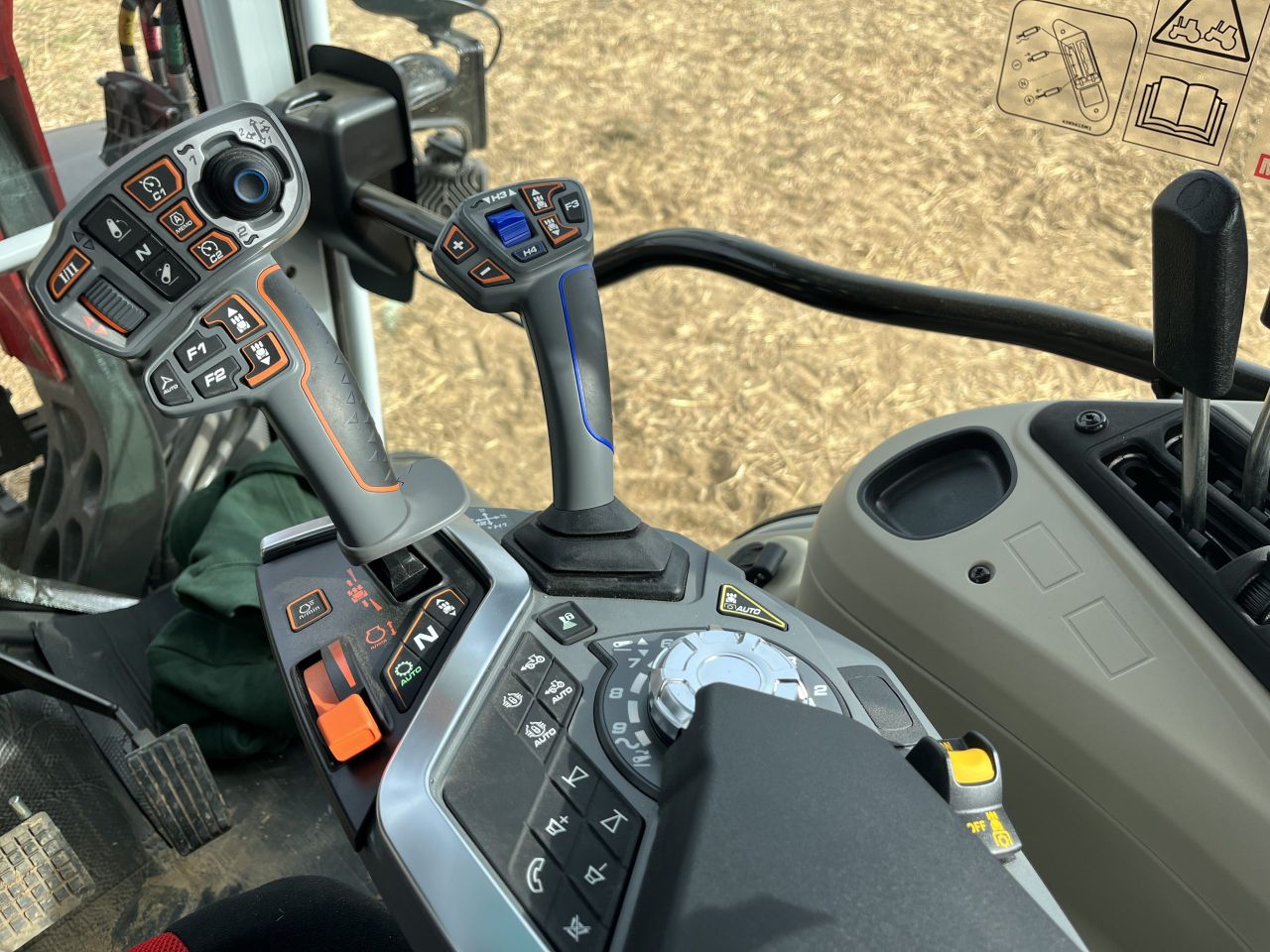
While the 5713SI featured a relatively simple armrest and did the basics well, the 5S could come with an ISOBUS-compatible Datatronic 5 terminal as standard for the exclusive package.
Additionally, the Fieldstar 5 terminal dedicated to precision agriculture can be optioned on any of the trim lines.
While previously any level of precision agriculture involved control boxes and retrofit solutions, a lot of brands now adopt a fleet-based approach, which has given the non-flagship machines better access to technology.
Compare this to the technological gap between the overall 2016 TOTY winner, the Fendt 1050 Vario and the 5713SL, it is clear that machinery across the power spectrum is getting more advanced.