Tillage advice: Early sowing of cover crops ‘essential’

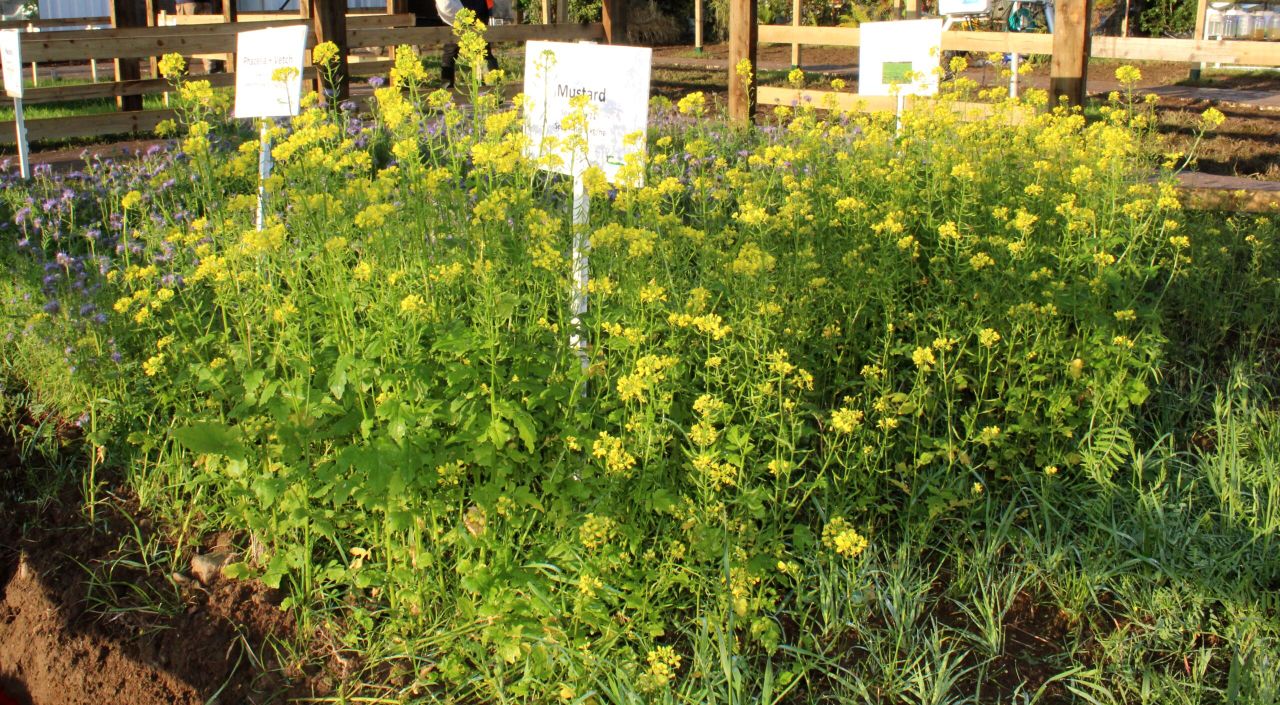
The sowing date of cover crops is crucial, according to Teagasc, as the more growth that takes place, the more nitrate will be taken up.
Large biomass production is vital to maximise the benefits of cover crops and early sowing is essential to achieve good autumn growth and subsequent large biomass, Teagasc said.
Experiments at Teagasc Oak Park examining the effects of sowing date on biomass production showed a linear reduction in the amount produced as the sowing date is delayed.
The mustard in the experiment lost 2t dry matter (DM)/ha for each three-week delay in sowing, so the clear message from the experiments is to plant cover crops as soon as straw is removed to reap the benefits.
Nitrogen use
Separately, a recent Agricultural Development and Advisory Service (ADAS) study has confirmed that cover crops can refine nitrogen (N) use and protect water quality.
This work was co-funded by funded by Affinity Water and Portsmouth Water under the aegis of a Nitrogen release from Cover Crops (NiCCs) project.
It was centred on the identification of how best to destroy the crops prior to the establishment of a new tillage enterprise.
During the trial, cover crops were destroyed either mechanically by rolling on a frost, chopping and incorporating, or with chemicals.
Two mixes were established. One comprised phacelia and wild radish; the other featured a mix of Japanese oats, buckwheat and phacelia.
The results identified that cover crops reduced nitrate leaching losses by up to 90% when compared to the weedy stubble control.
Depending on how well the cover crops established and the species mix, soil nitrogen supply to the following spring cereal crop also increased by up to 35kg N/ha.
When it came to the subsequent spring cereal crop, yields following a cover crop were up by 0.2-1.0t/ha when compared to yields following the weedy stubble control.
Destruction
On destruction, the cover crops released significantly more N than the no cover/weedy stubble.
Moving to destruction methods, chemicals were found to have more benefits than mechanical methods.
N mineral release, grain N off-take, and total crop N uptake were all higher with chemical destruction. This led to subsequent improvements in yield, and in the case of spring oats, grain weight.
However, the study did acknowledge that, without financial incentives, it was marginally more cost-efficient for farmers to not grow a cover crop and destroy weeds chemically.
It emphasised that incentive schemes should support cover crop use so that harder to monetise benefits such as improved water quality, soil health and biodiversity can be realised.