Wool demand remains stable despite international markets easing

International wool prices have fallen back slightly from the highs recorded at the end of June this year.
The markets had strengthened considerably over the past 12 months on the back of falling supplies and growing demand.
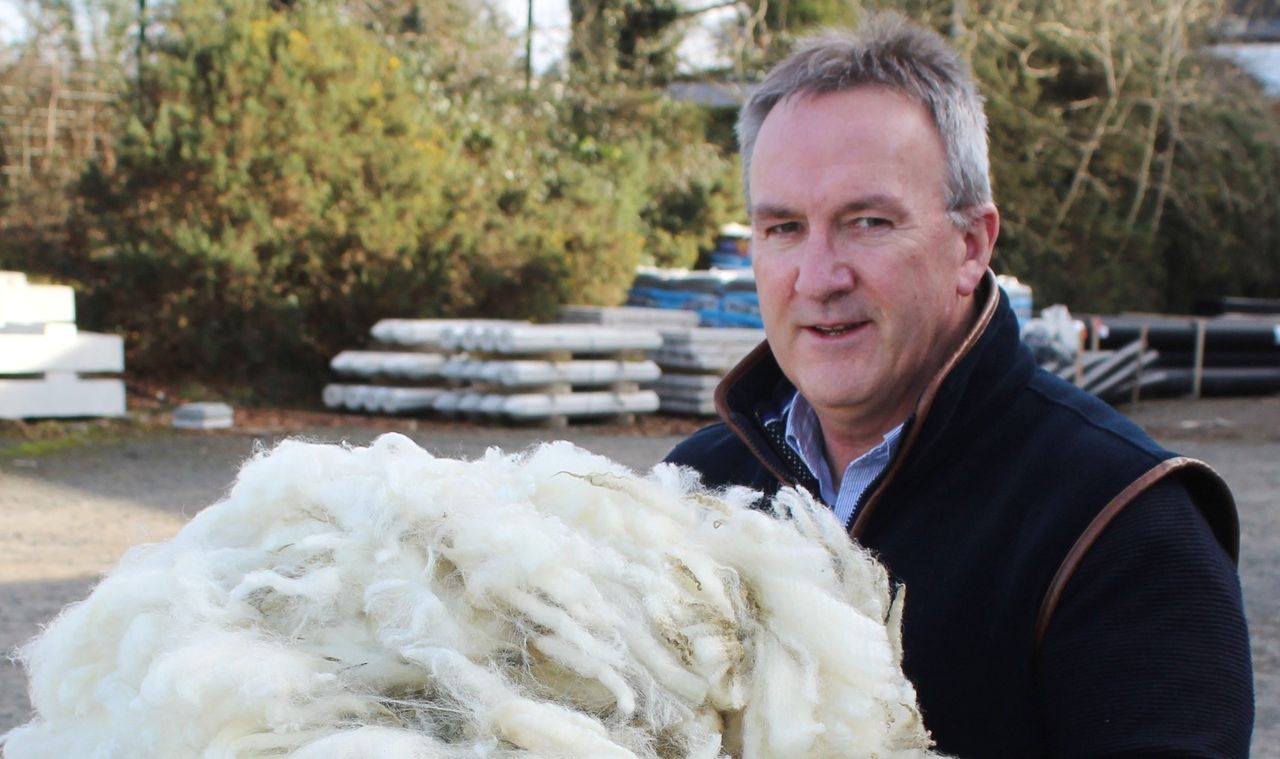
Despite the recent easing in prices, demand levels remain sustainable, as does the prospect for flock owner returns into the future, according to Ulster Wool chair Brendan Kelly.
He explained: “British Wool’s August auction returned an average price of 169 pence per kilo.
"This time 12 months ago, the comparable future was down at £1.
"So the potential for wool to make a genuine difference on farms across Northern Ireland remains significant.
“Chinese buyers have come out of the market over recent weeks. But, they will return once market trends become more discernible.”
Kelly is confirming that fleece deliveries to Ulster Wool’s sorting depot at Muckamore in Co. Antrim are on a par with 2025.
He continued: “We are also attracting back significant numbers of sheep farmers, who had previously looked at other wool selling options.
Independent merchants are buying wool at around 80 pence per kilo at the present time, well below the price that is on offer from Ulster Wool.”
But Kelly also recognises that those farmers coming back to Ulster Wool or dealing with the co-operative for the first time have to wait a year for their money.
“This is an issue that we are looking into at the present time,” he explained.
Sheep numbers
Meanwhile sheep numbers throughout Ireland, the UK and the rest of Europe continue to reduce.
And this decline shows no sign of levelling-off.
The Ulster Wool representative continued: “We need to see more sheep in our rural areas.
"And this makes sense from a food security and an environmental sustainability perspective.
“For example, sheep grazing our hill areas significantly reduce the threat posed by wild fires.”
Kelly went on to confirm that the advanced age profile of flock owners is now the most important factor in determining sheep numbers in Northern Ireland.
He said: “Older farmers are more likely to keep sheep if they can avail of labour-saving devices, particularly where effective animal management is concerned.
“And it is so important that capital grant schemes developed to meet the needs of agriculture in Northern Ireland reflect this specific reality.”
Support scheme
Another factor impacting on local sheep numbers is the continuing unavailability of a feasible support scheme for the sector.
And, in the view of Kelly, the prospect of getting a deal secured with the Department of Agriculture, Environment and Rural Affairs (DAERA) on this matter is still a long way off.
He said: “The money is there to allow for the development of a meaningful sheep support measure.
"The current underspend in the suckler cow and beef carbon reduction schemes can be used for this purpose.
“Meanwhile, DAERA officials continue to point out that any future support scheme for sheep must be wholly sustainable when the reality is that sheep, by their very nature, tick all these boxes.
“They add to the overall food security of the country while their grazing habits maintain the conservation value of our hill areas.
“It all adds up to a win/win scenario for local agriculture and society as whole in Northern Ireland," Kelly added.