Global beef production forecast to fall by 2% this year

Global beef production is expected to decline by 2% in 2026 as supplies tighten across several major producing regions, according to Rabobank's latest's quarterly global beef report.
Rabobank said production is currently forecast to decline across key markets, including Europe, the US, Brazil and China.
The downturn is expected to continue over the next 12 months, with Brazil projected to post the largest volume decline.
The report shows that global cattle prices in July eased back from the record levels reached earlier this year.
Across Australia, Canada, and the US, prices dropped by between 2-6%.
Weaker market sentiment has been driven by improved cattle availability, growing consumer resistance to higher beef prices, and trade disruptions.
Rabobank said that further price consolidation is possible over the coming months "as markets adjust to changing supply and demand dynamics".
Beef
The report highlighed that trade disruptions are now beginning to impact on global beef flows.
The Chinese import quota has resulted in Australian beef exports to China falling by 71% from May to June.
Australia reached its 205,000MT annual import quota set by China in mid-June.
Much of this beef product has now been redirected to Japan, South Korea, the US, and Middle East.
However, this has not completely offset the reduction in volumes to China.
Brazil
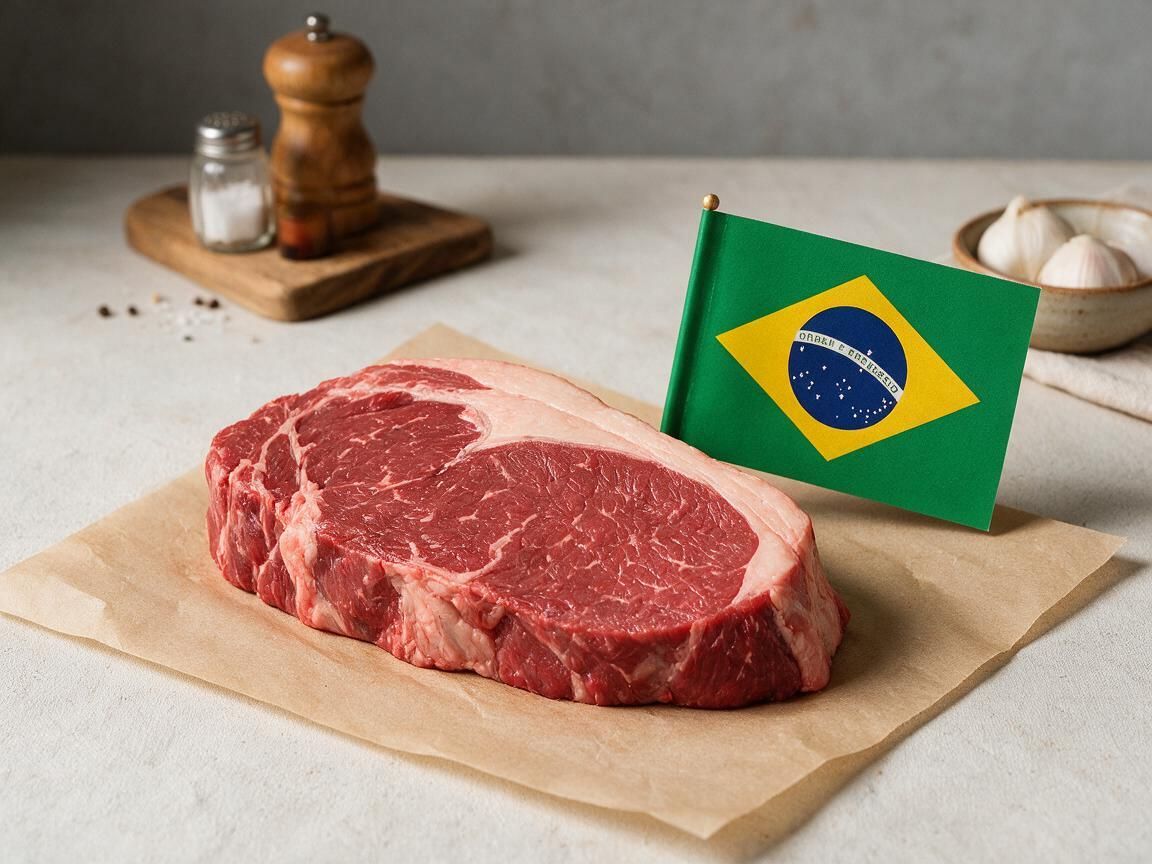
Brazil is expected to reach its quota in China in August or September, which will not just impact export flows, but also Brazil's domestic cattle price.
Stronger early shipments to China helped push Brazilian cattle prices higher, peaking in April, as opposed to the traditional seasonal high in the fourth quarter of the year.
Rabobank said if the quota remains in place, "this distorted price curve could persist into 2027".
China has been the key driver of Brazil's beef export expansion in recent years.
In 2025, China remained Brazil's largest beef destination, accounting for almost half of total export volume, worth €8.8 billion.
Brazilian beef imports to China in July were down 48% month-on-month.
Exports
Focus now turns to September 3 when a proposed EU suspension of Brazilian beef imports could further impact global trade.
"If implemented, roughly 10,000 metric tonnes per month of Brazilian beef would need to find alternative markets, increasing competitive pressure across key importing regions," Rabobank said.
In May, it was confirmed that Brazil would no longer be allowed to export a range of animal products, including beef and poultry, to the EU from September 3.
The EU said Brazil must ensure compliance with its requirements on the use of antimicrobials for the entire lifetime of the animals that the exported products originate from.
According to Rabobank, the EU is "one of the most attractive destinations for Brazilian beef from a value perspective, consistently offering some of the highest returns per metric tonne".
"Although considerably smaller than China in scale, disruptions in the European market tend to have a disproportionate impact on profitability across Brazil's beef export sector".
In 2025, EU imports of Brazilian beef reached nearly 129,000MT, the highest volume ever recorded for the region.
Rabobank said the expected suspension from September "carries significant implications", adding that the "likelihood of a near-term resolution appears increasingly limited".
The bank noted that lower cattle prices and higher retention of cattle for breeding may see supplies drop which could provide some balance to a likely reduction in export volumes.
Rabobank also said that securing beef trade access to Japan and South Korea would "come at a favourable time" for Brazil.
Japan imported around $4.5 billion worth of beef last year, while South Korea imported around $3.9 billion.
As US beef exports have been limited by historically low cattle supplies, Rabobank said "a rare opportunity has emerged for alternative suppliers".