

The Agri-Food and Biosciences Institute (AFBI) is confirming that the fourth phase of Northern Ireland’s Soil Nutrient Health Scheme (SNHS) is well underway.
This phase focuses on farms in Co. Antrim and includes any remaining farms across Northern Ireland that were not previously registered.
To date, the scheme has achieved significant coverage. Since its launch in 2022, approximately 440,000 fields have been sampled and 22,750 farm businesses registered.
This figure represents around 93% of all farms in Northern Ireland.

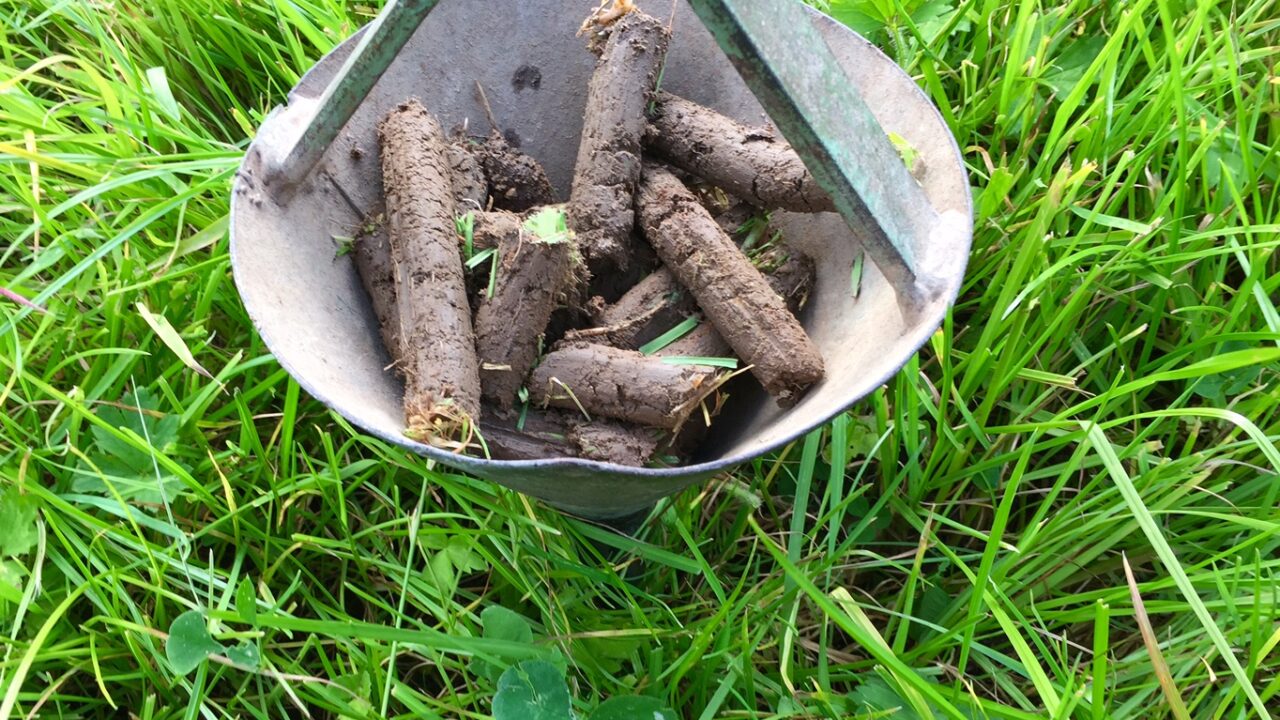
Sampling is typically carried out between November and February, with results sent to farmers within four to six weeks through the post.
After receiving results by post, farmers can also access detailed soil sample analyses and run-off risk maps online via their Government Gateway account.
The soil reports and online maps contain essential information on soil nutrient status, including soil pH, soil phosphorus, potassium, and sulphur levels.
Soil nutrient trends
Sampling programme project lead for the Soil Nutrient Health Scheme, Alex Higgins has identified some of the trends thus far:
He said: “Soil pH averaged 5.8 across Zones 1, 2 and 3 but varied considerably by farm type and intensity.
“There was a general decrease from east to west, which is likely due to higher rainfall and increased leaching potential in western areas.
“For many farms, the average pH sits below the optimum crop levels, which would be most effective at maximising nutrient uptake.
“Where intensive grass or silage fields are concerned, lime applications are one of the quickest and most cost-effective methods to increase nutrient use efficiency.”
Lime
When applying lime, the best approach is to apply little and often to slowly raise the soil pH, as very large single applications can cause issues with nutrient availability (potassium in particular).
If a soil has a high lime requirement, AFBI agronomists recommend splitting applications over a few years.
Where farms might be considering a shift to multi-species swards or clover mixes, the AFBI recommends getting some tailored advice from an adviser regarding the optimum pH, which may be higher to suit that mix.

Optimising pH will improve the efficiency of plant uptake of nutrients in soils, including phosphorus (P).
In large areas of Zones 1, 2 and 3, soil P indices are above the soil target optimum of Index 2+ for intensively managed grassland, sitting at 26.7 mg/l Olsen P overall (Index 3).
In Zone 1, the average soil P is 28.2 mg/l (Index 3), Zone 2 is 24.3 mg/l (Index 2+), and Zone 3 is 28.8 mg/l (Index 3).
Waterways
Given this backdrop, farmers are encouraged to carefully consider their P applications to reduce surplus soil P, as this plant available form is also very susceptible to loss to waterways and can lead to issues there through encouraging algal growth.
Meanwhile, the connectivity of land to water in Northern Ireland is very high, with around 5km of watercourses (open drains, streams and rivers) every square kilometre, according to the AFBI.

The run-off risk maps being produced as part of the project are intended to highlight areas within fields where there is greatest risk of nutrient and soil loss during heavy rainfall events.
Farmers are encouraged to look at these areas and see if there are any small steps that can be taken to break the connection between land and water at these times.
This can be as simple as raising the ground level slightly where a runoff pathway goes through a hedge, to slow the flow of water temporarily and allow sediment and nutrients to settle out.
There may also be funded measures in current, or future, agri-environmental schemes that could be applicable.
These include vegetated buffer strips or sediment trapping features.