

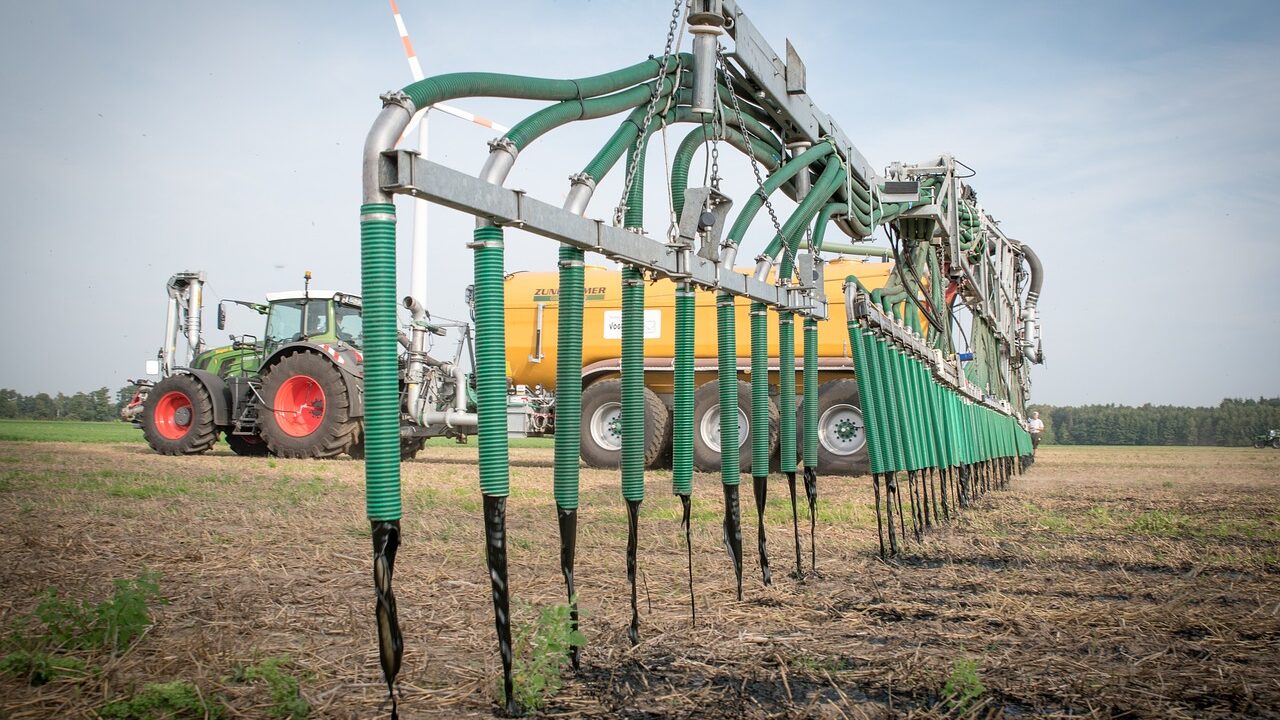
Pressure continues to build across the island of Ireland for the introduction of more flexible slurry spreading seasons.
A number of lobby groups regard the current arrangements as simply an exercise in ‘farming by calendar dates’.
It is an approach to farm management that they fundamentally disagree with.
The Beef Plan Movement (BPM) has said it wrote to Minister for Agriculture, Food and the Marine, Martin Heydon a fortnight ago, proposing changes to the closed period for slurry spreading.

According to the organisation, the current, inclement weather is proof in point that something needs to change.
BPM’s John Moloney said: “The EU’s nitrates’ directive stands as a cornerstone of the bloc’s water quality policy.
“Designed to prevent nutrient pollution from agricultural sources, it mandates closed periods during which the spreading of organic fertilisers like slurry is prohibited.
“While this calendar-based system functions adequately in regions with predictable continental climates, its rigid application is proving increasingly problematic, and even counterproductive here in Ireland.”
Moloney referenced the key issue in the slurry spreading debate as the fundamental mismatch between a static regulatory calendar and Ireland’s dynamic, maritime climate.
He said: “The directive’s fixed dates cannot account for the volatility of an Irish winter or the fleeting windows of opportunity that our weather provides.
“To mandate inaction during ideal conditions, only to force spreading as the weather breaks, is a policy contradiction that undermines the very environmental goals it seeks to protect.”
Restrictions
The BPM representative pointed to the early weeks of January as an example.
“Across counties like Limerick, farmers observed a prolonged spell of dry weather perfect for land travel and nutrient uptake by dormant soil,” he said.
“However, the closed period legally compelled them to wait.
“By the time restrictions lifted on January 15, the weather had turned, with heavy rainfall (nearly 10mm in one evening) quickly rendering lands unsuitable.
“This left farmers with a difficult choice: spread into wet conditions or face storage crises later in the season.”
Given this backdrop, BPM is proposing a solution which its members believe to be both pragmatic and evidence-based – the adoption of a dynamic, weather-responsive closed period.
Dynamic closed period
Under such a framework, the default closed period would remain. But it would incorporate flexibility to allow spreading during verified suitable conditions that occur before the official end date.
However, this would not be a free-for-all, as it would be a managed system, according to BPM.
It is proposing that an authoritative body like Teagasc could monitor soil conditions, weather forecasts, and drainage status to provide clear, science-led guidance on when early spreading is permissible.
“This is not a call for deregulation: rather it is a recognition of the need for smarter regulation.
“The principle is clear: effective European legislation must accommodate regional diversity.
“A uniform calendar cannot equitably govern the climates of Andalusia, Finland, and Ireland.
“As we confront increasing weather variability, the need for adaptive agricultural policy has never been greater,” Moloney said.
Northern Ireland policies
Meanwhile in Northern Ireland, calls for the introduction of more flexible slurry spreading policies have been forthcoming.
Traditional Unionist Voice (TUV) agriculture spokesperson, Cllr Allister Kyle said: “Many farmers and agricultural contractors will have been checking off the calendar until the February 1.
“The Northern Ireland slurry ban once again exposes how rigid, calendar-based farming rules clash with reality.
“The idea that nutrient management can be neatly boxed into dates ignores the one factor farmers can’t control – the weather.
“Northern Ireland only received around 80% of average rainfall during December, and could have offered workable spreading conditions, to help with many farmers slurry storage capacity.”

The agriculture spokesperson explained why more flexibility would be of benefit to farmers later in the year.
“In truth, most people would prefer to save their slurry until March when conditions for growing improve, meaning that they get best use of the natural fertiliser,” Kyle said.
“Relaxed rules would have given many farms relief of extra storage capacity to allow later spreading.
“We now have a situation at the end of January, that the month has been a complete wash-out, leaving land saturated and many farmers getting close to full capacity of slurry.”