Can finisher pigs thrive on 0.35% phosphorus rations?

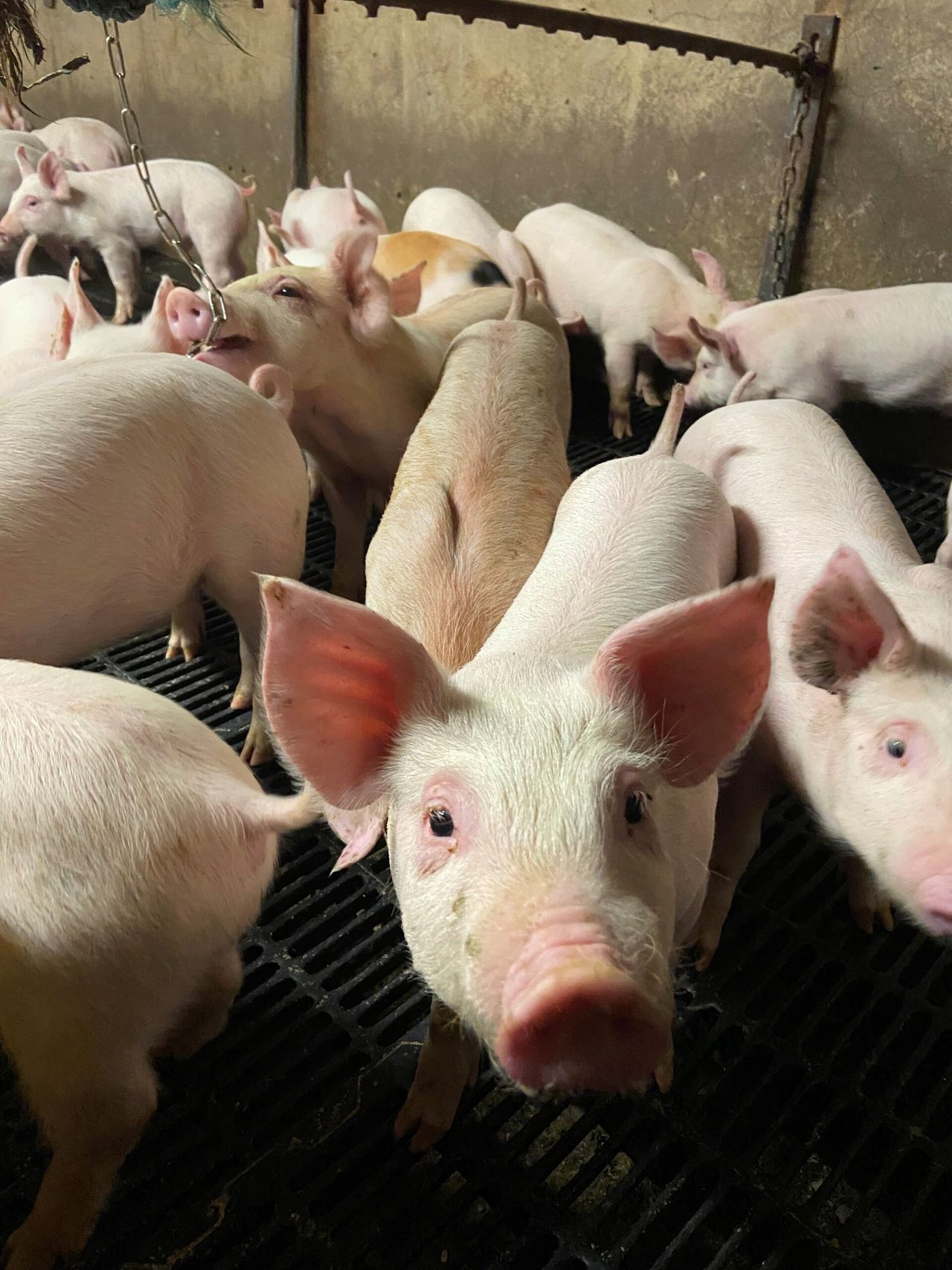
The amount of phosphorus (P) finishing pigs require in their diets to maintain productivity is the subject of research underway in Northern Ireland.
The trials are assessing if the level of dietary P can be safely lowered to 0.35%.
Phosphorus is an essential part of a pig's diet and is fundamental for good bone health and production performance.
However, pigs can only digest a small amount of the mineral present in plant ingredients, meaning that much of it is excreted.
If the trials are successful, the reduction from the current level of 0.4% would represent a further significant improvement in the environmental footprint of pig production.
The research is being undertaken by scientists at the Agri-Food and Biosciences' Institute (AFBI).
Phosphorus reductions
In the early 2000s, P in pig diets was reduced from 0.6% to 0.5%, leading to 15% less P being excreted into the environment
This reduction was a result of trial work, which also demonstrated that it was possible to lower dietary P safely without impacting on pig performance or welfare in terms of bone strength.
Later research showed that dietary P could be reduced further by using the enzyme phytase, which reduced P excretion by 17%, but only when the total P content of the diet was reduced at the same time.
Otherwise, phytase can release extra P from feed ingredients that the pig does not need, which may in fact increase P excretion.
Building on these findings and other research, around 2010, Northern Ireland’s pig industry adopted a level of around 0.4% total P in finishing diets.
The move from 0.6% to 0.4% meant a 50% reduction in P excretion.
For example, before the reduction, in a 2,500 finishing place unit, excreted P on 0.6% total diets was 7.2t.
On 0.4% dietary P diets, the P in excretion from the same unit is only 3.6t per year.
Trials
AFBI is now conducting trials to see if dietary P can be safely lowered to 0.35% through targeted phosphorus nutrition and the use of phytase at higher levels.
For a 2,500 finishing place unit, excreted P could be lowered to 2.3t if the 0.35% level is proved to be successful.
AFBI research has also identified that modern pigs retain more P than pigs 20 years ago. This is due to improved genetics and nutritional strategies.
The finding is important because it helps identify where there is still potential to reduce phosphorus losses from pig systems.
Cutting these losses could save money at farm level while further reducing environmental impacts from pig production.