

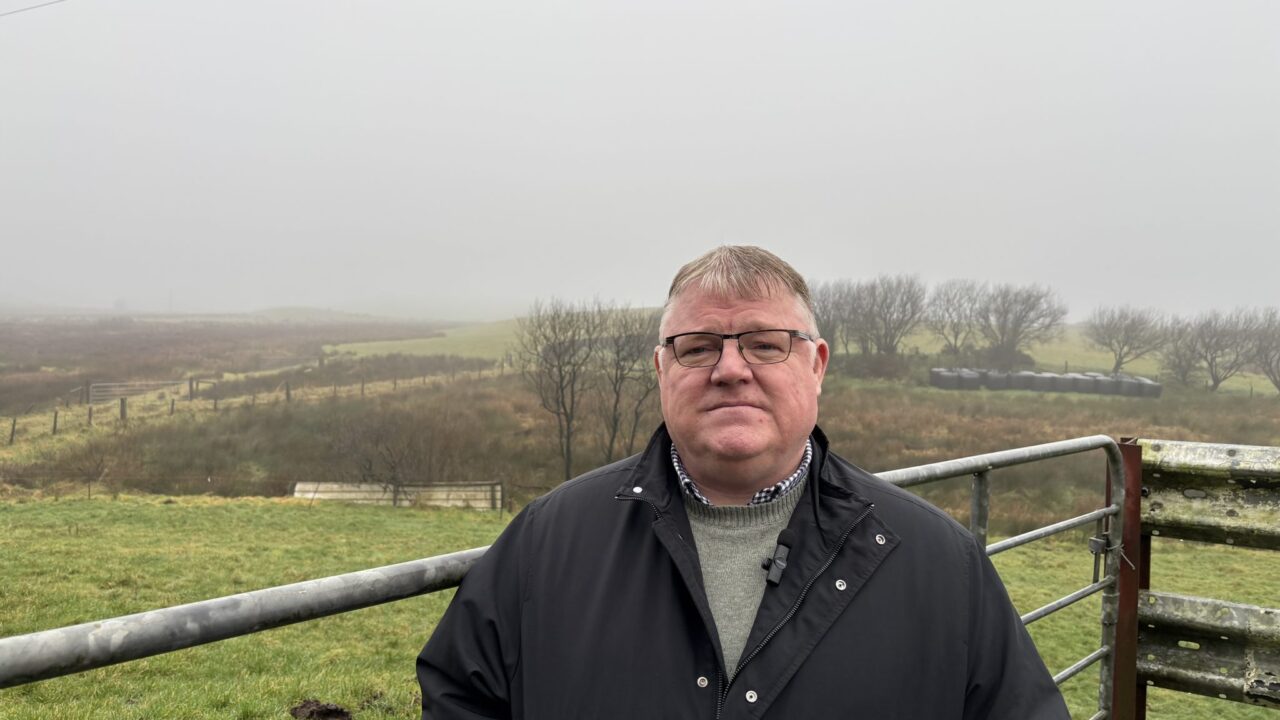
Sinn Féin’s agriculture spokesperson Declan McAleer has warned that families across Northern Ireland could face sharp increases in food prices.
This is a direct consequence of the ongoing Middle East conflict as it disrupts global fertiliser supplies and drives up costs for farmers.
The West Tyrone MLA said: “Nitrogen-based fertilisers are essential to modern agriculture, underpinning around half of all food production.
“However, severe disruption to a key global shipping route has significantly reduced the flow of fertiliser and energy supplies.
“This has driven major price increases in vital inputs such as urea and ammonia, placing farmers under intense financial pressure.”
McAleer said that the impact “is particularly acute” for Northern Ireland’s agri-food sector.
“Farmers are now facing some of the highest fertiliser costs in decades, alongside rising fuel prices, including red diesel,” he explained.
“With margins already tight, many producers may be forced to cut back on fertiliser use or reduce output altogether.
“This will have direct consequences for consumers at the checkout.”
Meanwhile, the Sinn Fein MLA has written to the Northern Ireland agriculture minister to outline the impacts of the war in Iran on farmers, including access to fertilisers, rising energy costs, and disruptions to cross-border trade.
McAleer continued: “People here are already under pressure.
“We must support our farming community, and protect households from what could otherwise become an unsustainable rise in living costs.”
UFU
For its part, the Ulster Farmers’ Union (UFU) has said the ongoing developments in Iran highlight both the importance and fragility of food security at home and abroad, warning that further escalation could have serious implications for the agri-food sector.
UFU deputy president, John McLenaghan, said farmers across Northern Ireland are already concerned about the potential knock-on impact the situation could have on energy, fuel, and fertiliser prices.
He said: “Events unfolding in Iran underline just how vulnerable global supply chains can be.
“Food security must be treated as a strategic priority.
“If tensions escalate and governments fail to respond appropriately, we risk sleepwalking into a situation where our ability to maintain a stable food supply is seriously undermined,” he said.
The UFU said its members need confidence from the government to continue producing high-quality, affordable food for consumers, particularly at a time when input costs remain extremely volatile.
The union’s deputy president continued: “We are already seeing signs over the past number of days that energy, fuel and fertiliser prices could increase significantly.
“Farmers are extremely exposed to these costs, and any further shocks will have a direct impact on the cost of producing food.”
