Corncrake chicks caught on camera as farmers praised for support

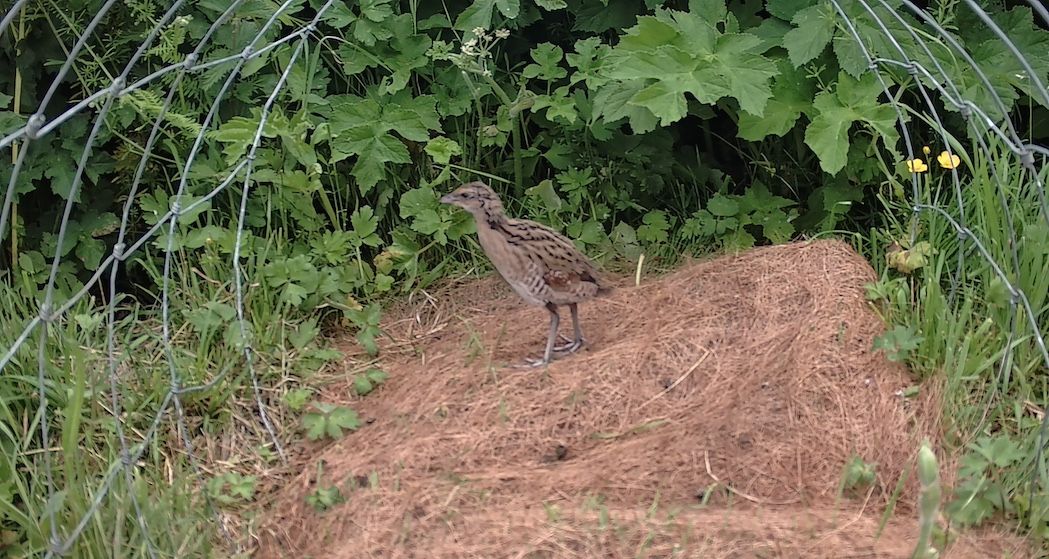
Corncrake chicks have been caught on camera on Rathlin Island, confirming a major breeding success for the species.
Their appearance is also an indication of the support given by farmers, landowners and volunteers, according to PeacePlus Nature in partnership with the Royal Society for the Protection of Birds, Northern Ireland (RSPB NI).
The chicks were photographed using wildlife cameras funded through PeacePlus Nature, a project supported by PeacePlus, a programme managed by the Special EU Programmes Body (SEUPB).
PeacePlus is co-funded by the EU, the government of Ireland, the Northern Ireland Executive and the UK government.
Corncrakes
The milestone builds on the news during the summer that four male corncrakes were heard calling on Rathlin Island.
Once widespread across Northern Ireland, corncrake numbers declined dramatically during the 1980s due to changes in farming practices and loss of habitats.
They are now one of Northern Ireland's rarest breeding birds.
The corncrake is a secretive bird that spends much of its time hidden in tall vegetation, making it notoriously difficult to spot.
During the breeding season, males can be identified by their distinctive 'crex-crex' call, which they use to attract mates.
While calling birds provide an important indication of the species’ presence, the recent photographs of chicks, taken under licence from the Northern Ireland Agency (NIEA) is the first time they have been captured on camera.
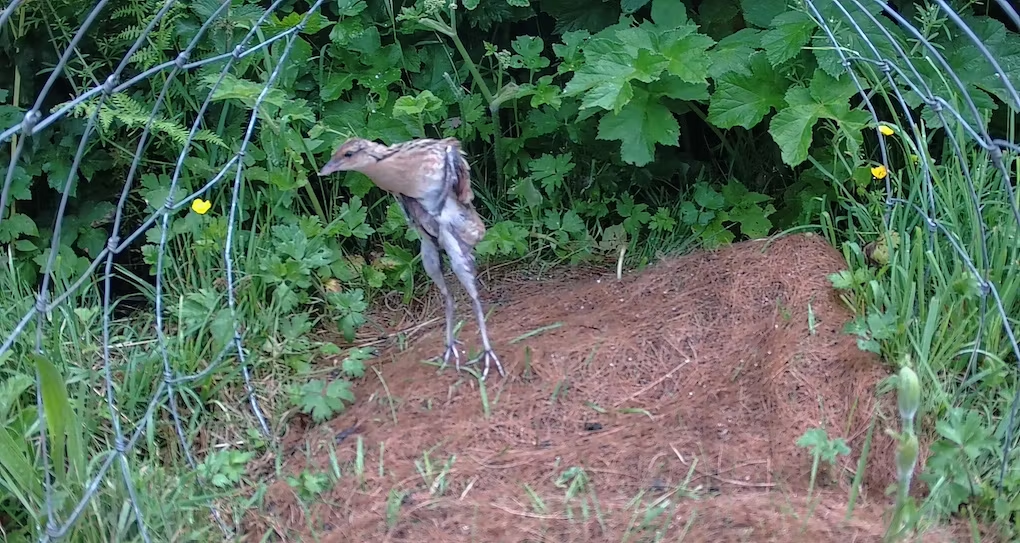
At least three broods have been identified so far through the footage.
This is said to be a great indicator that conservation efforts are helping the species reproduce in the wild.
Anne Guichard, RSPB NI’s conservation officer, said that to have images of corncrake chicks on Rathlin Island is incredibly exciting.
She said: "Seeing chicks on the island is evidence that the habitat management work and support from local farmers, landowners and volunteers is making a real difference and enables us to learn about their preferred habitats and will help guide management moving forward.
"It's a fantastic milestone for Rathlin and a reminder that conservation works when communities come together to give nature a home."
Senior programme manager, PeacePlus Nature, Kate Noble said that capturing evidence of breeding corncrakes is an important milestone for the species and for the many people who have contributed to its recovery.
"Through PeacePlus Nature, we have been able to support monitoring and conservation efforts, helping us better understand how these birds are responding to habitat restoration work.
"This is just the beginning. Over the coming years, PeacePlus Nature will continue investing in species recovery, habitat restoration and community engagement across Northern Ireland and Ireland," Noble said.