


Three innovations have been shortlisted for this year’s Royal Dairy Innovation Award and will compete for the title when judging takes place at the Royal Association of British Dairy Farmers’ (RABDF’s) Dairy-Tech next month.
The award recognises research and development innovations that are practical, relevant and have the potential to shape the future of dairy farming.
Commenting on this year’s shortlist, dairy farmer, RABDF council member and competition judge Tim Downes said: “The standard of entries this year has been exceptionally high, making the judging process challenging.
“The shortlisted innovations demonstrate real potential to improve efficiency, sustainability and profitability on dairy farms.”
Finalists
This year’s finalists are:
- Epiherd – Antler Bio
- Milk Source Heat Pump – Arkaya Energy
- CowToilet – Hanskamp
EpiHerd is a screening platform that helps dairy farmers identify and address factors limiting their herd’s true potential by combining gene expression data with actionable insights.
Using RNA testing from blood samples taken from 10% of the herd, the system measures genes and metabolic pathways.
Insights cover areas such as environment, handling, stress markers, disease resistance, and the impact of feed and supplements.
Antler Bio says that by reactivating underperforming genes, farmers can improve cow health, longevity, milk yield and quality, and resilience.
The Milk Source Heat Pump from Arkaya Energy is a “one-stop solution that promises milk cooling, hot water generation and energy efficiency”.
The system cools milk to 4°C while producing hot water up to 90°C for dairy wash-downs.
According to Arkaya Energy, by recovering heat from milk cooling, the technology can, theoretically, reduce electricity use, lower carbon footprint and cut energy costs, helping modern dairies save time, energy, and money.
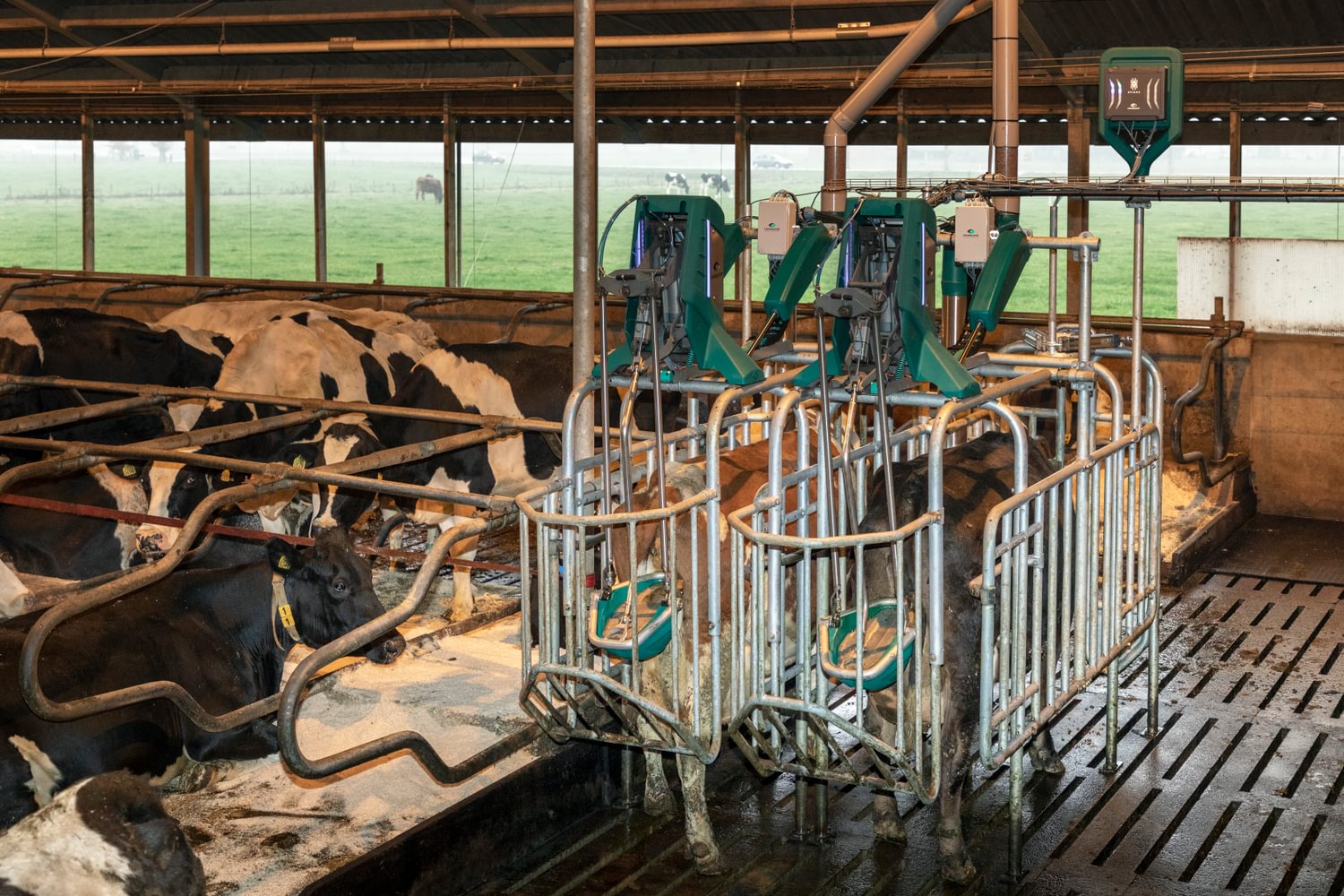
CowToilet (pictured) is designed to separate urine and faeces at source. The system collects urine before it mixes with solid manure. The urine is stored in an airtight tank, preventing ammonia formation.
Research by Wageningen Livestock Research shows separating urine and manure can reduce ammonia emissions by up to 38%, total nitrogen by 33% and nitrous oxide by 18%, while also improving housing hygiene, air quality, and animal health.
Judging
The finalists will present their innovations live at Dairy-Tech to a panel of independent judges comprising Tim Downes, fellow RABDF council member Karen Halton, and last year’s winners Anthony and Jane Marsh of HoofCount.
The winner will be announced at 3:15p.m on the Innovation Hub at Dairy-Tech and will later in the year receive a signed, framed certificate and trophy from HRH The Princess Royal.
RABDF is a UK charity dedicated to the needs of dairy farmers, established in 1876, and the organisers of this event.