Farmer launches objection to John Deere’s $99m ‘right to repair’ settlement

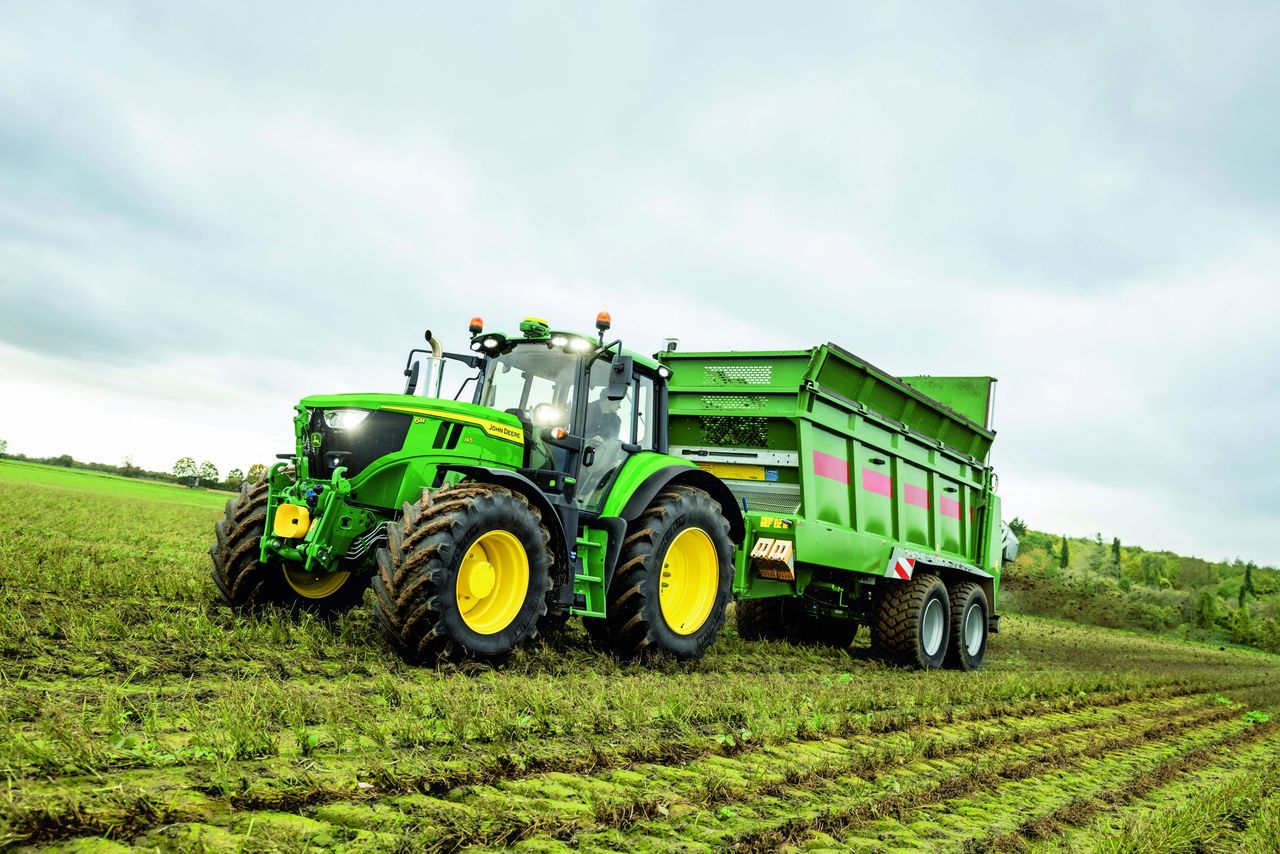
An objection has been launched by an American farmer against the John Deere $99 million 'right to repair' settlement.
Earlier this year, Deere reached a settlement agreement to resolve the long-running court case over the 'right to repair'.
In broad terms, it meant that Deere will share tools and resources to allow machinery owners or mechanics repair a vehicle or equipment without having to go to an official Deere dealership.
As part of that settlement, Deere agreed to deposit funds into a class settlement fund.
The funds would be distributed to class members outlined by a court-approved distribution plan and used to cover administrative and legal fees.
However, objection was filed on Monday (June 29) on behalf of Missouri-based Jared Wilson, who runs Wilson Farms Land and Cattle Co.
According to the court documents, Wilson became a named plaintiff four years ago "to make sure that the claims of the farmers and other absent members of the class were pursued vigorously and with their best interest in mind.
"The cost in loss of independence and liberty to our farmers and our rural communities is incalculable."
The objection states "approval of this settlement would cause manifest injury to the interests of every farmer in America".
It adds that the settlement "will grant Deere far greater protection than the class receives in either remedy or compensation".
Compensation
While John Deere's $99 million settlement has been preliminarily approved, Wilson argues through the objection that the amount is not enough to cover the repairs carried out over the past eight years.
"Class counsel's filings suggest they are likely to seek $51 million in attorney's fees and costs out of the settlement fund - a prospect that would put more than half the entire amount Deere is paying for the proposed settlement into the pockets of the class counsel," the objection states.
The document illustrates a scenario where 200,000 class members submit valid claims when the net fund of the settlement is between $48-79 million.
After deductions for attorneys' fees, costs and expenses, administration costs and incentive awards, the average recovery could be $240-395 per claimant.
"For an average farm of approximately 470ac, that equals $0.51 to $0.84/ac.
"A [cheque] for that amount would likely fail to cover the cost of a single authorised dealer service call made necessary by Deere's monopolisation of the repair services market."
The objection also refers to the yardstick damages model, which is an economic approach used in legal cases to calculate lost profits or overcharges.
The objection reads that the model "found class-wide impact, and estimated 'overcharge damages in the range of $190 million to $387.3 million'."
Current situation
On May 18 this year, Illinois district judge Iain Johnston preliminarily approved the $99 million settlement for the class-action lawsuit.
Johnston set a fairness hearing for October 29, 2026 in Rockford, Illinois to hear objections and support to the settlement.
The judge will review all feedback before deciding whether he shall grant final approval to the settlement.
While this lengthy lawsuit may soon draw to a close, it is not the last of Deere & Company's legal battles.
In January 2025, the Federal Trade Commission along with multiple state attorney generals filed an antitrust suit against Deere for the same conduct underlying the case with the $99 million settlement.
Additionally, on May 14, an Illinois-based landscaping company filed a class-action suit in relation to Deere's repair restriction on its construction and forestry equipment.
These complaints allege multiple violations of federal antitrust law, mainly centred around the alleged illegal monopolisation of the repair and replacement parts market for its agricultural equipment.
Deere has denied any wrongdoing throughout the process.