How does birth order affect piglet survival rates?

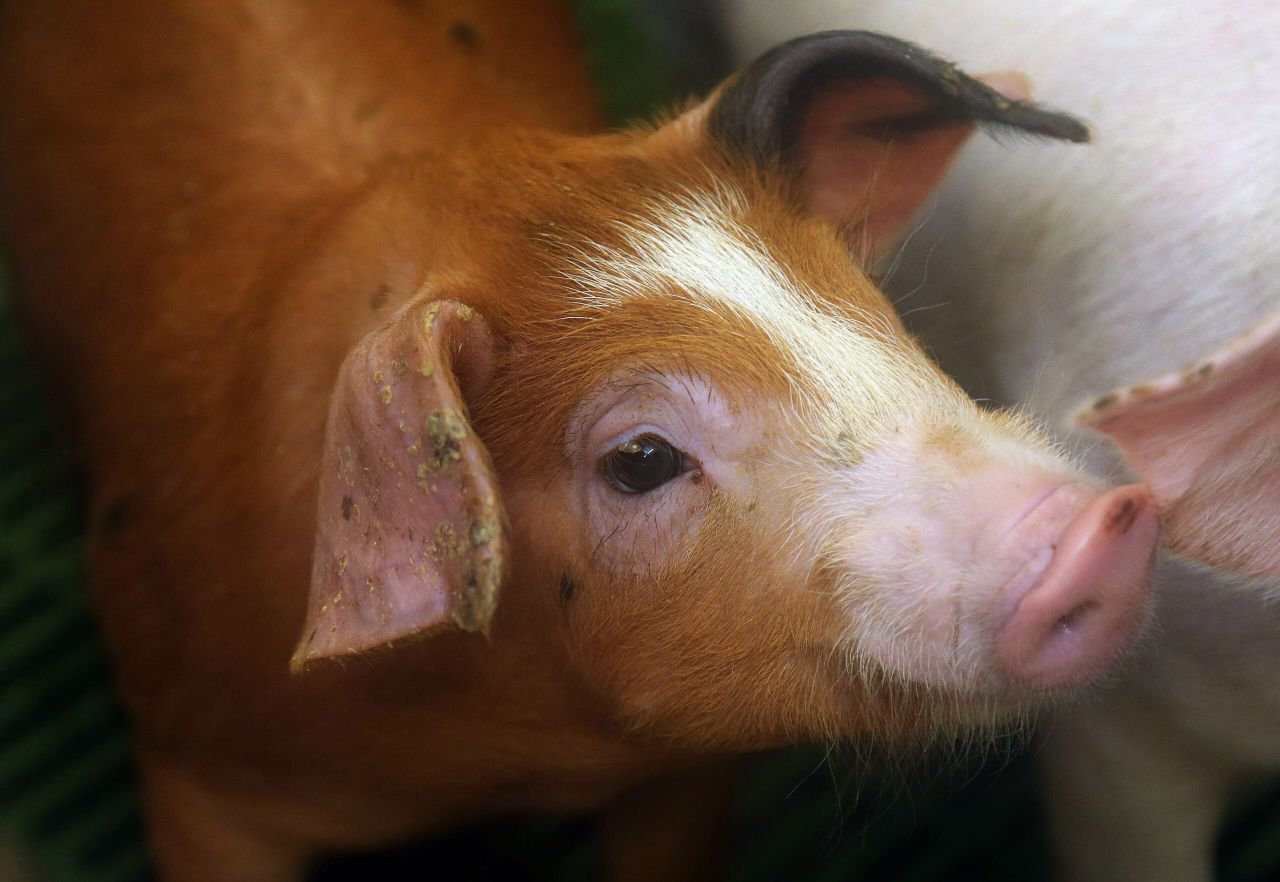
Farmers could save up to one piglet per litter by focusing on the wellbeing of pigs born late in the farrowing process.
This is according to new research from the Agri-Food and Biosciences Institute (AFBI).
The average sow delivers 17 piglets per litter but only around 14 to 15 usually survive.
A study by AFBI scientists found that piglets born later in the farrowing process are less likely to survive, regardless of birth weight.
The project looked at more than 2,100 piglets born from more than 140 sows during four separate pig trials.
Scientists tracked the birth order of the piglets and placed them into three categories: early piglets which were born from first to fifth; middle piglets which were born from sixth to tenth; and late piglets which were born from the eleventh onwards.
Survival chances
Research found that piglets born from the eleventh in birth order onwards had a "77% chance of survival, compared to 83% for early piglets and 85% for middle piglets".
The study found that piglets born early in farrowing are more "robust", meaning they are less likely to be stillborn, drink more colostrum and gain more weight in the first 24 hours of life.
The study also found that, as expected, piglets which survive lactation and the nursery period are heavier at birth (1.38kg) than piglets who do not survive (1.10kg).
However, the research showed that birth order had no relationship to birth weight and that late piglets tended to have the same weight (1.39kg) as early piglets (1.37kg).
Conference
The findings were presented at a research conference at AFBI Hillsborough on pig health, management, and environmentally sustainable production.
Dr. Ramon Muns, head of AFBI’s Monogastric Research Group, said: “Most of the management after farrowing is based on trying to save pigs at a lower weight but what we found was that birth order can be equally important to body weight.
“The higher mortality observed among ‘late’ born piglets is not due to weight but more likely due to low oxygen levels during a long birth process and subsequent low vitality.”
He added that farmers already spend a lot of time in the farrowing room making sure that all piglets have the same chance of success.
Dr. Muns said: “If we could bring the survival of ‘late’ pigs from 77% up to 83-84% survival (same level as in ‘early’ and ‘middle’ pigs), we would increase overall litter survival by 3-5% (almost one extra piglet assuming 16 total born piglets)."
He said that one extra piglet per sow (using £50/€58 as a reference/approximate price for a weaner, extra feed for the sow not accounted for) could result in approximately an additional £100 (€115) per sow per year.
The study recommended that farmers consider:
- Making sure sows have feed available around their farrowing date; the shorter the interval between the sow’s last meal and start of farrowing, the shorter the farrowing time;
- Making sure sows have easy access to water;
- Making sure sows are not constipated prior to farrowing by giving them bran or mixing a gestation and lactation diet from when a sow enters the farrowing room until farrowing;
- Being mindful that sows with a higher fat deposition are likely to have a longer farrowing;
- Spray-marking piglets when doing the farrowing checks to easily identify those born late;
- That ‘higher risk’ piglets will be the ones born in the second half or last third of the farrowing process, in addition to very small ones.
The study also recommended that farmers that practice split nursing block the access to the udder of the pigs born first rather than the heaviest ones.
Those that cross-foster are recommended to cross-foster the early born pigs because they would have had higher colostrum intake.
The study was co-funded by the Department of Agriculture, Environment and Rural Affairs (DAERA) and farmer-funded body Pig Regen.