John Deere JD18 engines powering Kansas reservoir sediment project

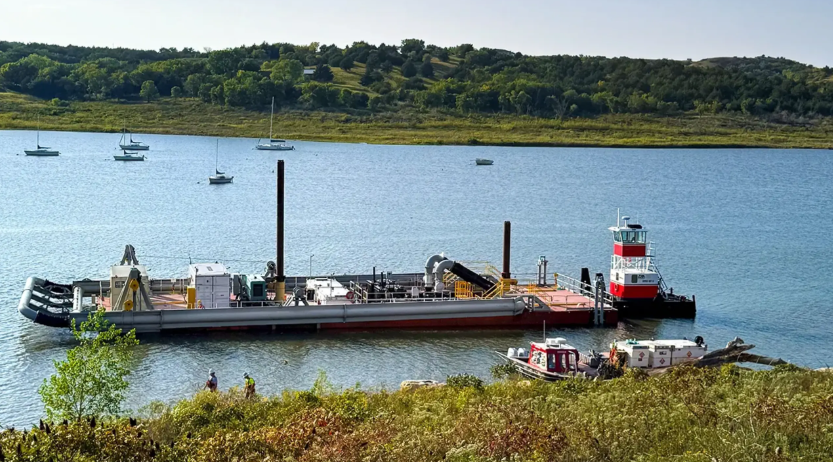
Two John Deere engines are being used to restore a key reservoir in Kansas in the US where sediment build-up is a pressing issue.
Without intervention to the sediment, which currently occupies in excess of 300m3, estimates point to the reservoir only having 25% of its original storage capacity remaining by 2074.
In autumn 2025, the US Army Corps of Engineers and the Kansas Water office launched a pilot project to test a sustainable way to reclaim the storage capacity at Tuttle Creek Lake, which is the second-largest reservoir in the state.
The project centred around a custom-built 100-foot-long water injection dredge, created by Custom Dredge Works.
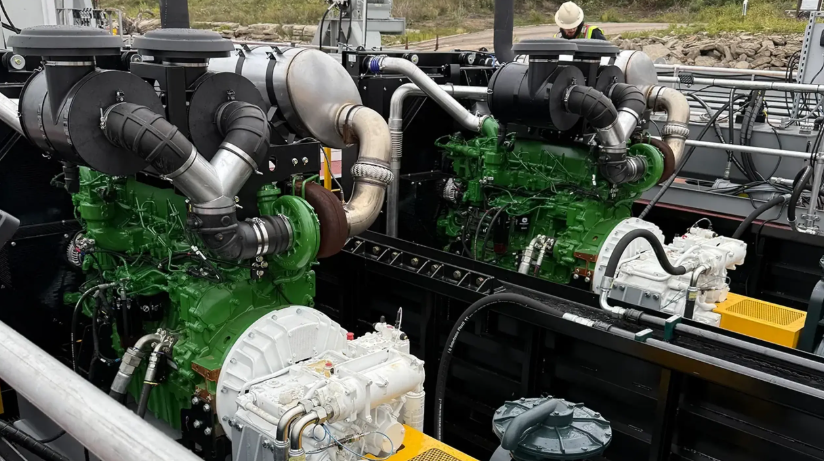
To meet the heavy-duty demands of this unique application, the manufacturer utilised two John Deere JD18 industrial engines.
JD18
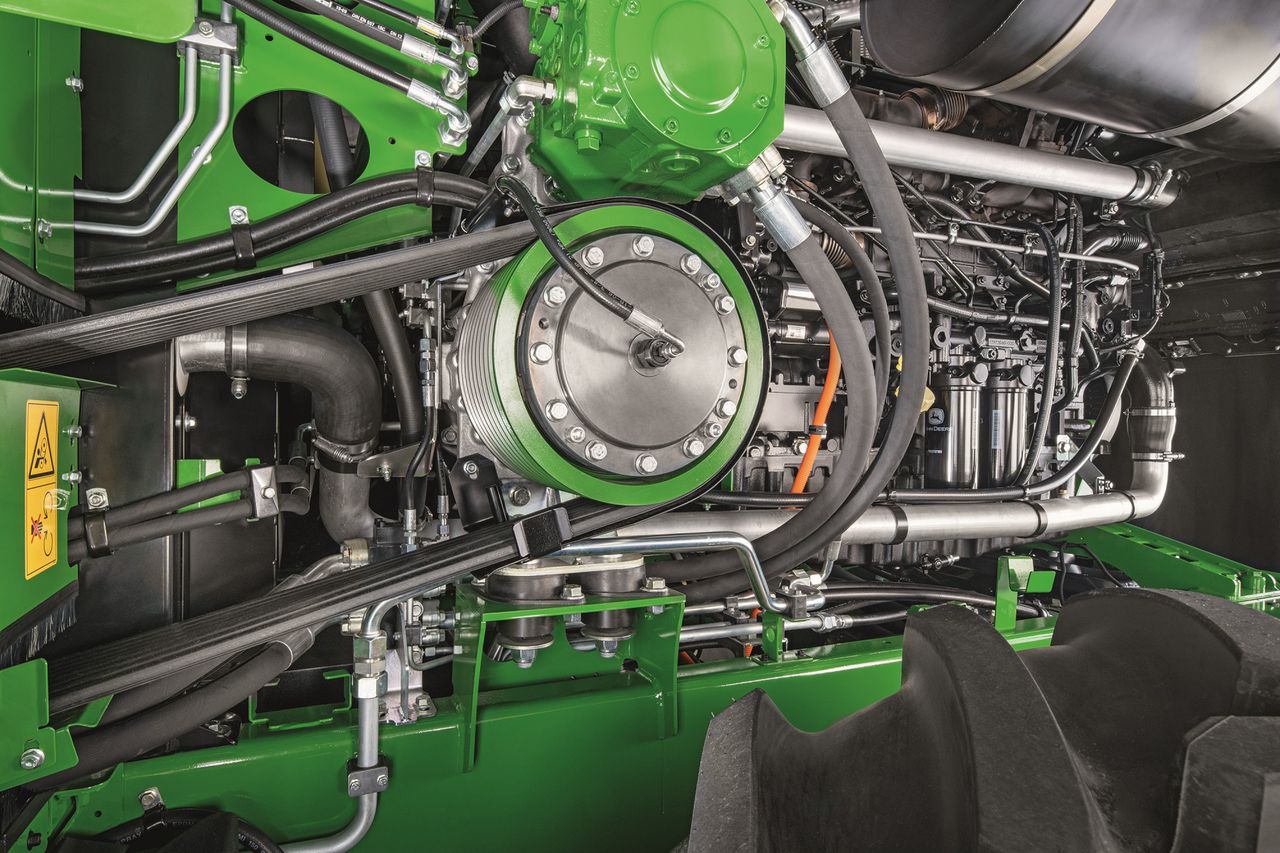
The JD18X IHR is a six-cylinder, 18L engine, weighing over 2t.
The turbocharged engine, which won the Diesel Of The Year (DOTY) award in 2021, does not require Adblue and has a dry weight of 2,119kg, with a power range of 700-908hp.
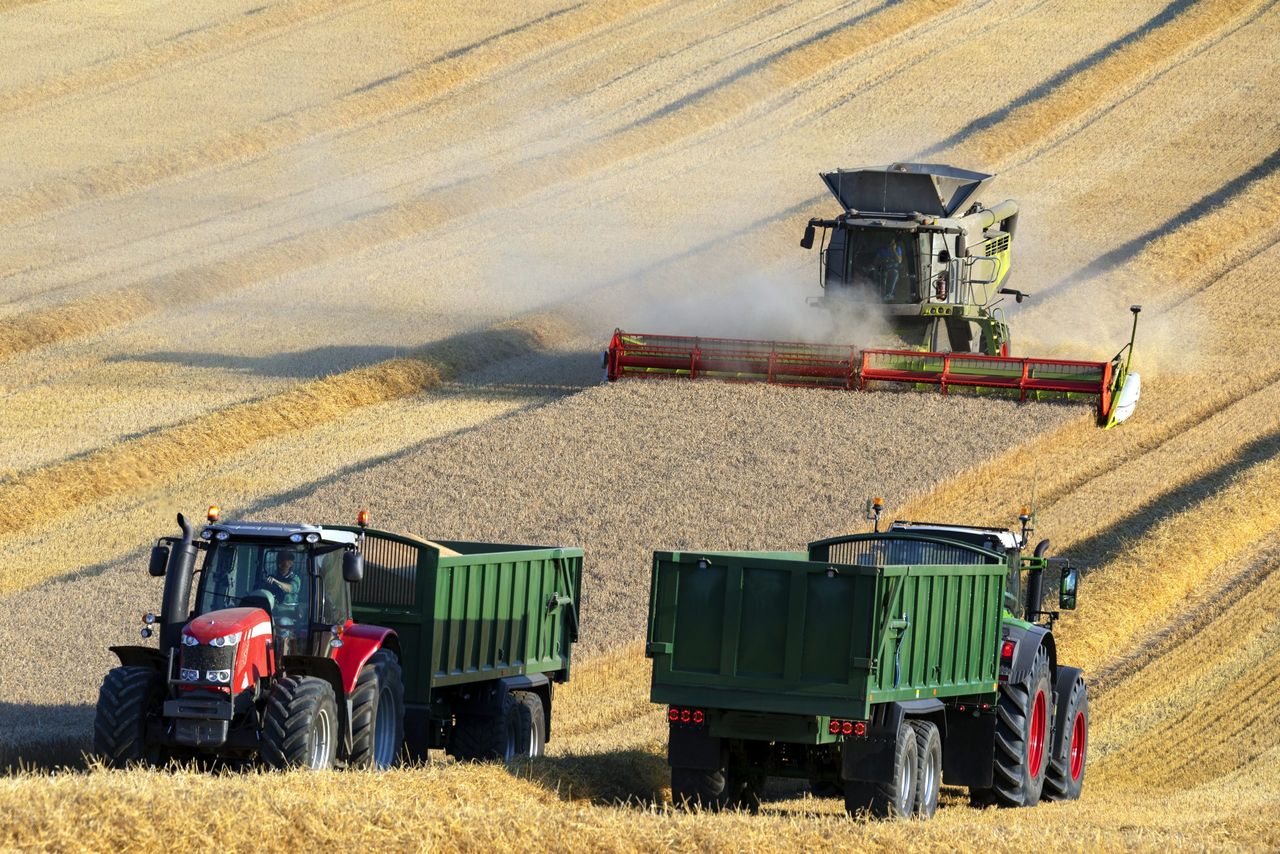
It drives John Deere's 9500, 9600, and 9700 self-propelled forage harvesters
The world's largest and most powerful full-series production tractor, the John Deere 9RX 830, also makes use of the JD18X, and manages to squeeze out an extra 5hp from the engine.
While the 9000 series has since been replaced by the F9 series, this engine is a serious piece of kit, and is capable of generating a great deal of power.
The right engine
When identifying a power solution for the Kansas dredging project, the president of Custom Dredge Works, John Jones looked for a reliable "drop-in" package rather than raw horsepower.
He ended up in contact with John Deere distributor Northstar Power, where account manager Matt Trout pointed the project towards the JD18.
The engine's power range, straightforward air system and relatively compact size were the deciding factors for the John Deere engine being used in the project.
Jones described the JD18 engine as "very easy to work with".
"It's a very polished, professional engine," he said.
Custom Dredge Works had previously used the JD18 engine for a seperate booster pump project in Virginia, where the team experienced a high level of assistance via John Deere Connected Support.
This is a proactive remote monitoring and diagnostics system that sends predictive alerts to John Deere dealers and distributors regarding potential engine issues.
It allows service technicians to perform remote diagnostics, meaning they may never have to visit the site the engine is used on.
Matt Trout said: "When that unit (in Virginia) hit a component snag early on, the power of John Deere Connected Support proved to be the ultimate safety net."
Jones spoke about the experience with the support system, saying: "The mobilisation was outstanding.
"With other companies, you can wait a month for a fix. Northstar jumped on it quickly. We had the customer back to work in just a few days".
Service technicians can also arrive on-site with the correct parts and tools when they know the issues via the system's health checks.
Tuttle Creek project
The project at Tuttle Creek utilises a specialised water injection method to clear sediment.
Instead of trying to suck mud through miles of pipe, the JD18 engines drive two 24in pumps that inject water directly into the lake bed.
This water injection stirs the silt into a dense current so that when the dam's spillway opens, gravity carries the suspended silt particles downstream just like a natural river would.
According to Jones: "The JD18 serves as a versatile power hub.
"We use the engine's integrated auxiliary drive to power a specialised packing pump, which keeps the main pump seals cool during 20-hour workdays.
"By utilising the rear gear train for auxiliary power, the JD18 provides the direct power necessary for these demanding shifts," he said.
As it stands, the project currently has no plans to facilitate the silt being used as fertiliser, however the reintroduction of the natural sediment will help heal the downstream river ecosystem, which has received less sand and silt since the dam was built.
Downstream from Tuttle Creek was once a vast floodplain, however, with the construction of the dam, the once devastating floods were now far more restricted.
This also in turn meant that the farmland below Tuttle Creek lost out on the highly fertile, thick layer of alluvium.
Long-term project
The first phase of the project is now complete, however, this pilot is part of a multi-year strategy aimed at ensuring the viability of the reservoir into the next century.
US Army Corps of Engineers project manager and planner for the Kansas City District, Laura A. Totten confirmed that the pilot was the first of three dredging periods planned.
She said: "The data and information from this project will be used to support a determination of using water injection dredging at Tuttle Creek Lake".
John Jones also spoke about the long-term nature of the project, saying: "This project is about more than just clearing silt; it's about a long-term commitment to our infrastructure.
"By using water injection, we've found an effective way to move massive amounts of material while letting the river's natural energy do the heavy lifting".
By integrating the John Deere JD18 engine into the project, Custom Dredge Works has found a unique yet apt power solution for the operation.