

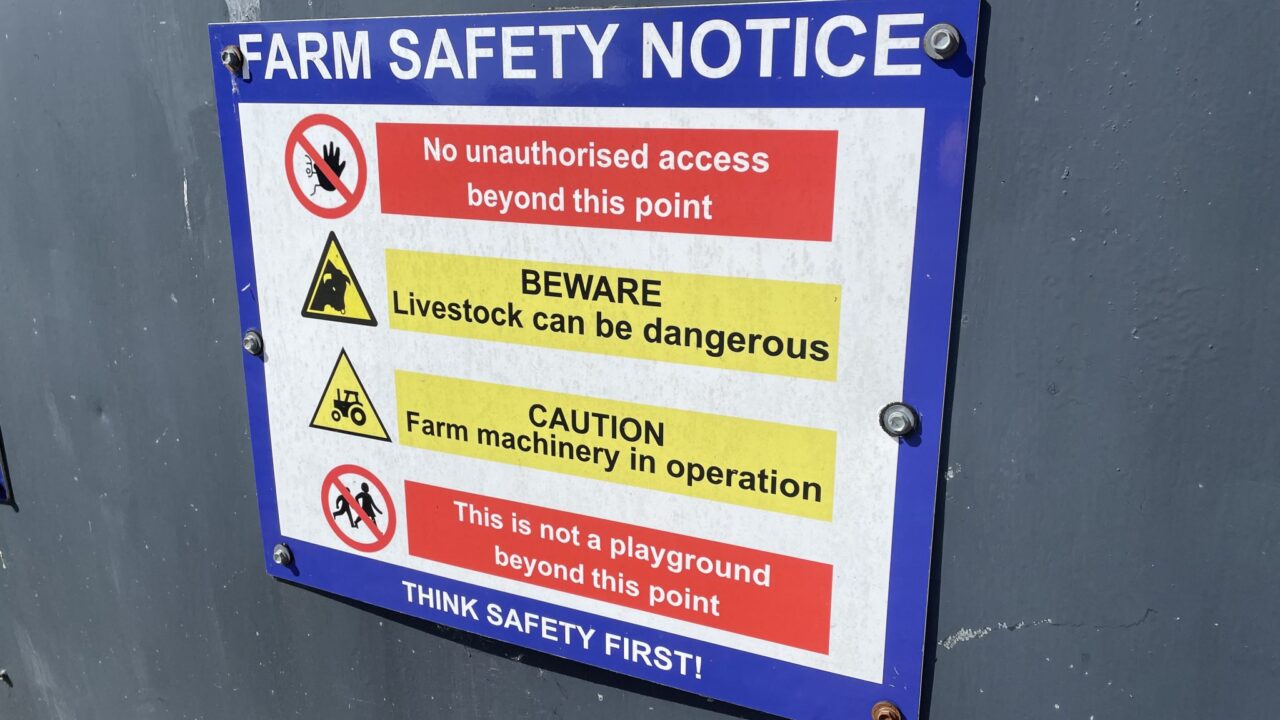
Livestock and Meat Commission (LMC) chief executive, Colin Smith, has highlighted the significance of a new farm health and safety campaign for Northern Ireland.
The initiative highlights the specific challenges that face older farmers in this regard.
The publicity campaign has been developed by the Health and Safety Executive (HSE) with the full support of Northern Ireland’s Farm Safety Partnership (FSP).
Smith said: “I attended the launch of the new campaign in full recognition of the fact that men and women over 60 years-of-age constitute an extremely important cohort of those working within the beef and lamb sector at farm level.
“It is also important that farmers with this tremendous level of knowledge are allowed to continue working, should they choose to do so.
“They have so much to offer the livestock sector in terms of what they can physically achieve and the experience they can pass on to younger generations.”
Smith noted that the commission is a founding member of FSP.
“My attendance at the launch event has encouraged me to reflect at length on the role that LMC must always play in promoting the attainment of the highest possible health and safety standards on all our farms,” he said.
“And this is a matter that I will be discussing with LMC board members as a matter of priority.”
Farm safety
Meanwhile, agriculture remains the most dangerous profession that anyone can follow in the UK and Ireland.
According to Smith, this is why securing the highest possible health and safety standards on farms is “hardwired” into the commitments made by LMC to its farmer levy payers.

The most obvious example of this is to be found in the standards established for the Northern Ireland Beef and lamb Farm Quality Assurance (NIBLFQAS) scheme. And these continue to evolve.
Recent reviews of NIBLFQAS have served to put a number of key safety-related practices at the very heart of the management standards expected of local cattle and sheep farmers.
In addition, the Commission has used its presence at Balmoral Show over many years to communicate a very clear health and safety message to farmers.
This promotional activity has had a very strong focus on the need to keep young children living on farms safe at all times.
Slurry management
Slurry management has also been a key focus of the health and safety standards established in the context of NIBLFQAS.
“The current quality assurance standards specifically focus on the maintenance of slurry stores,” Smith said.
“They also address the condition of livestock handling facilities on farms.
“NIBLFQAS requires members to meet strict standards, where farm safety is concerned.
“Since 2022, participants in the scheme must sign a declaration that they manage risks, including handling facilities and machinery, to prevent accidents.”
All of the safety standards referenced in the current NIBLFQAS standards fully comply with the Health and Safety Executive’s Slurry, Animals, Falls and Equipment (SAFE) criteria.
The LMC’s chief executive further explained: “NIBLFQAS standards are reviewed every three years. Increasingly, health and safety has taken greater prominence within this process.
“And this will continue to be the case. One farm accident is one too many.”
Smith called on all stakeholders within agriculture to “continually re-double their efforts in promoting the attainment of the highest possible health and safety standards on our farms”.
“At LMC we will continue to work closely with the Health and Safety Executive and the Farm safety partnership in this regard” he added.
“Health and safety is a fundamental requirement of a sustainable farming business and should be regarded as an essential part of farm business management.
“The personal costs of injury and ill health can be devastating.
“Life is never the same again for family members left behind after a work-related death, or for those looking after someone with a long-term illness or serious injury caused by their work.”
Related Stories

Decline in number of reported incidents of farm equipment theft

Livestock the ‘leading cause’ of serious facial injury on farms – study

Gardaí issue safety advice for slurry spreading season
.editor-styles-wrapper .wp-block-acf-related-stories-block {
max-width: 960px !important;
background-color: var(–color-gray-default);
padding-inline: 40px;
padding-top: 8px !important;
padding-bottom: 20px !important;
}
