Now is the time to tackle lameness by investing in roadways

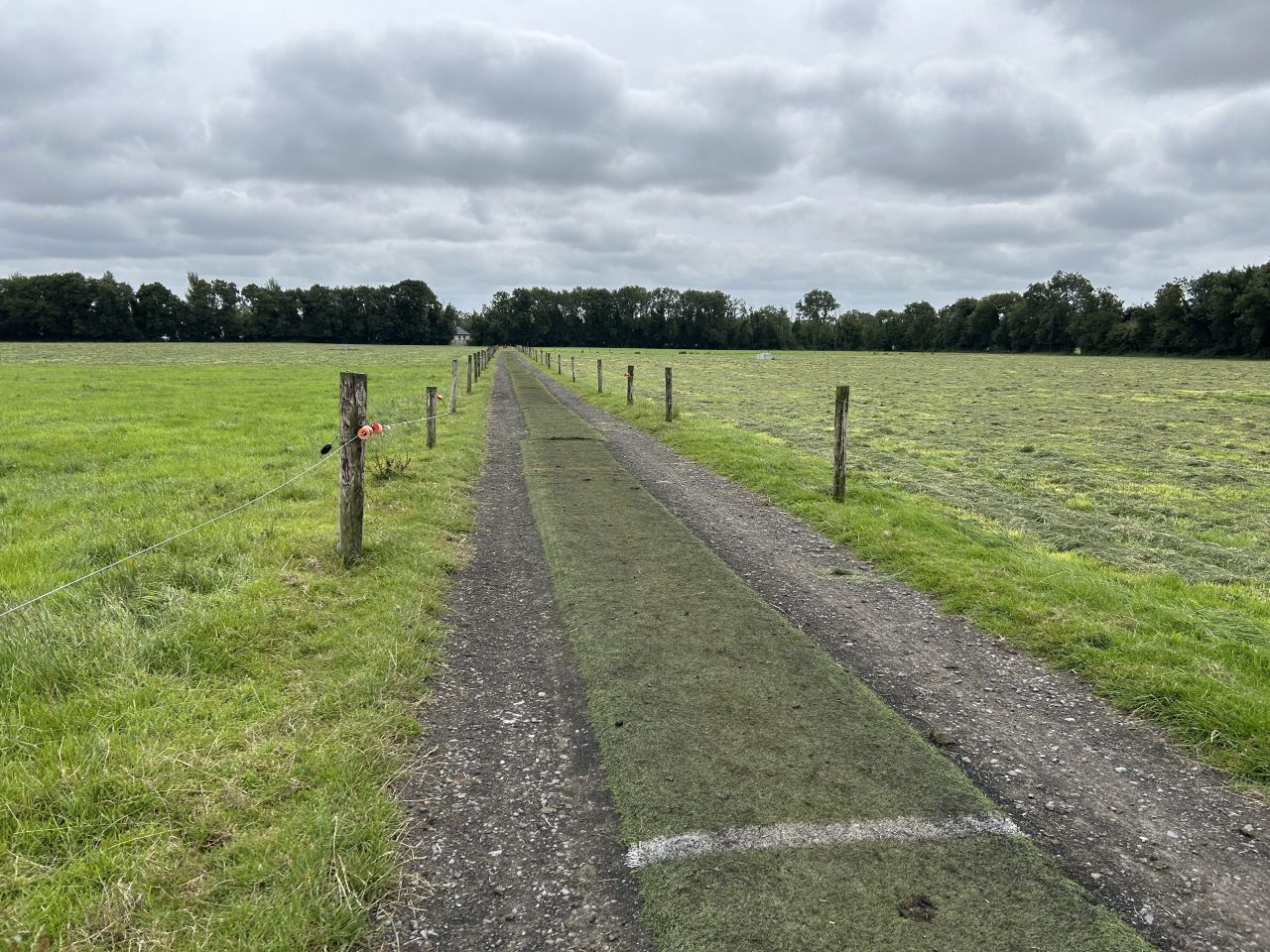
With the grazing season coming to an end and farms preparing for winter housing, it is time to start ticking off the jobs on the winter list.
One of those jobs could be investing in roadways and paddock access, to improve pasture accessibility next spring while reducing lameness.
Cows will not go lame in a field, but will easily pick up issues while moving to and from the parlour, whether it is due to poor design or unmaintained surfaces.
With the workload quietening down and the conditions proving ideal, now may be the best time to rectify any issues.
It may seem counterintuitive to be spending money on roadways while cashflow is tight, but if there is a high lameness prevalence in the herd, as much as €15,000 is being lost annually as it is.
Lameness
Poor roadways are often one of the biggest culprits for lameness, as uneven, stony surfaces can lead to trauma and bruising of the hoof, while wet and muddy surfaces can cause softening of the claw horn and skin.
White line disease is one of the most common causes of lameness, as the white line is one of the weakest parts of the sole, and it can be easily damaged by grit or stones.
This is why well-designed and well-kept roadways are crucial in an effort to reduce lameness, while improving efficiency.
Well-maintained roadways also have the ability to reduce the amount of mastitis in the herd, as cows will be cleaner.
Currently, it costs approximately €40/m to construct a 4m wide roadway, meaning each kilometre costs approximately €40,000.
However, unless you are starting from scratch, costing does not have to be this high.
If you do have roads in a dire state, keep work small and consistent to fit the budget, starting with high traffic areas such as the stretch from the parlour.
Roadway design
When designing the roadway, you first need to calculate how wide it needs to be based on your herd numbers to ensure good cow flow.
E.g., a herd with 150 cows or fewer should have a roadway width of 4.5m, adding an additional 0.5m for every 100 extra cows.
Areas of congestion must also be considered as these can be a problem areas in terms of lameness.
Congestion areas are usually at the entrance of the holding yard, bends, or any part of the road which may have a water trough.
These areas may need up to 1m of extra road, with fences back an additional 0.5m on each edge of the road; avoid sharp bends where possible.
A sweeping bend will allow cows to continue walking three or four abreast, stopping cows from bunching or continuously wearing the inside.
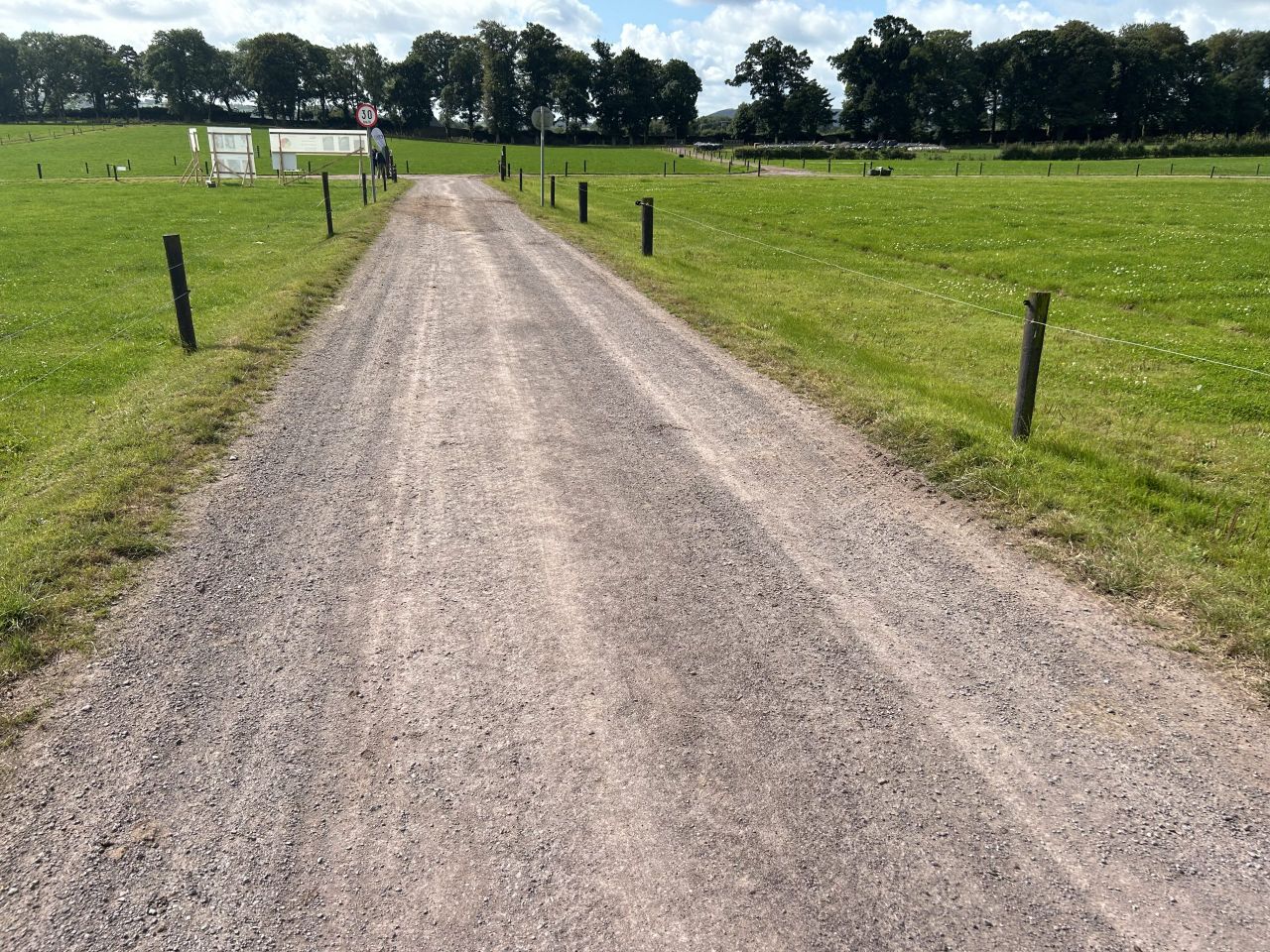
As it stands, fences should always be 2ft back from each edge of the road.
A cow will not walk up against a fence, meaning if fencing is right up to the edge, grass and muck will build up, trapping water and deteriorating the road's surface.
Most farms keep fences tight to the road to utilise field space, but it must be remembered, a cow has a 2ft-long neck and can easily graze out under the wire.
If the fence can not be pushed back, install channels every 5-10m to allow water beyond the grass verges.
Once you have calculated your sizing and fence positioning, you must then calculate the correct fall to allow water drain away and prevent the road from becoming muddy, especially in spring and autumn.
It is typically recommended to have a crossfall at a ratio of 1 in 25, e.g., a 4m wide road should be 160mm higher on one side than the other.
With the road mapped out, you can go ahead and remove approximately 10-15cm layer of topsoil, after which you should be ready to lay stone.
Most choose their stone based on what is in the quarry located nearby, but each stone is different.
Shale is flat, soft and comfortable on cows' hooves; however, it breaks down easy especially, under machinery.
In contrast, limestone is more durable under machinery, but is harder on a cows' hooves, while sandstone falls in the middle of the two as a fairly durable and relatively comfortable stone.
A layer of with 804 (T1) gravel packed in well, ideally with a vibrating roller, can go on top of the coarse material, before finishing the road with a 25mm thick binding.
Many farmers are also choosing to add astroturf to laneways to provide extra cushioning to the hooves, but there is no point in laying this on a poor quality road.
Some farms also install a 3" or 4" plinth to stop stones kicking on to concrete.
If doing this, farms must put concrete on the side of the road to prevent a hole building where cows end up stepping back into.
On top of all this, do not push cows excessively using a quad or dog, let them stroll at their pace or consider using a system like a batt latch.