

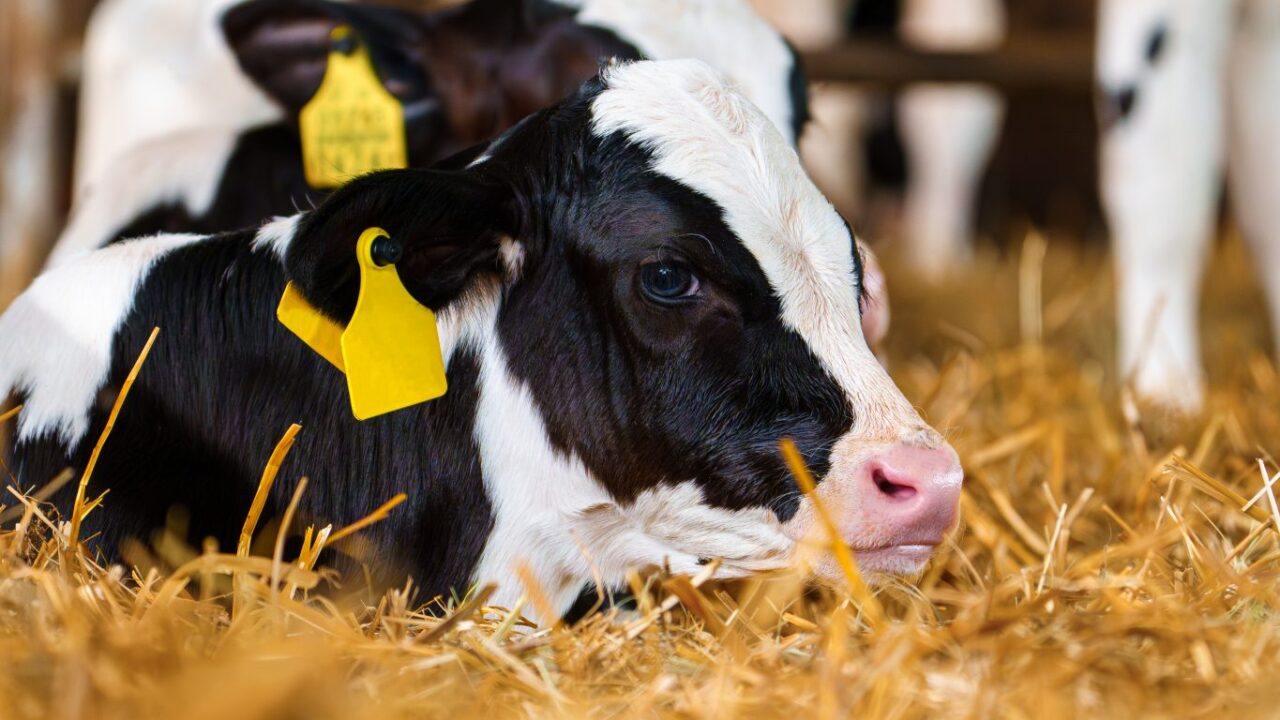
With spring calving well underway, farmers must start focusing on the rumen development of their young calves.
Rumen development is an essential part of ensuring the health of your future replacement heifers, as well as their performance and production when they are mature.
Once a calf is born, it should be introduced to concentrates and water – these are the two key ingredients to successful rumen development.
The sooner these are made available to the calves, the sooner the rumen starts developing, leading to healthier calves and earlier weaning off milk.
Rumen development
The rumen only accounts for 25% of the digestive tract when calves are first born, but once it is fully developed, it makes up 70%.
Therefore, when a calf is born, the rumen is not capable of digestive action and the calf depends on a milk-only diet, as they are essentially monagastrics.
The rumen begins developing from day one; however, it must be developed to become active, with the transition phase taking between four and eight weeks of the animal’s life.
By week 12, the rumen should be fully developed and capable of eating and digesting a a diet similar to an older animal.
However, this is not going to occur without the gradual introduction of hay, straw, concentrates, and water.

A freshly born calf’s rumen does not contain any bacteria, and so the bacteria that makes up the rumen comes from the environment and the feed that the calf eats.
Therefore a calf starter ration should be introduced very early on in a calf’s life so bacteria can begin developing in the rumen.
Calf starter contains carbohydrates in the form of starch which is broken down to volatile fatty acids (VFAs) through bacterial fermentation.
Acetic and propionic acid are important sources of energy for calf growth, but it is the butyric acid that drives the development of the rumen, as it is used as the main energy source by the rumen wall cells.
VFAs in the rumen reduce the pH, providing ideal conditions for bacteria to digest starch to produce more propionic and butyric acid to provide more energy for rumen development and growth.
Meanwhile, roughages such as hay and straw will act as a source of fibre and promote the growth of the rumen’s muscular layer, as well as improving the health of the rumen lining.
Water
Calves should have access to clean fresh water ad-lib from birth.
Water troughs should be at the front of the pen so they can be cleaned regularly and prevent the bedding from getting damp.
If there is more than 20 calves in a pen, two water troughs should be available.
Farmers need to remember that milk replacer does not act as a substitute for fresh water.
Liquid in the rumen is also an essential element of bacterial production. Without it, bacteria will not grow and rumen development will be affected.
