

Ulster Bank is working with milk producer clients in Northern Ireland on the basis of an assumed five-year rolling milk price average of 35p/L.
The bank has also outlined that feed costs are expected to remain relatively favourable, from an input perspective, during 2026.
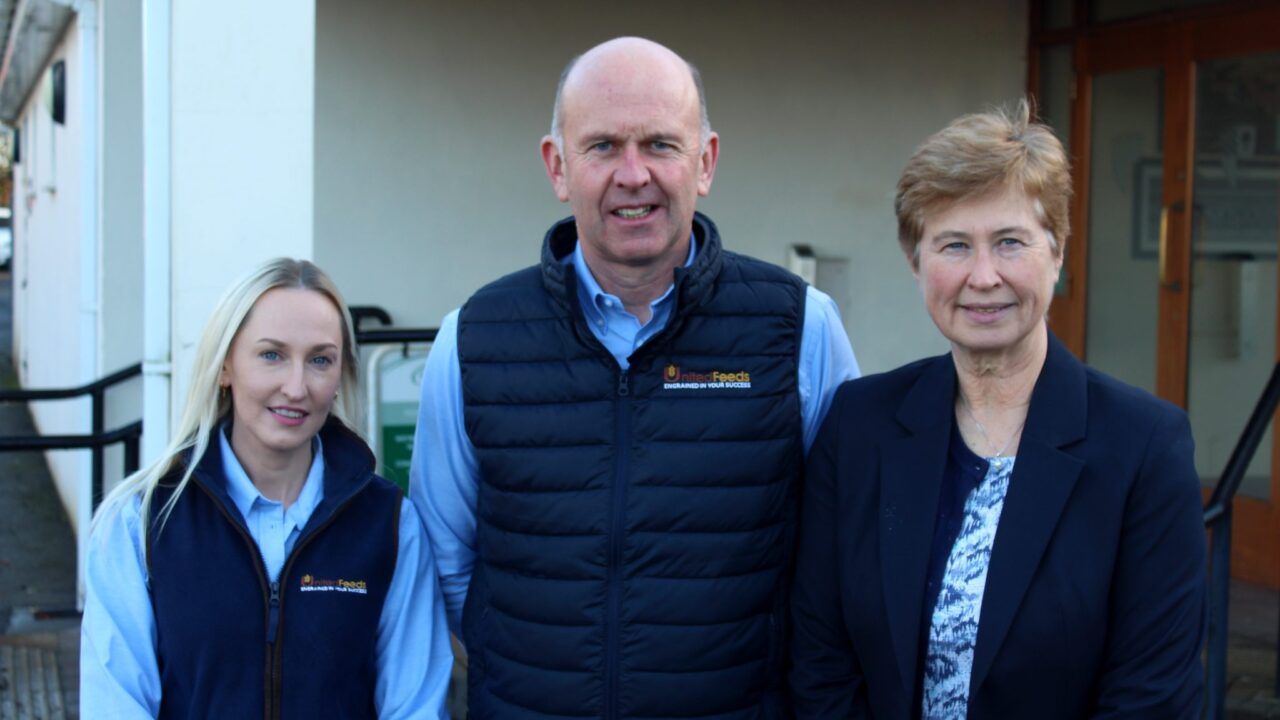
Ulster Bank business manager, Rhonda McClelland, spoke at a recent dairy farmer meeting in Ballymoney, Co. Antrim, hosted by United Feeds.
Ulster Bank has confirmed that most of the sectors making up agriculture in Northern Ireland performed well in 2025.
The latest bank borrowing figures for farming total £922 million, significantly below the litmus £1 billon figure, with farmer deposits sitting at £731 million.
Meanwhile, asset finance commitments made by farmers in Northern Ireland currently come in at some £300 million.
The equivalent figure for merchant credit is £100 million.
According to McClelland, milk output in Northern Ireland had increased by 9% during 2025.
The corresponding figures for the UK and the Republic of Ireland were 6% and 7%.
Driving this trend was a combination of strong farm gate milk returns and competitive compound feed costs.
The significant margins generated on the vast majority of dairy farms throughout the first three quarters of 2025 had allowed farmers to drive down their borrowing commitments very significantly.
Rhonda McClelland explained: “The recent drop in milk prices is concerning.
“Milk production is a cyclical industry and it should be pointed out that the fall-off in market returns that we are seeing now is not as dramatic as that witnessed during 2015/2016.”
Factors cushioning the recent drop-off in milk prices include the winter milk bonuses available from all the dairy processors in Northern Ireland in tandem with the very strong prices now available for cull cows and dropped calves.
“But producer prices could be depressed for up to 12 months,” McClelland continued.
“It may take a 4% reduction in global milk output to restore markets.”
Under these circumstances Ulster Bank is expecting that cash flow issues may start to become apparent on dairy farmers during the second quarter of this year.
Farm enterprises are therefore strongly encouraged to compile accurate cash flow projections for their businesses.
This will allow the identification of the funding gap that exists in order to maintain an adequate cash flow level.
Only when these projections have been completed should farmers approach their banks.