

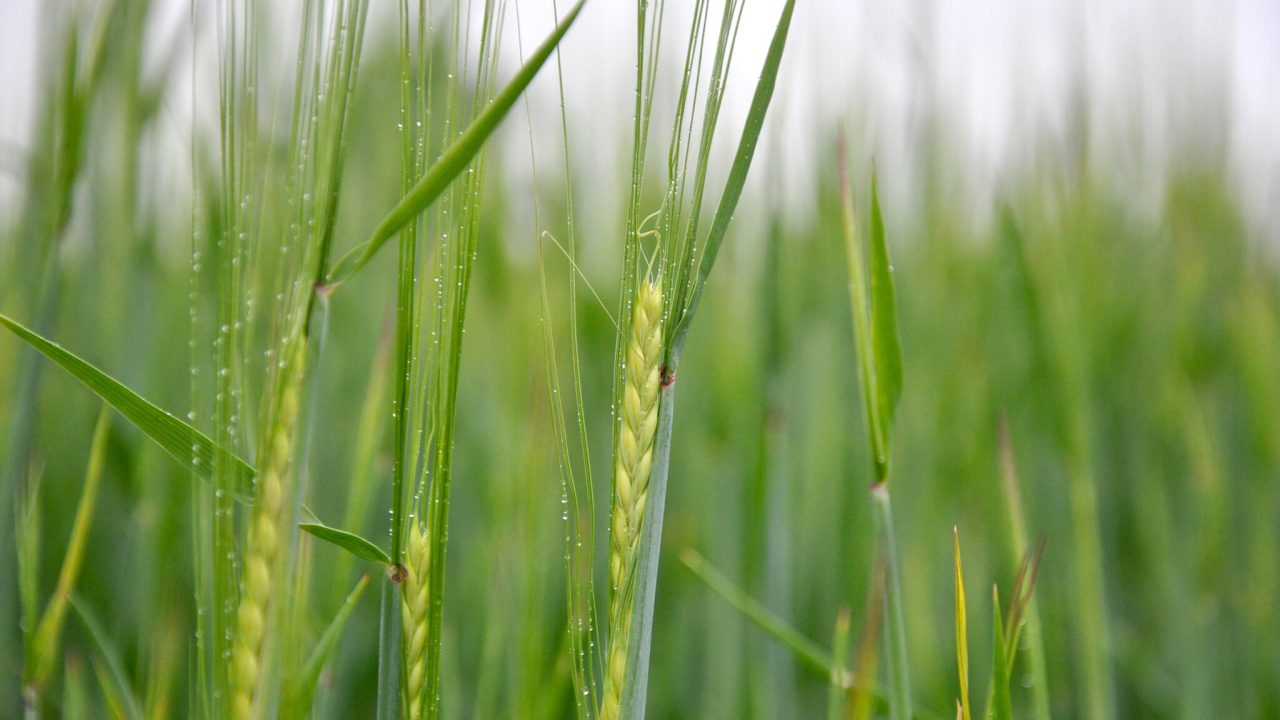
The Agricultural and Horticultural Development Board is to launch a new Barley Yellow Dwarf Virus (BYDV) management tool.
The web-based facility will be rolled out in time for the 2026 autumn planting season.
BYDV can cause major yield losses in winter cereals. Manage virus-spreading aphid vectors is important to prevent its spread.
According to AHDB agronomists, when neonicotinoid seed treatments were withdrawn in 2018, it “set back aphid management by decades and saw a return to the routine use of foliar pyrethroid sprays in the autumn”.
“Although pyrethroids are relatively cheap, every spray puts pressure on non-target organisms and increases insecticide-resistance risks,” AHDB said.
“This means they need to be used carefully.”

An existing BYDV management tool has been available from AHDB for some time.
The scope of the updated version reflects AHDB-commissioned research undertaken by agricultural consultancy Agricultural Development and Advisory Service (ADAS).
This work has led to the development of a new model that accounts for additional measures of risk and provides comprehensive information on BYDV.
Bird cherry-oat aphid
For example, although bird cherry-oat aphid, rose-grain aphid and grain aphid all transmit BYDV, the ADAS work confirmed that bird cherry-oat aphid is by far the most significant virus vector across the UK, so the model was trained on this species.
Rose-grain aphid is rarely seen in winter crops (it overwinters on roses), and grain aphid flies in relatively low numbers in the autumn.
This has been confirmed by recent in-field monitoring work and results from the Rothamsted Insect Survey (RIS) suction-trap network (across England and Wales).
Although grain aphids can spread BYDV, this only happens in limited situations.
For example, high summer infestations use green bridges (such as grass weeds or cereal volunteers) to move to following cash crops.
Early emerging crops (before mid-September) are affected the most.
It is also known that grain aphid transmits BYDV less efficiently than bird cherry-oat aphid.
Suction trap data
Suction trap data is representative of aphids flying over a radius of about 80km, according to RIS.
ADAS found that the traps provide a good indication of aphid migration trends, crop infestations near traps (especially up to 10km away) and the proportion of aphids carrying virus up to 40km away.
The investment in skill, time and money needed to locate and identify aphids and determining if they carry BYDV means that suction-trap results provide a very useful proxy for modelling in-field virus pressures.
In addition to the number of aphids carrying BYDV, the new model considers many other data sources.
These include minimum, maximum and mean temperatures as well as crop-specific information such as: cereal type, sowing date, plant populations, treatment costs, predicted yield, estimated grain price and location risk factors.
Initial validation work found the model accurately predicted BYDV risk, based on symptom development in untreated crops.
It also guided control as good as or better than the current BYDV tool in treated tramline and plot trials.
Moreover, this was achieved with fewer insecticide applications and provided yield benefits – specifically where BYDV was present.