

Regulatory frameworks and targets will increasingly define the future shape of agriculture throughout the UK, a British academic has claimed
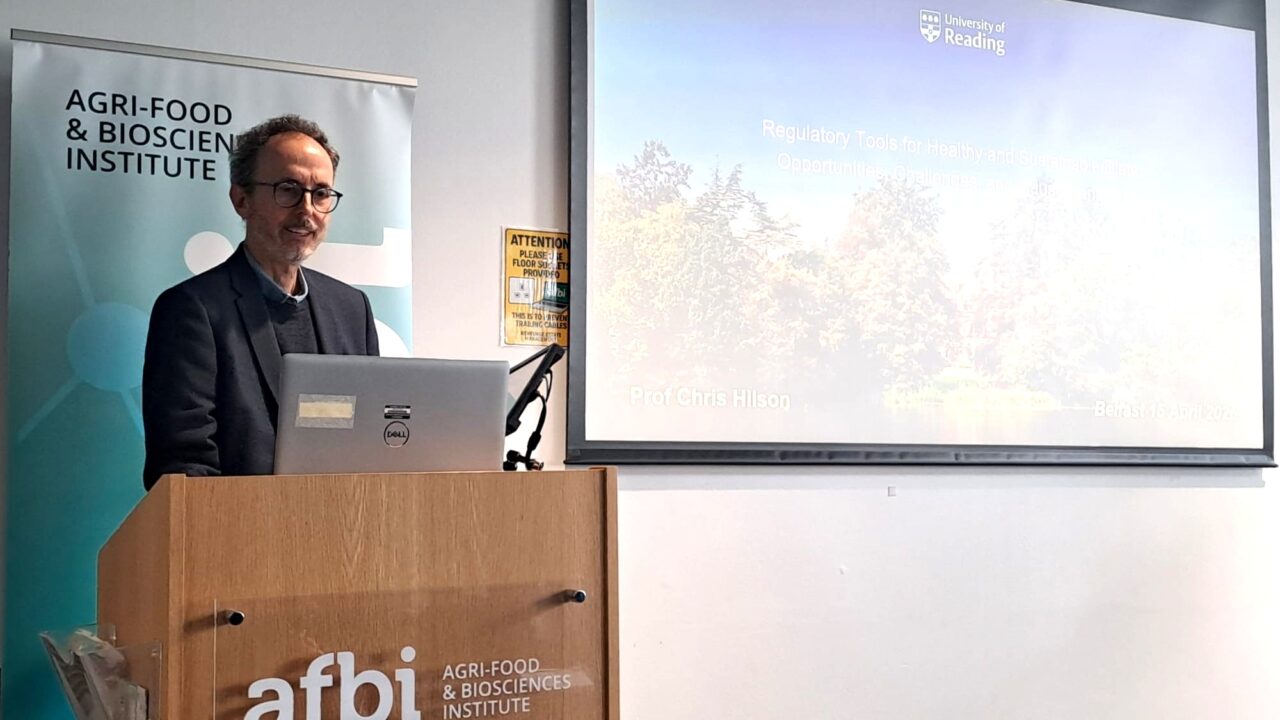
Prof. Chris Hilson, from the University of Reading made this assertion while speaking at a recent Agri-Food and Biosciences Institute (AFBI)-hosted conference in Belfast.
The event was entitled: ‘From Plate to Policy; Diet Transitions and the Role of International Supply Chains’.
Hilson also indicated that the farming sector will have considerably less leeway in the future, where the self policing of policy standards are concerned, adding that agriculture must do more to communicate its own strategic priorities with policy makers and the public at large.
Food consumption changes
The backdrop to the conference was the completion of a major economic research project, which had been established to assess food consumption changes linked to the transition to a healthy, sustainable diet in the UK.
The work also investigated the link between improving national diets and the impact on the environment.
Current dietary guidelines in the UK foresee a reduction in dairy and meat consumption with a greater consumer focus placed on fruit and vegetables.
The research project involved teams from AFBI, the University of Reading, Cranfield University, and the University of Kent.
Carbon footprint
One of the most significant outcomes from the modelling undertaken was the identification of the role played by discretionary foods in defining the carbon footprint of the entire farming and food sector.
It has been estimated that the consumption of cakes, biscuits, sugary drinks, deep fried foods, all of which are extremely high in calories, account for approximately 30% of the greenhouse gas emitted across both industries.
From a farming and food supply chain perspective, the key role played by multiple retailers in the UK was highlighted.
However, the research also confirmed that the margins generated by supermarkets on the food lines they sell is extremely low on a per unit basis.
Their business model is wholly centred on scale of operation. Moreover, there is independent data to confirm this strategy.
Technology
Meanwhile, the generation of data linked to every aspect of agriculture and food production will become increasingly important during the period ahead.
The tendency of many farmers to hold back on providing information linked to the performance of their own business was cited as a key challenge facing production agriculture throughout the UK and Ireland at the present time.
There is growing evidence that significant investment in new technologies is taking place across the various farming sectors
However, it is important that policymakers are fully aware of the exact impact this commitment is having in terms of improved efficiency levels and reducing carbon footprint across agriculture.
A greater commitment to benchmarking on the part of farmers is the most obvious way of securing this data.