

The war in Iran has created a surge in energy costs, reportedly raising fertiliser prices by 60% and creating a knock-on-effect on food systems.
An article published in the Global Food Security journal has highlighted the impact the unrest in the Middle East has had on food supplies and the potential increase to the cost of food on supermarket shelves.
It states that modern food systems are “structurally dependent on stable energy markets, open maritime trade routes, and predictable geopolitical conditions”.
The article highlighted that energy is “central” to food systems, with fossil fuels powering “irrigation, fertiliser synthesis, cold chain logistics, and freight transport.”
It said that modern food systems consume an estimated 10 fossil fuel calories per food calorie produced.
Strait of Hormuz
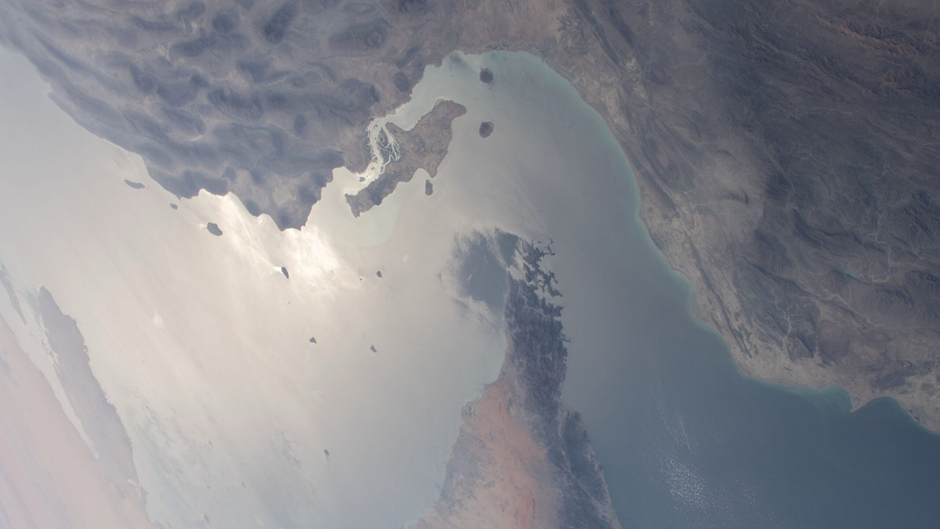
According to the article, the Strait of Hormuz, through which approximately 20% of global petroleum and one-fifth of liquefied natural gas (LNG) trade transits daily, represents one of “the most critical chokepoints” in global food systems.
The International Energy Agency (IEA) reported that flows of crude oil and oil products through the Strait of Hormuz have fallen from approximately 20 million barrels per day before the war to “a near-trickle”, prompting the release of 400 million barrels of its emergency reserves by its member countries.
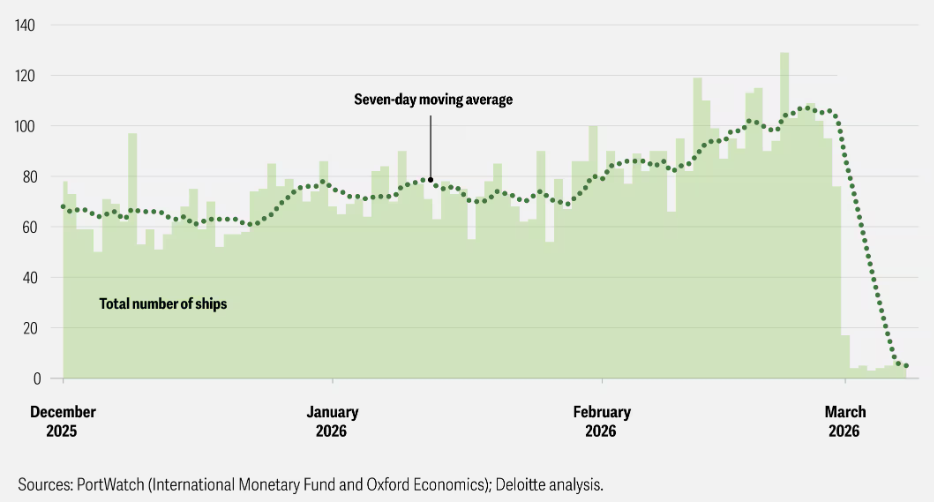
According to Oxford Economics, if oil prices spike to €140/barrel, the global economy will be pushed into a recession.
“The current war between the US and Iran therefore carries direct food security implications and risks that extend far beyond the Arabian Gulf region,” the report added.
Ripple-effect of crises
The report outlined how “the 2007-2008 global food price crisis demonstrated how combined energy shocks, biofuel mandates, export restrictions, and commodity speculation can produce double or triple spikes in cereal prices”.
The Covid-19 pandemic revealed that “simultaneous multi-node supply chain disruptions” can collapse food access for millions even without an energy shock, and that countries with “pre-existing social protection systems fared significantly better in safeguarding household food security.”
Furthermore, the Russia-Ukraine war demonstrated how “the disruption of the Black Sea shipping routes drove global wheat prices up by 55%”.
Across all three crises, governments seeking to “protect domestic supplies, imposed unilateral export bans that amplified the global price volatility and worsened outcomes for net food-importing countries” the report claimed.
It is understood that these crises impact the entire food system approach, from agricultural production and fertiliser availability to food processing, distribution, retail prices and ultimately dietary quality and nutritional outcomes.
The report outlines how “reactive responses are costlier and less effective than investments made before a crisis strikes.”
Fertiliser
The decrease in shipments through the Strait of Hormuz has increased global fertiliser prices.
According to the International Food Policy Research Institute (IFPRI), “Qatar, Saudi Arabia, Bahrain, and Oman are large fertiliser exporters, particularly of urea, diammonium phosphate (DAP) and anhydrous ammonia.”
IFPRI estimates suggest that as much as one-third of global fertiliser trade could be affected by the disruption in the strait.
It reported that Iran is also a “major producer of nitrogenous fertilisers, but exports very little.”
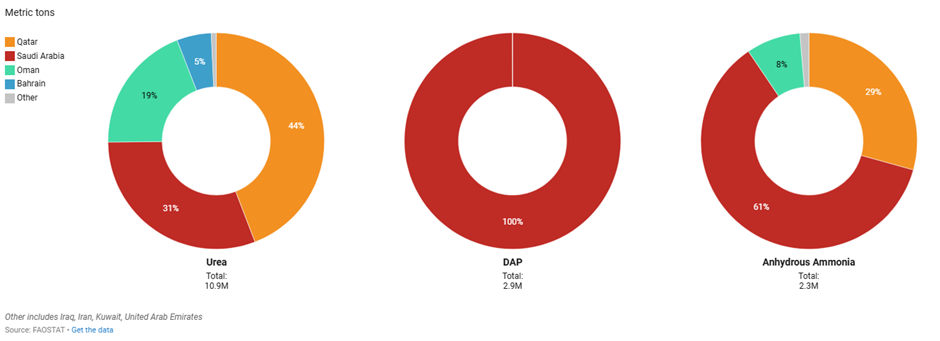
As seen in the graph above, during 2023, the Persian Gulf region was an important source of urea, DAP and other ingredients for countries trying to offset losses in imports from the Black Sea disruptions due to the war in Ukraine.
The IFPRI reported that “if the conflict in the Persian Gulf continues and shipments remain disrupted, importers will have to seek out alternative sources”.
“As with previous disruptions, such efforts will likely be successful, but come with significantly higher costs.”
According to the IFPRI, Middle East urea prices grew to $590 per metric tonne (MT) on March 5 this year, up over $90/MT compared to a week earlier.
Meanwhile, US Gulf DAP prices hit $655/MT, up over $30/MT, indicating a 5% increase.
IFPRI said: “The increased costs come at a time when farmers around the world are already facing lower prices for grains, oilseeds, and other crops.”
The research institute said that energy accounts for a “significant share of production costs for crops and livestock”.
This energy hike contributes to “a large share of post-farmgate costs, e.g., milling costs, transportation, refrigeration, and other product transformation costs”.
IFPRI indicates that markets can mitigate conflict-driven disruptions, provided countries “avoid export restrictions and other ‘beggar-thy-neighbour’ policies that exacerbate the impacts.”