

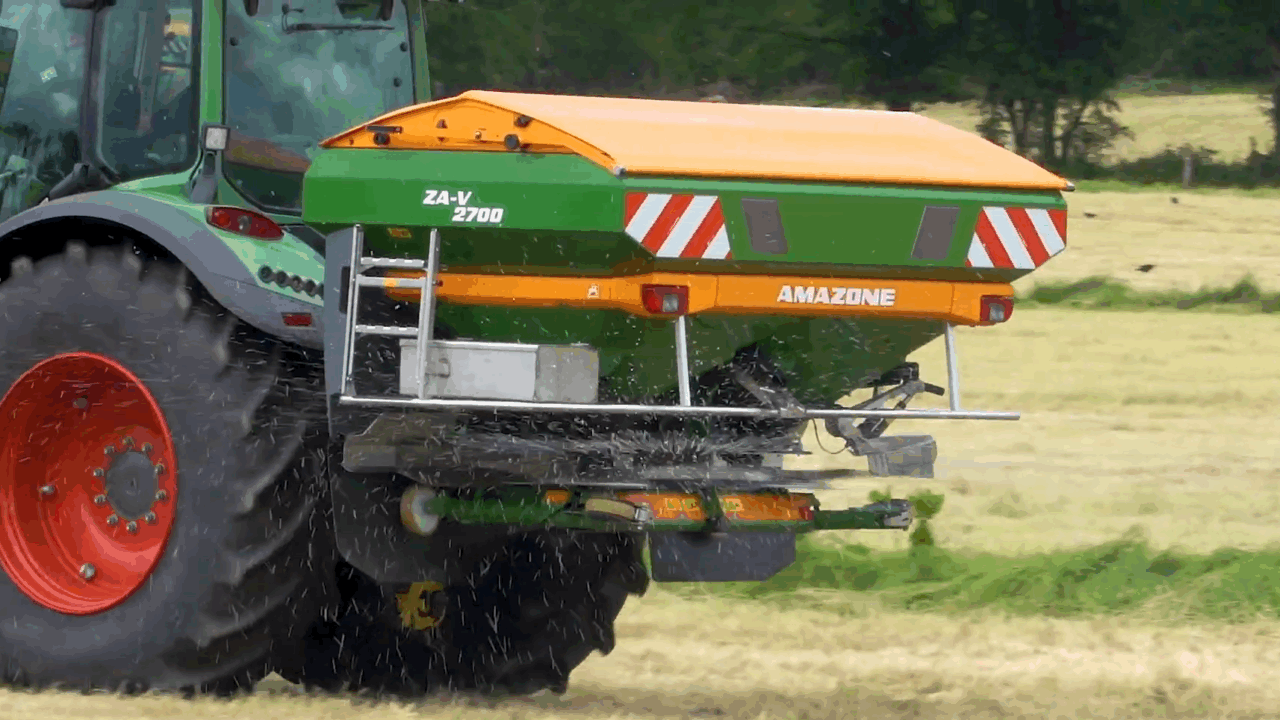
When it comes to spreading nutrients this summer, it is easy to just throw out slurry and chemical fertiliser, but it is just as important to remember sulphur.
Sulphur plays a major role in nitrogen (N) efficiency, helping to make the best of your slurry and chemical N, and boosting grass production and utilistaion.
As well as that, sulphur does a lot of heavy lifting in terms of protein availability, as it is a major part of two of the plant amino acids which form said protein.
That means getting sulphur out to grass will not only indirectly boost profitability through nitrogen efficiency, but will also be directly seen in the milk cheque as through protein.
Farms with heavier soils typically have higher soil organic matter, meaning they have a higher soil sulphur supply, while farms with light soils are the opposite.
Light-soiled farms will have a better response to sulphur applications, but will more than likely have a higher chance of that sulphur leaching again.
If leaching does occur and sulphur levels deplete, you will have a sulphur deficiency, which manifests as quite similar to an N deficiency where as the plant starts to take a yellowish tinge.
Sulphur application
The advice for sulphur applications on the grazing block is to spread 20kg of S/ha/year, which is 16 units/acre/year. Ideally, this should all be out by July.
This should be spread after each grazing; whether it is a blend or not will not make a difference as long as the pasture is being regularly topped up.
Given that clover’s response rate to sulphur is high, these paddock should definitely be targeted to boost growth.
Meanwhile, a lot of farmers will have slurry gone out on silage fields following the first cut, but they should also be applying 15kg of S/ha to that land, this should ideally be done after each cut.
The benefits of S application in grass production, as seen in Johnstown, is as follows:
Grass yield (t/ha)
+ 2.6t
Nitrogen uptake (kg/ha)
+38kg/ha
N leaching reduction (kg/ha)
– 22kg N/ha
Nitrogen use efficiency (%)
+ 25%
Farmers should choose a product that will supply their ground with N, phosphorus (P), and potassium (K) with S.
This may depend on your P allowance for the next application of fertiliser. A product like 18-6-12 + S might be ideal.
A lot of farmers aim to hit paddocks three times between March and May to keep up with requirements, but given how messy the start of the season was, a lot of place may not have had a chance to get sulphur out.