


A 75-year-old man said he feared for his life after being attacked by cows while walking his dog on a public footpath in Cornwall.
The farmer responsible for the cows has been prosecuted by the Health and Safety Executive (HSE) as a result.
Brian Gregory, aged 75, was on a caravanning holiday at Porthcothan in June 2024.
On June 30, 2024, Gregory and his labrador, Molly, were walking along the South-West Coast Path at Park Head when he was attacked by a herd of cattle with calves.
He let go of Molly’s lead and the cattle chased after his dog away from him, but not in time to prevent him from being trampled and butted.
Gregory was assisted by passing walkers and made it back to his caravan with Molly.
When his partner saw his injuries, she immediately called an ambulance and he spent five days in hospital.
He suffered multiple serious injuries including a severed artery, horn marks and gashes down to the bone, and required surgery.
Young calves
The farmer responsible for the cattle, Beverley Chapman of Tembleath Farm, St. Columb Major, was told about the cattle attack on the same day.
However, rather than removing the cattle and calves from the South West Coast Path, she added more cattle and calves to the herd to increase its size.
Some of the calves were as young as 42-days-of age.
A month later, two local residents were walking their dogs along the South West Coast Path in the same area of Park Head when they were also attacked by the same herd of cattle and calves.
They escaped injury by sheltering in an area of gorse bushes by the cliff edge, but one of their dogs was seriously injured and required surgery.
Again, Chapman was informed about the incident, but only removed the cattle from the South West Coast Path four days later, when instructed to do so by a Cornwall Council public rights of way officer.
Investigation
The HSE investigation found that cattle with young calves, which are known to be protective and unpredictable, were being kept in a field with a public right of way across it.
This can pose a significant risk to walkers, particularly those with dogs.
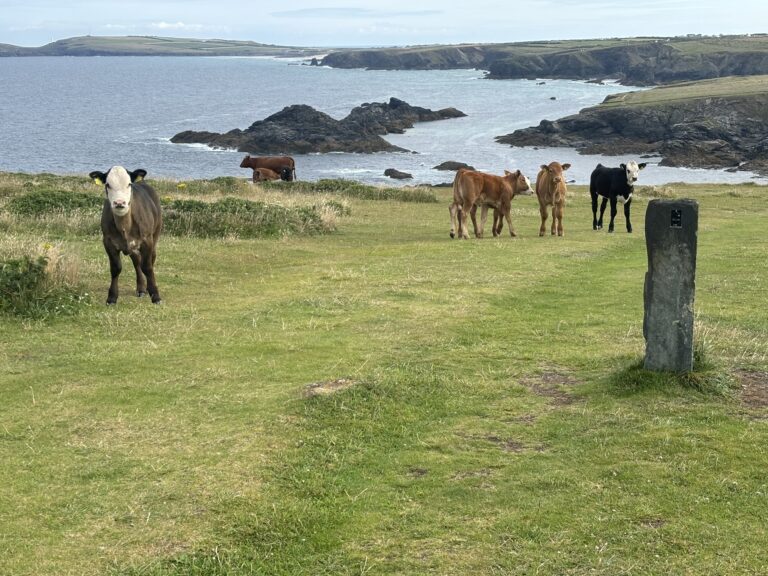
Chapman had other enclosed fields available, which did not contain public rights of way and could have been used to house the cattle and calves.
Beverley Chapman of Tembleath Farm, St Columb Major, Cornwall, pleaded guilty to breaching Section 3 (2) of the Health and Safety at Work etc. Act 1974.
She was fined £5,260 and ordered to pay prosecution costs of £4,650 and a court surcharge of £2,000 at Bristol Magistrates’ Court on 16 December 2025.
HSE inspector
After the hearing, HSE inspector, Simon Jones, said: “Cattle are extremely protective of their calves and even calm cattle can become aggressive if they think their calves may be threatened.
“Given the nature of the cattle attack, it is fortunate that the injuries sustained by Mr. Gregory weren’t fatal. On this occasion, Mr. Gregory took all the right precautions while out walking.
“Despite being made aware of attacks on walkers on two separate occasions, Mrs. Chapman failed to take action to remove the cattle or control risks by separating them from walkers on the South West Coast Path.
“It was only when officially instructed by a public rights of way officer from the local council that she took action.”
The prosecution was brought by HSE enforcement lawyer, Rebecca Schwartz and Paralegal, Gabrielle O’Sullivan.
HSE guidance
When farmers are considering putting cattle into fields with public access, the HSE sets out a range of controls which should be considered and, where reasonably practicable, implemented, including:
- Where possible avoid putting cattle, especially cows with calves, in fields with public access;
- Do all that is reasonably practicable to keep animals and people separated, including erecting fencing (permanent or temporary), such as electric fencing;
- Assess the temperament of cattle before placing them in fields with public access;
- Any animal that has shown signs of aggression must not be kept in a field where they have access to the public.
The HSE is also reminding farmers to clearly signpost all public access routes across the farm.
There should be signage at all field entrances stating what livestock are present, such as cows with calves or bulls.
