

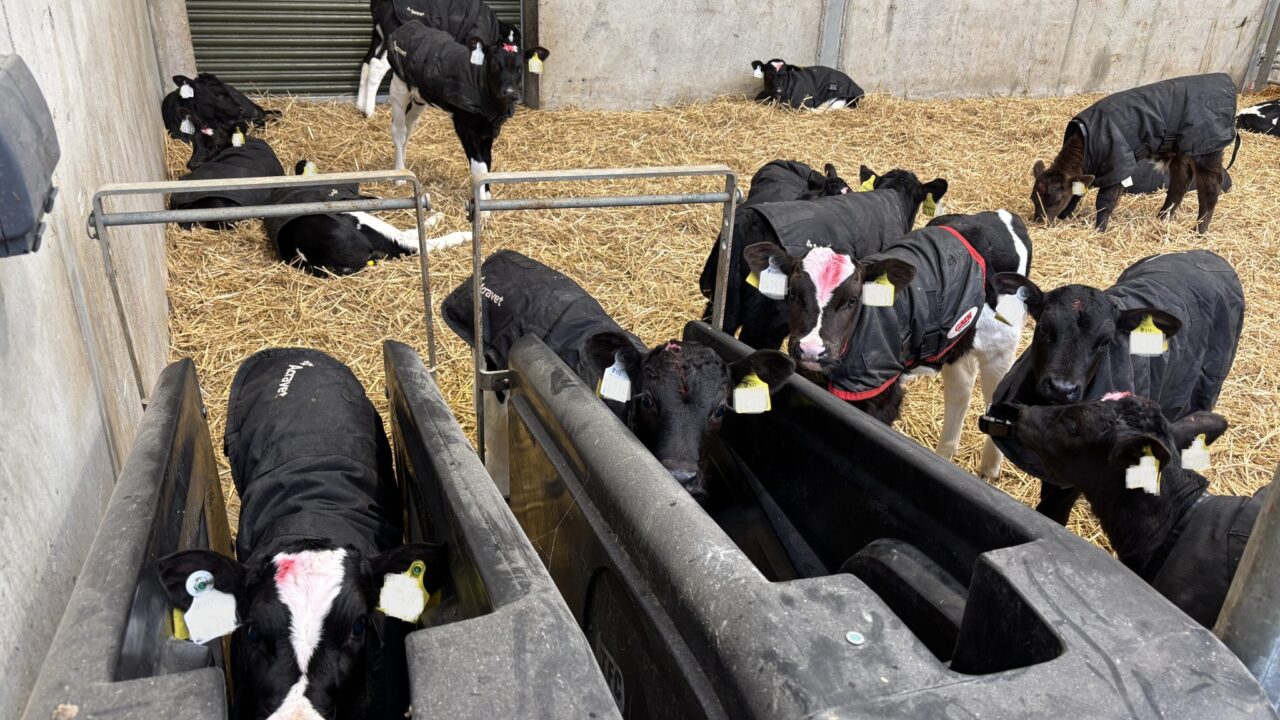
Once calves turn four weeks-of-age, it may be worth farmers considering the move to once-a-day (OAD) feeding.
OAD feeding can be great timesaver at this time of the year when labour resources are stretched thin.
Picking out a batch of month-old healthy calves to go on a OAD feeding regime can save huge time in the evenings.
OAD feeding is often associated with milk replacer, but with the way milk price is sitting this year, not too many farmers will be opting to feed replacer.
However, studies have shown that whole milk can be fed once-a-day to calves over a month old, without any difference in weight gain or scour incidence.
If calves are moved to OAD feeding, it does not mean that calves should be fed once and not looked at again; they still need to be checked thoroughly twice daily and fed concentrates at an alternative time to milk feeding.
Once-a-day feeding
The switch to OAD feeding should be done approximately one month prior to weaning and at least 28 days after birth, which will give the calves time to adjust to the new regime and further develop their rumen before the total liquid feed amount is reduced.
Calves should be provided with ad-lib access to concentrates, straw, and fresh clean water at all times.
They should be fed in the morning, as this will reduce the disturbance in the shed where they can then settle down, and it will also concentrate feeding.
Once the switch is made, research has shown that farmers will experience a 25-36% reduction in the labour input required when compared to TAD (twice-a-day) milk feeding systems.
When making the move, the reduction of the amount of milk fed should be gradual, carrying out the transition out over the space of two weeks to prevent any digestive upsets and reduce stress levels.
Farmers who are feeding milk replacer to calves should reduce the solids content of the powder in conjunction with the water content of the milk.
Not only can OAD feeding can significantly reduce labour, but it can also help the process of weaning next month.
Related Stories

The deadly risk of pneumonia

Transitioning from starter ration to concentrates

Should calves be left at foot this spring?
.editor-styles-wrapper .wp-block-acf-related-stories-block {
max-width: 960px !important;
background-color: var(–color-gray-default);
padding-inline: 40px;
padding-top: 8px !important;
padding-bottom: 20px !important;
}
