

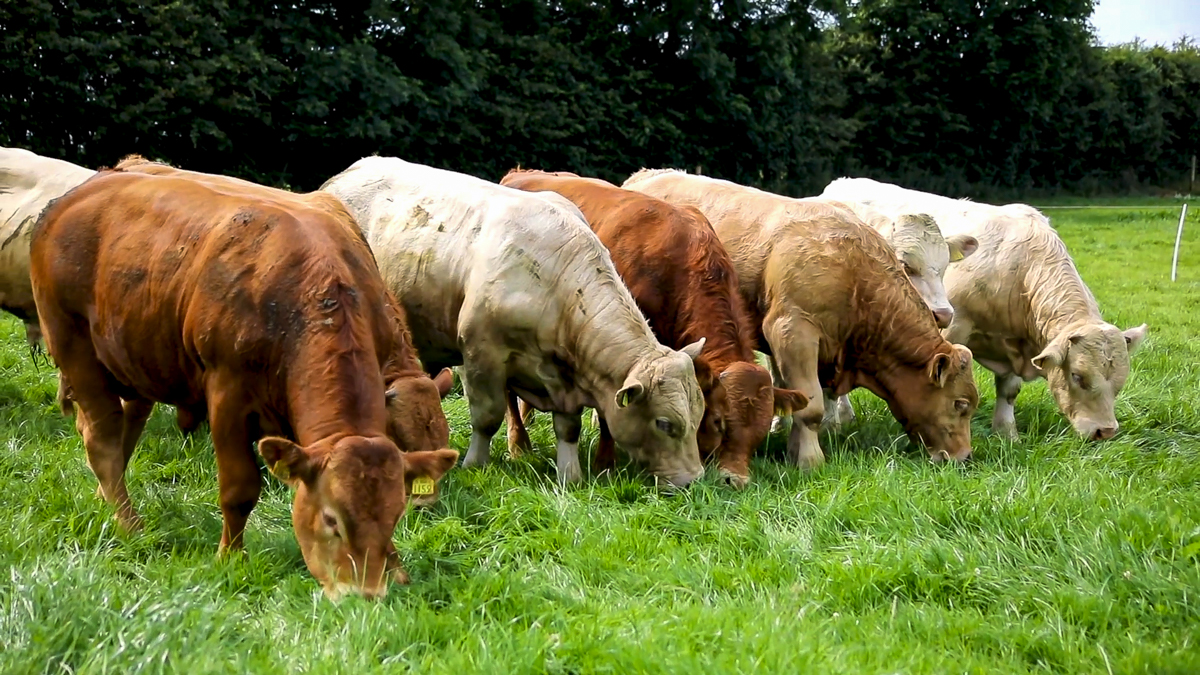
The importance of the Beef and Lamb Farm Quality Assurance Scheme (FQAS) for Northern Ireland has been confirmed by Livestock and Meat Commission for Northern Ireland (LMC).
Chief executive, Colin Smith, said: “We live in a fast-changing world where beef and lamb trading processes are concerned.
“The UK has signed up to a free trade agreement with Australia and New Zealand, two of the world’s leading producers of red meat.
“Meanwhile the European Union has committed to an extensive trade agreement with South America’s Mercosur Group.
“The end result of all this is the greater direct and indirect threat of beef and lamb imports coming into the UK.”
“And no doubt all this suppliers of red meat will be actively extolling the virtues relating to the traceability, high production values and the provenance of the meat they will be trying to see UK customers.”
The LMC chief executive highlighted the role played by FQAS.
“But this is not the point. The real issue is centred on the fact that FQAS delivers full and independent verification of all these criteria on behalf of Northern Ireland’s beef and lamb sector,” he said.
“Moreover, all the UK’s supermarkets and food retailers fully recognise and accept this fact. And we want to build on this for the future.”
Smith continued: “FQAS also underpins all of the beef and lamb marketing work undertaken by LMC in Northern Ireland.
“So continuing to make the scheme relevant for red meat buyers and consumers, both on the home market and further afield, is vitally important.”
Approximately 98% of the cattle produced in Northern Ireland are FQAS certified at point of slaughter.
All stakeholders agree that the scheme must continue to deliver for the red meat sector on a value-for-money basis with full cognisance taken of the fact that its operational costs are met in full.
FQAS fees
A £10 increase (£95 to £105 excluding VAT) in the initial application and annual FQAS renewal fees takes effect on April 1.
The change follows a review of costs undertaken by the FQAS Industry Board.
The LMC representative explained: “FQAS is run on the basis of fee income, pretty much, matching the outgoing costs incurred.
There is no fat in the system or large reserves that can be drawn down to absorb increases in expenditure that are incurred.
“Inflation is a reality as are the myriad costs that are involved in the FQAS certification process.”
Looking ahead, Smith said further changes in FQAS standards are inevitable as is the way in which the scheme is operated at farm levels.
Last year saw a review undertaken of all the farm quality assurance schemes that operate in the UK.
In addition FQAS in Northern Ireland is formally reviewed by its industry board every three years.

This work will be undertaken against the backdrop of a core, guiding principle: ‘delivering maximum market opportunity for minimum audit burden’.
“So much of this can be achieved using new digital technologies,” Smith said.
“Take the issue of completing an FQAS animal health plan. Up to now these have been completed on paper by the farmers involved, which can be a cumbersome process
“But, even now, this procedure can be fully automated by connecting up the various animal health data bases that already exist in digital form.”
According to the LMC representative, the information required does not have to be directly accessed by LMC or FQAS, it can be anonymously hosted by an independent third party organisation.
“It is possible to embrace new technologies while protecting individual farmers’ own data,” Smith said.
“Investing in new management systems can also be used to improve health and safety standards on farms.
“And, again, this can deliver a win/win scenario for farmers in also reducing audit burdens.”
Smith added that FQAS gives consumers assurances about the farming systems used on Northern Ireland’s beef and sheep farms.
“Standards are centred on the sustainability of the production methods used and the quality of care for animals which is practiced,” he explained.
“In addition, farm quality assurance drives farm-based environmental standards while also re-assuring customers that the beef and lamb they are eating is wholesome and safe.
“Farm assurance is critical to the future of the beef and lamb sectors and is delivering necessary guarantees on quality to consumers.
“But it must be delivered in a streamlined manner that meets the needs of farmers in full.”
Related Stories

LMC endorses new NI farm health and safety campaign

LMC strikes a positive note for farm quality assured beef and lamb in 2025

Calls for re-introduction of NI Area of Natural Constraint scheme
.editor-styles-wrapper .wp-block-acf-related-stories-block {
max-width: 960px !important;
background-color: var(–color-gray-default);
padding-inline: 40px;
padding-top: 8px !important;
padding-bottom: 20px !important;
}
