

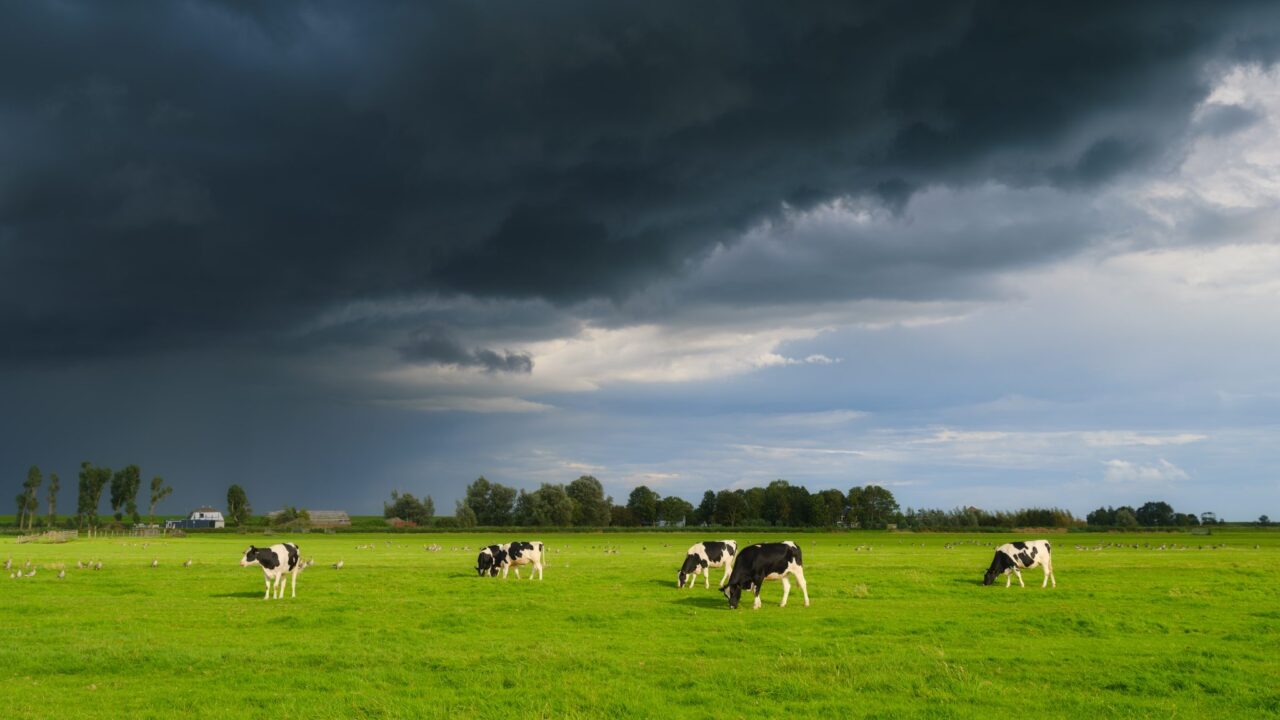
Northern Irish livestock farmers have been advised to assess mineral levels in their soil this spring following the wettest start to a year in over a century.
Northern Ireland recorded 70% more rainfall last month than its January average, “making it the wettest start to a year in nearly 150 years”, according to livestock feed supplier Nettex.
With soils still saturated across many parts of Northern Ireland, advisers have warned that mineral leaching and reduced plant uptake could pose challenges at turnout.
Nia Williams, who is a commercial and technical manager at Nettex, noted that prolonged waterlogging can significantly affect a soil’s trace element availability.
She said: “When soils sit wet for extended periods, oxygen levels are reduced and root function is compromised, which can limit mineral uptake by the plant.
“At the same time, we can see increased soil intake and therefore higher intakes of antagonists such as molybdenum and iron.”
Williams stated that these antagonists interfere with the absorption of key minerals, such as copper, manganese, and zinc in the farm animal.
She noted these antagonist minerals are among many factors that could increase the risk of mineral deficiencies in livestock, with rapid grass growth later in the spring being another one.
“Fast-growing grass can dilute trace element and magnesium concentrations.
“Combined with low dry matter and high potassium and nitrogen levels, this increases the risk of deficiencies and conditions such as grass staggers,” Williams added.
Magnesium
Due to magnesium’s inability to be stored effectively in the body, cattle require consistent daily intake of the macromineral during high-risk periods.
For this reason, farmers are encouraged to reassess their mineral strategies as many farms prepare for turnout.
Spring calving dairy and suckler cows are particularly at risk of developing hypomagnesemia (grass staggers) following turnout, the livestock feeds supplier said.
It stated: “Every litre of milk requires around 0.11g of magnesium to produce, therefore during early lactation, magnesium requirements for a typical dairy cow are doubled compared to the dry period.
“Every producer should consider their grazing and magnesium supplementation strategies, which will differ from trace element provision.”
Adding magnesium liquid to the drinking water is a possible supplementation strategy for farms where the infrastructure allows it.
However for this strategy to work, farmers must ensure to supplement all water sources accessible to cattle, as magnesium can be unpalatable and cattle are likely to drink non-supplemented water instead if possible.
In addition to grass staggers, studies have shown that by increasing magnesium (MG) in the diet from 0.3% to 0.4%, the risk of milk fever can be reduced by up to 60%.