

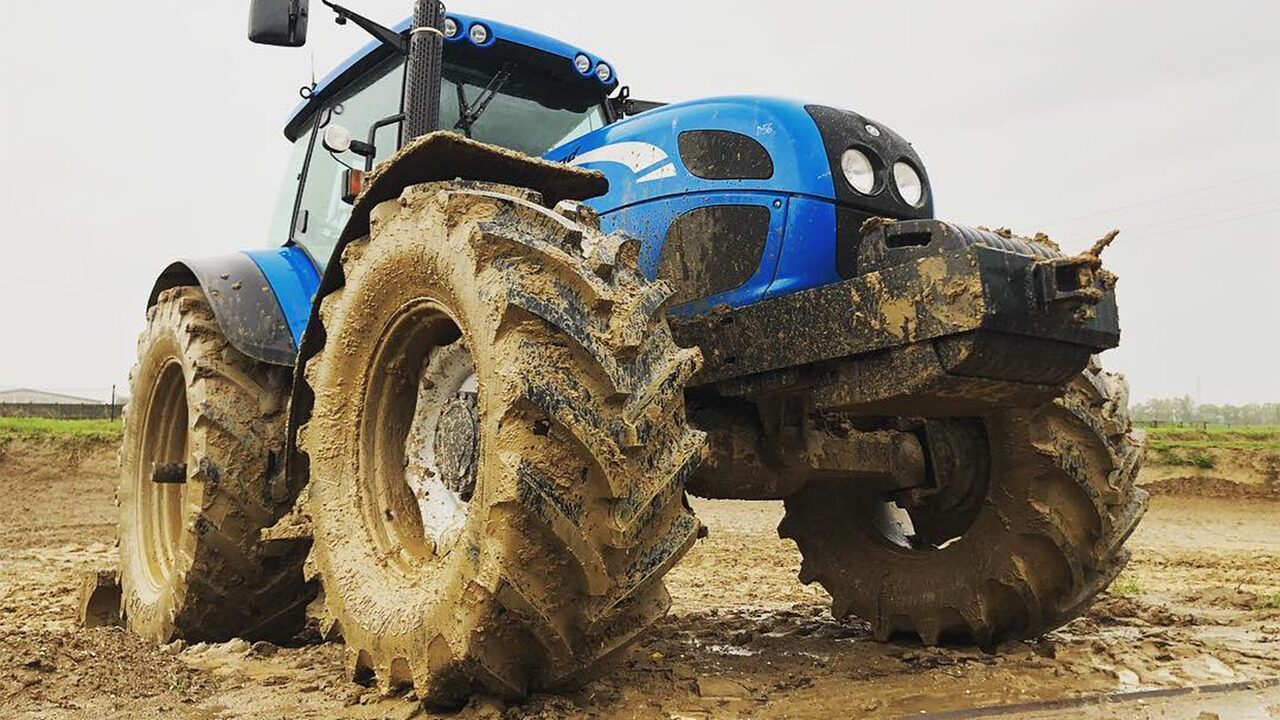
Following a particularly wet winter, many soils are entering spring in a fragile state, College of Agriculture, Food and Rural Enterprise (CAFRE) adviser Jonathan Brown has warned.
He noted that many farmers in Northern Ireland have a mix of heavy clay and loam soils, which are slow to drain and highly susceptible to structural damage when trafficked in marginal conditions.
Brown said that as slurry and fertiliser applications commence, it is important that farmers consider the impact of machinery on soil structure.
The focus must be on protecting long-term soil productivity all while still meeting early season nutrient demand.

Soil compaction remains a significant challenge for grassland farms, with long-term implications for productivity and nutrient efficiency.
According to CAFRE, damage to soil is influenced by two factors; total axle load and tyre inflation pressure.
Machinery size has increased over recent years, and so has tyre technology.
Tyre inflation pressure determines the amount of pressure exerted on the soil surface, while axle load affects the depth to which the effect is put into the soil profile.
Before carrying out fieldwork, farmers should:
- Check tyre manufacturer load and inflation tables for correct pressure setting;
- Adjust pressures to field settings before entering fields;
- Ensure axle loads are within tyre capacity at lower pressures.

Reducing the tyre pressure increases the tyre’s footprint, thus spreading the load over a greater area, reducing the risk of compaction in vulnerable conditions.
When soil becomes compacted, the reduction in pore space limits oxygen availability, restricting root development and slows the natural movement of water through the soil.
Delaying field work for several days in improving weather can prevent damage that may persist for years.
In situations where the ground conditions remain marginal, farmers may consider:
- Umbilical slurry systems to reduce in-field axle loads;
- Smaller tanker loads where practical;
- Applying slurry to silage ground first and fertiliser to grazing ground;
- Splitting nitrogen applications to reduce single-pass weight.
Many tyre manufactures now offer Very High Flexion Tyre (VF) designs.
These tyres are engineered to operate safely at lower inflation pressures while carrying heavy loads.
According to CAFRE, the tyre’s flexible sidewalls and increased air volume create a larger footprint and reduced soil stress.
These tyres carry a higher upfront cost, however the investment should be viewed in the context of long-term soil productivity.
But even with improved tyres, timing remains the most critical factor.
Related Stories

CASE IH names Tipperary business as All Ireland Dealer of the Year

New chief executive of Red Tractor appointed

Brazilian cattle breeders trialling feed efficiency in Santa Gertrudis breed
.editor-styles-wrapper .wp-block-acf-related-stories-block {
max-width: 960px !important;
background-color: var(–color-gray-default);
padding-inline: 40px;
padding-top: 8px !important;
padding-bottom: 20px !important;
}
