

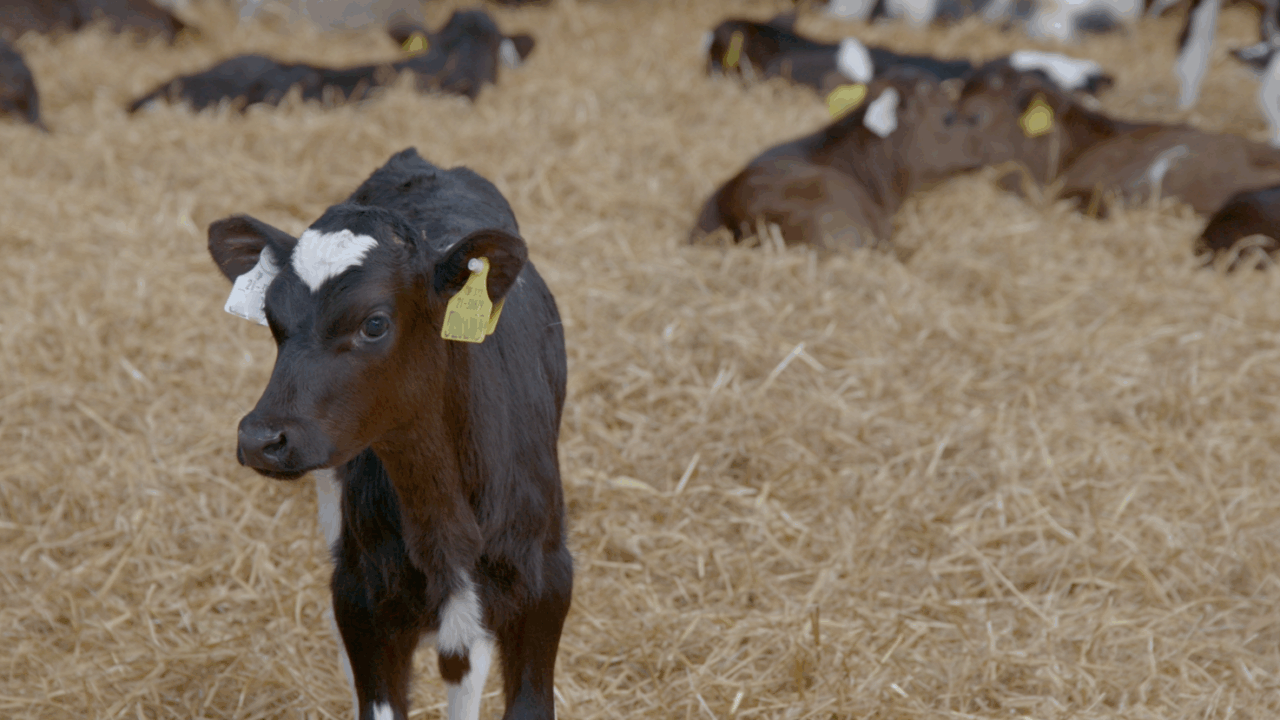
With plenty of calves now on the ground, farmers will be focusing on health issues such as abomasal bloat.
Bloat is a sporadic disorder in young calves as clostridium bacteria or lactic acid produce gas in their system.
It can affect either the abomasum or the rumen, however young calves are more commonly prone to bloat of abomasum.
Abomasal bloat or Acute Bloat Syndrome (ABS) most commonly occurs in calves aged between four days-of-age and three weeks-of-age.
And considering calves of this age are essentially monogastric, with all milk or milk replacer been digested in the abomasum, bloat can prove fatal if it is not functioning properly.
Abomasal bloat
Determining the exact cause of abomasal bloat on farms is quite difficult.
However, it is often linked to poor hygiene, dirty bedding, and inaccurate feeding.
That’s why such care is needed when rearing young calves, starting with colostrum. Farmers need to follow the ‘1-2-3’ rule to ensure their calves receive their essential antibodies.
If calves are unwilling to drink and need to be stomach tubed, do so with extreme caution as incorrect use of a stomach tube can damage the vagal nerve, which is responsible for abomasal motility.
With more calves in the pen and more cows in the parlour, hygiene standards often slip as calving progresses, which only leads to costly health issues in both cow and calf.
Therefore it is crucial that you ensure that the feeding equipment and teats are in good condition and kept clean.
Teats should be changed on the feeders regularly, especially when using an automatic calf feeder.

If you are struggling to keep up with the workload and letting hygiene standards slip, you may need to consider hiring farm labour.
Feeding irregular volumes of milk can also cause issues. If calves consume large volumes of milk, it will take longer to empty from the abomasum.
This will give bacteria more time to ferment the milk, which can cause an excess of gas.
When mixing milk, the same protocol should be taken every time in relation to the total solids in the milk; remember, calves love consistency.
Osmolality, which refers to the solid content of milk or milk replacer as it flows through the abomasum, can also be an issue with young calves.
Anything that delays the flow of milk through the abomasum allows bacteria to multiply which increases the risk of bloat.
If clostridium perfringens bacteria is present, harmful toxins will be produced which can then damage the calf’s organs.
Water should be available to calves from birth as it has many important roles in promoting health growth.
One of the functions of water intake is reducing the risk of bloat by increasing the osmolality of the milk being fed and slowing the abomasal emptying rate.
Farmers should make sure there is plenty of access to the water trough.
If there is a group of 20, there should be two water drinkers at the front of the pen where they can be easily cleaned.