UK Beef market faces tight supplies, high prices in 2026

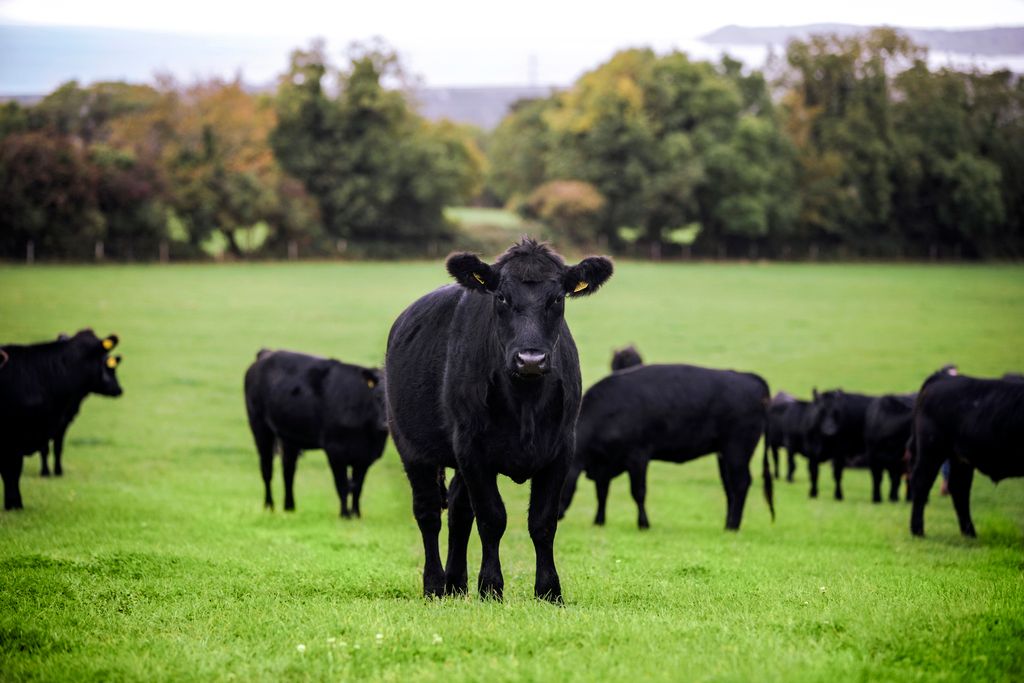
Despite relatively steady pricing in the UK beef market this year, compared to the volatility of 2025, producer confidence remains fragile.
This was the message from the Agriculture and Horticulture Development Board (AHDB), announcing that UK beef production was forecast to reach 904,000 tonnes for 2026.
The current producer sentiment was ascribed to "uncertainty around domestic policy, extreme weather and continued profitability challenges".
According to Becky Smith senior analyst (livestock), beef production levels was 1% higher than those in 2025, "with increased carcass weights counteracting lower throughputs".
"Historically tight supplies are likely to continue to support cattle prices.
"However, subdued consumer demand and a changing imports mix have the potential to weigh on any significant price growth," she said.
"While consumers continue to spend more on beef, high retail prices restrict volumes purchased, particularly of more premium cuts, which weighs on price growth at the farmgate," she said.
According AHDB, an important aspect to monitor at present was the impact of developments "in trade and market access for key players on the global beef market" on the domestic market.
In terms of the outlook for cattle supplies, AHDB said the "contraction in beef breeding herds" appeared to be declining.
"Calf registrations for beef production saw a slight uplift in Q1, which is likely a reaction to the high prices of spring 2025.
"Registrations have, however, eased back again in Q2, indicating again the fragility of producer confidence and suggesting that supply contraction is likely to continue over the coming years".
Supply
The UK prime cattle slaughter rate for the first eight months of 2026 totalled 1.32 million head, or a 1% reduction on figures for the same period last year.
"Slaughter was lower year-on-year through H1, but in July and August we saw numbers higher than the same months of 2025.
"Looking at the remainder of 2026, we expect that prime cattle slaughter will trend slightly higher than last year’s Q3 and Q4, as we annualise against extremely tight cattle supplies".
The AHDB forecast indicated that the total prime cattle slaughter rate for 2026 would reach 1.99 million head, which will be 0.8% lower than 2025, and continued to reflect the contraction in the national beef herd.
"Looking ahead into 2027, we anticipate this shortening in cattle throughput to continue, with total prime slaughter sitting at 1.98 million head, a further 0.9% decline on the 2026 forecast".
%20UK%20prime%20cattle%20slaughter_72dpi.png)
Cow slaughter
Cow slaughter numbers for the year to date totalled 355,000 head, or 2.2% lower than in 2025.
"This is representative of both the continued contraction of the suckler cow herd, and increased dairy cow kill in the latter part of 2025 following falls in milk prices.
Both these categories had limited numbers available for slaughter this year, Smith said.
It is anticipated that total cow slaughter number for 2026 will reach 580,000 head, or a 2.4% decline year-on-year, according to AHDB.
"Declines will be felt across Q3 and Q4, with an uplift in Q2 driven by forage shortages, likely increasing offloading".
The forecast for cow kill numbers in 2027 indicated a further 0.5% decline year-on-year, to 577,000 head, AHDB said.
2027 beef production
It is estimated that beef production would reach 896,000 tonnes in 2027, or a 0.8% decline on the 2026 forecast.
"This takes into account continued contraction in cattle numbers, combined with sustained high carcass weights from 2026," according to Smith.
%20UK%20beef%20production,%20with%20year-on-year%20change_72dpi.png)
Bluetongue
By Wednesday, October 14, a total of 3,370 farming premises in the UK had confirmed cases of bluetongue (BTV-3) during the 2026/27 season.
"Assessing how the bluetongue outbreak will shape our outlook is challenging as much remains unknown about levels of infection and mortality from the disease and uptake of vaccination, Smith explained.
"To address this challenge, we have developed a likely bluetongue scenario using farmer survey evidence combined with anecdotal evidence from vets, farmers and farming organisations.
"We have modelled a range of scenarios given the uncertainty on impacts and have found that at a national scale these do not materially change the production outlook in comparison to the 'most likely' scenario.
"Given that mortality in cattle is significantly less severe than in sheep, the impact of this bluetongue scenario on production for 2026 and 2027 is minimal.
According to Smith, the most significant impact of the outbreak will be on the fertility of cows, as well as "the viability of calves born from cows infected during pregnancy".
Therefore, the largest impact in this likely scenario is a reduction in the number of calves born in 2027, with modelling indicating a potential reduction of 14,000 head (3.1%) of calves.
Taking into account the cattle production cycle, the impact of these losses are not felt materially in the production forecast until 2029.
Here, the losses account for a further 0.2% fall (around 8,000 head) in prime cattle kill, beyond the forecast.
A significant uncertainty in this scenario is the scale of uptake of bluetongue vaccination, with a quicker uptake of vaccination shifting cattle production closer to the baseline forecast, According to AHDB.