

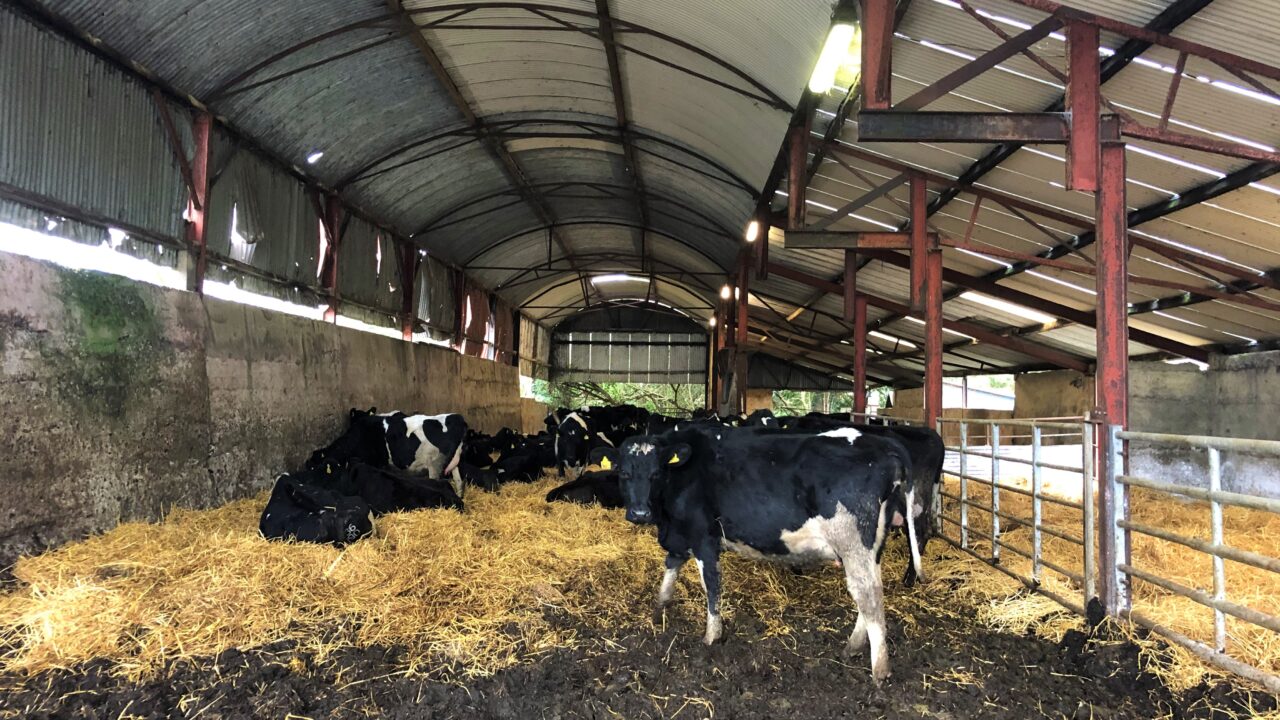
As the calving season kicks off for many farms across the country, managing the concern that is negative energy balances (NEB) in freshly calved cows is crucial.
The few weeks after calving are crucial for the freshly calved cow, as a poorly managed NEB can affect the cow’s health and production throughout the lactation.
NEB means that the cow is not eating adequate levels of energy required for her maintenance, gestation, and production.
Dairy cows enter NEB a few weeks before calving and could remain in this state for a couple of weeks post-calving.
Their transition period from calving down to producing milk can be quite traumatic and stressful, and therefore, the cows’ dry matter (DM) intake is reduced post-calving.
NEB
Insufficient energy in the milking cow’s diet can result in low milk protein, low milk yields, poor fertility and poor immunity.
If NEB lingers on for longer than expected, the likelihood of the cow going down with metabolic disorders such as ketosis, fatty liver, and displaced abomasum is increased.
Almost every cow in the herd will have some degree of NEB during early lactation, but when there are a couple of cases of ketosis in the herd of over 2%, it can be a cause for concern and a farmer should seek advice.
It is natural for cows to lose a bit of condition when they calve down, but if there is excessive loss in the following weeks, this is a sign that there is an issue in the herd.
Decreased feed intake is the first clinical sign of severe ketosis. If ration is offered to cows, any with ketosis will often refuse grain before forage.
Decreased milk production and lethargy are usually the first few clinical signs of ketosis.
This can lead to excessive loss in body condition score (BCS) in a short amount of time and is caused by the cow trying to mobilise body fat to make up for the NEB.
According to Teagasc, indicators of an NEB issue in the herd are:
- Less than 15% of early lactation cows with milk protein <3.05%;
- Less than 15% of cows with a milk fat:protein ratio >1.4;
- Less than 25% of cows with >0.5 units of BCS loss in early lactation.
To treat clinical cases, cows should be drenched straight away with propylene glycol to restore blood glucose levels as quickly as possible.
The best way to prevent this severe NEB is to have cows calving down at over a BCS of 3, which may be difficult to rectify at this stage for early calving cows.
Overfat cows are also susceptible to issues at calving and metabolic issues post-calving – which is why the monitoring of BCS is crucial during the dry period and at calving.

Farmers also need to wary of high levels of potassium (K) in the silage they are feeding to cows at this time of the year, as it can cause its own problems regardless of condition.
High levels of K in grass silage can be common due to the timing and volume of slurry application.
K interferes with the absorption of magnesium and can result in increased risk of sub-clinical milk fever.
Avoid feeding silage with a K level in excess of 2.4% to cows in the final two to three weeks before calving to minimise these risks.