

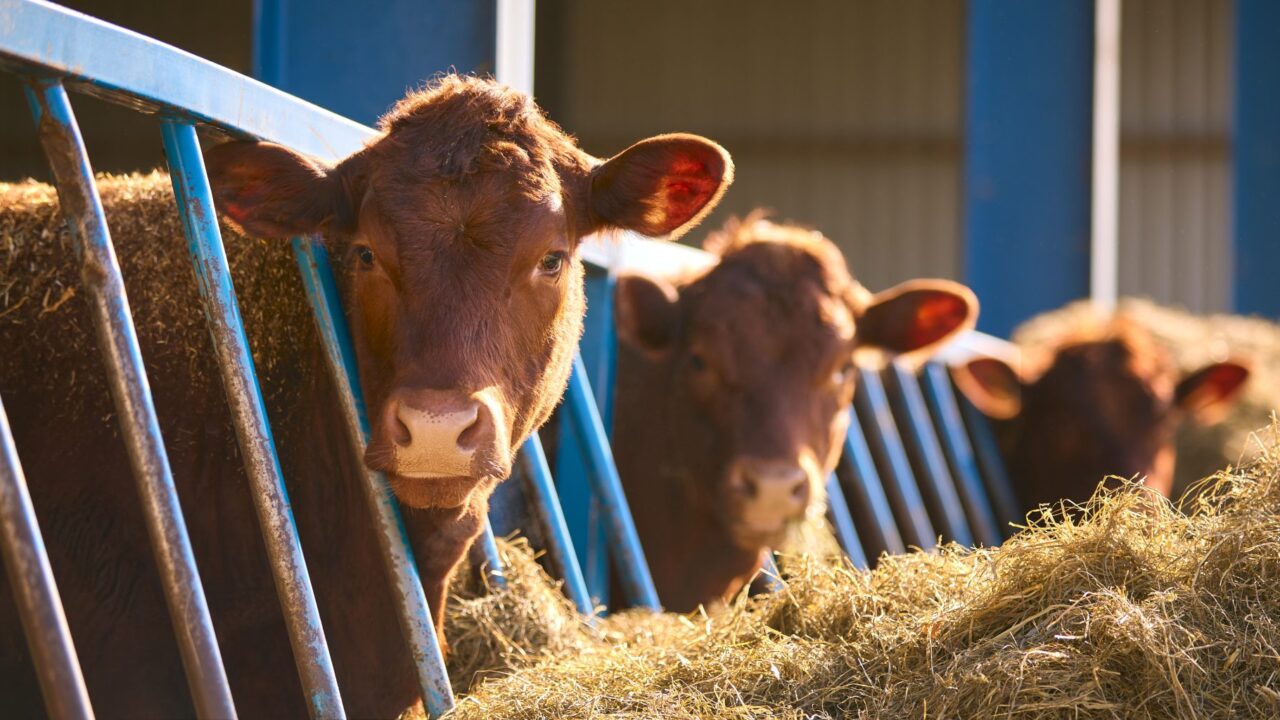
Northern Ireland farmers are in “a state of uncertainty and limbo” regarding bluetongue, according to the Ulster Farmers’ Union (UFU).
The UFU said that the Department of Agriculture, Environment and Rural Affairs (DAERA) is engaging in “radio silence” on the bluetongue virus (BTV).
UFU deputy president Glenn Cuddy said farmers are “frustrated by the lack of clear, timely information”.
He added: “Farmers are in the dark. There has been little to no meaningful communication heading on two weeks now, and that simply isn’t acceptable in a situation of this seriousness.
“We have formally asked DAERA for clarity, yet farmers are still waiting for answers. There is radio silence on the key questions that really matter to farm businesses.
“At present, DAERA cannot give us a clear answer on the trade implications with the Republic of Ireland, nor on east–west movements between Northern Ireland and mainland Great Britain.”
Temporary controlled zones
DAERA confirmed in December that all animals except those that have tested positive for BTV will be permitted to move under general licence within and out of the temporary controlled zone (TCZ), unless they fall into defined high-risk categories.
These high-risk animals require specific licences and additional conditions, such as testing, vaccination, or certification of non-pregnancy.
The Irish Creamery Milk Suppliers Association (ICMSA) livestock committee chairperson, Michael O’Connell urged the Department of Agriculture, Food and the Marine in the Republic of Ireland to “work swiftly and efficiently with their counterparts in Northern Ireland to sort out certification issues regarding the movement of cattle from south to north”.
Cuddy said: “Farmers need clarity. They need to know where they stand on movements north–south, east–west, and how this will affect trade and market access.
“Information dripped out in bits and pieces is not good enough. DAERA must engage properly with farmers and the industry, explain the position clearly, and provide certainty wherever possible.”
“Farmers understand disease control and the need for proportionate measures,” Cuddy added.
“What they cannot accept is being left in the dark. We need answers, and we need them now.”