

Sustainable Ruminant Genetics (SRG) has today (Tuesday, February 17) officially launched a document which sets out its “vision and priorities to transform livestock breeding and genetic improvement in Northern Ireland”.
SRGs Strategy and Communications Framework document was released at an event that saw farmers, industry stakeholders, delivery partners and policymakers from across the ruminant sector come together.
It took place at the Glenavon Hotel, Cookstown, Co. Tyrone, this morning.
The event featured presentations outlining SRGs strategic objectives, progress to date and future plans, alongside input from across the dairy and red meat industries.
Two Bovine Genetics Project (BGP) pilot farmers – one dairy and one beef – also shared their on-farm experiences of using genetics to drive performance.


According to SRG, its strategy will place a “strong focus on improving the uptake and impact of genetic improvement projects to enhance farm profitability, animal health, and environmental sustainability.”
SRG was established in 2022 and is a not-for-profit company set up as a strategic partnership between:
- The Ulster Farmers’ Union (UFU);
- Dairy Council for Northern Ireland (DCNI);
- Livestock and Meat Commission (LMC);
- The Northern Ireland Meat Exporters’ Association (NIMEA).
The core purpose if the entity is “to lead and implement a long-term strategy of genetic improvement across Northern Ireland’s cattle and sheep sectors”.
BGP
SRG said it will play a key role in coordinating and supporting ruminant genetic improvement projects, including the £50 million DAERA-funded Northern Ireland BGP, working closely with industry partners, policymakers, and farmers to drive long-term gains.
Initially, the focus will be on the cattle sector, but work is already underway with the NI Sheep Industry Taskforce to support genetic improvement across all ruminant sectors, the organisation said.
Currently, it is estimated that only around 12% of Northern Ireland dairy cows and 3% of suckler cows are involved in physical or financial benchmarking, compared with approximately 70% participation in the Republic of Ireland.
Farmer engagement
Improving farmer engagement with benchmarking and data-driven breeding decisions is a key objective of SRGs work and will underpin improvements in productivity, welfare, and environmental performance, helping to future-proof the ruminant industry.
SRG said that the launch event marks “an important milestone” as it moves into the next phase of strategy delivery, “with a continued emphasis on transparency, farmer engagement, and measurable outcomes”.
Future key milestones include:
- The official launch of the BGP at the Balmoral Show later this year;
- The commencement of the Bovine Genotyping Scheme in September 2026.
The communications framework aims to strengthen engagement with farmers and stakeholders, ensuring clear, consistent and accessible messaging and related training around the value of genetic progress.
Victor Chestnutt, chair of SRG, said: “We are at the beginning of something genuinely exciting.
“It is essential that Northern Ireland farmers grasp the opportunities presented by SRG to help drive this project to deliver world-class leading genetics and I have no doubt they will do so.”
“By working together, and by making informed, data-led breeding decisions, we can build a more efficient, profitable and sustainable future for our livestock industry.”
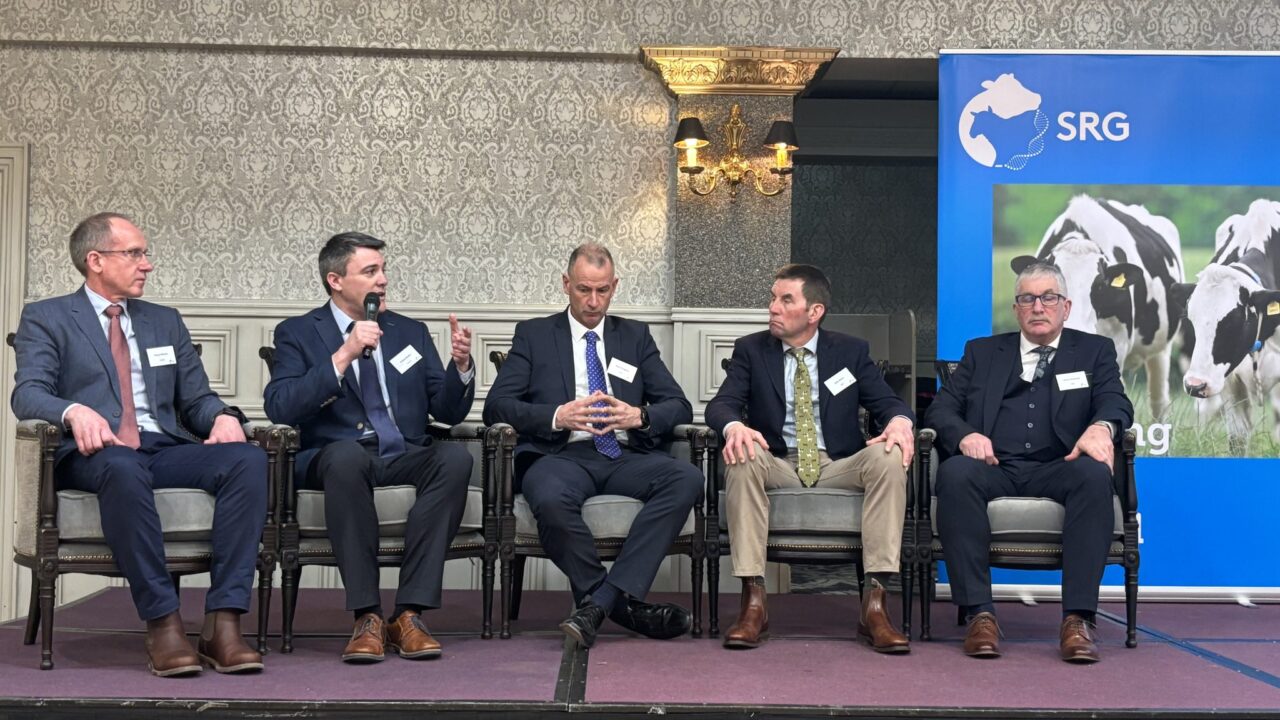
The programme concluded with an expert panel discussion featuring representatives from:
- SRG;
- The Irish Cattle Breeding Federation (ICBF);
- The Agriculture and Horticulture Development Board (AHDB);
- The Department of Agriculture, Environment and Rural Affairs (DAERA).
The event brought together all the key delivery and policy partners involved in the BGP.
SRG is responsible for delivering the project to farmers with ICBF acting as the service provider, AHDB providing the dairy genomic evaluations, and DAERA funding the project.
The panel provided attendees with the opportunity to discuss how improved data, technology and cross-industry collaboration can support better breeding decisions at farm level and deliver long-term benefits for the ruminant sector.