

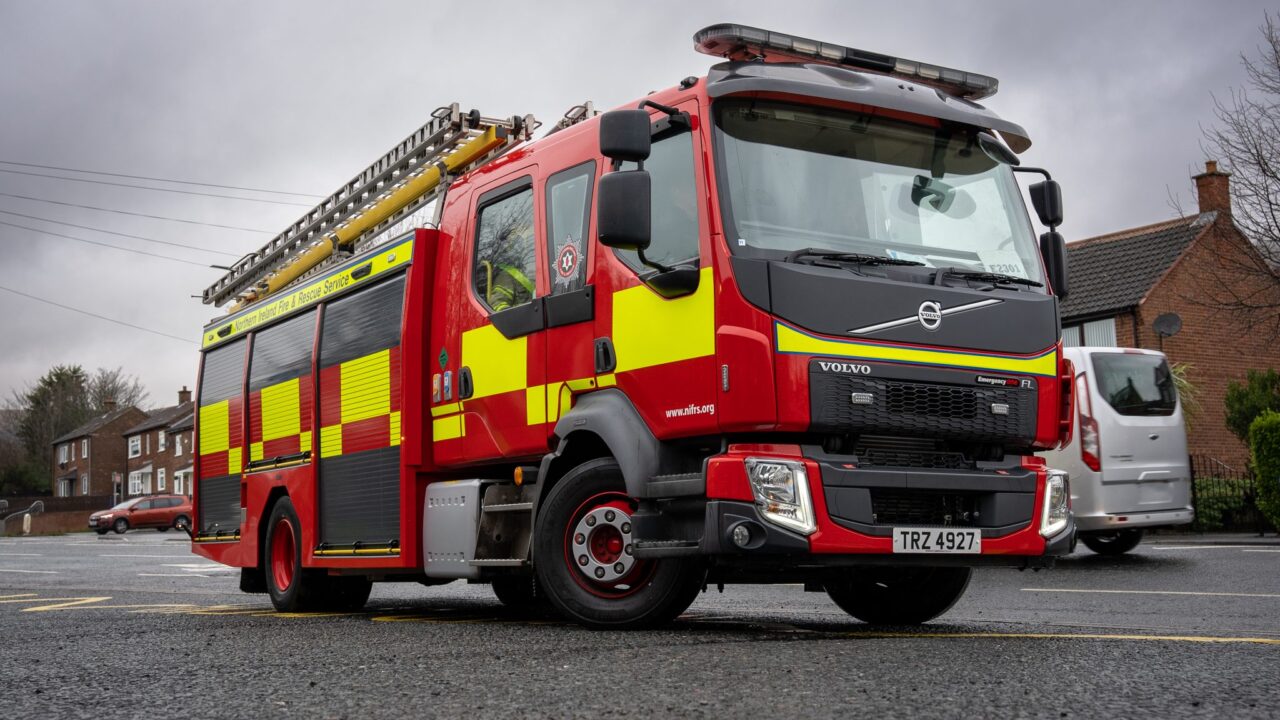
Firefighters came to the rescue on a farm in Co. Fermanagh after two calves had to be saved from a slurry pit this week.
The Northern Ireland Fire and Rescue Service (NIFRS) were made aware of the incident on Wednesday night (March 4).
Emergency services arrived at the scene, which was a farm on the Belturbet Road in Derrylin, around 7:00p.m.
NIFRS deployed two appliances from the Lisnaskea Fire Station and two specialist rescue teams from the Central Fire Station to attend the scene.
An animal rescue team from Omagh Fire Station was also present to offer their expertise and assist with rescuing the calves from the slurry pit.
Firefighters at the scene were able to free both calves from the slurry pit by using specialist rescue equipment.
Following the rescue, emergency services left the scene shortly before 9:30p.m.
Slurry pit safety
With this year’s slurry season already underway, Teagasc has offered safety tips for farmers to better protect themselves and their livestock from slurry pits.
Air movement can play an important role in safely agitating slurry and farmers must only agitate when it is windy.
According to Teagasc, a wind speed of at least Beaufort Scale 2, where “wind is felt on exposed skin and leaves rustle,” and has a speed of 7km/h or higher is required.
Farmers must also take some time before agitating to move any animals in the shed to a safe location outside, as the gases can be poisonous.
Working around an agitator or slurry tanker is demanding and it is possible to lose concentration, so farmers should stay vigilant when placing agitators into position.
Teagasc also recommends using access holes for slurry pipes.
During agitation, all slurry pits should have safety grids and barriers to prevent anyone from falling in.
Once agitation is complete, farmers must ensure that all openings are securely covered or fenced once again before they go to spread the slurry.