

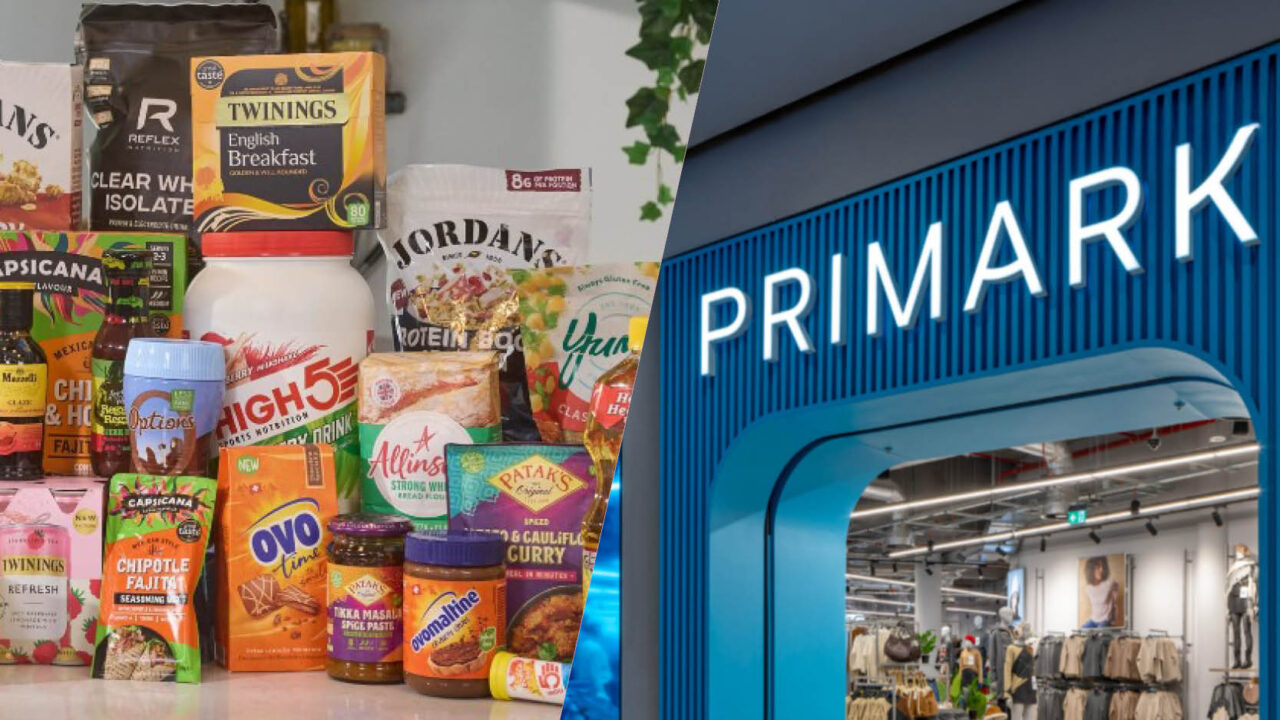
Associated British Foods (ABF) has confirmed its decision to proceed with a “demerger” of its retail arm Primark and its food division.
The announcement comes as ABF released its interim results for the first half of the 2025/2026 financial year.
ABF operates across five divisions: retail, grocery, ingredients, sugar and agriculture.
ABF’s retail arm Primark turned over £9.4 billion in 2025 and its agricultural division, AB Agri, recorded revenues of over £1.6 billion.
The group had first indicated it was considering a demerger of Primark and its food division FoodCo in November 2025.
Structure
In its interim report released today, the group said: “Following an in-depth review of its Group structure, as announced on November 4, 2025, the board of ABF has decided to proceed with a demerger of its Retail business (“Primark”) from its Food business (“FoodCo”).”
ABF in consultation with ABF’s largest shareholder, Wittington Investments, which holds a controlling 58.8% of the company’s shares, conducted the “strategic” review with a view to maximise “long term value.”
On completion of the demerger, with immediate effect, ABF shareholders will hold shares in both listed entities.
ABF said it will provide further updates on the progress of the demerger as and when appropriate.
ABF
George Weston, chief executive of ABF said today: “We knew the first half of this financial year was going to be challenging and that’s borne out in our financial results.”
He added that, in first quarter of 2026, “Primark continued to make strong progress in re-energising its customer proposition in a difficult clothing market.
“Our Grocery and Ingredients businesses performed as we had expected them to, with our US businesses impacted by weak consumer demand.”

ABF’s international grocery brands delivered “good sales growth” and are positioned for “a stronger profit performance in the second half”.
Weston warned that the group’s sugar results were below its expectations and given the current market conditions, it is “more cautious on the outlook”.
Weston said the company is “managing” the impacts of the Middle East conflict and also expects the cost consequences in 2026 to be contained.
“However, there is a risk to Primark sales if the conflict persists and consumer spending deteriorates,” he forewarned.
Weston finished his statement by affirming the “strong balance sheet underpins the Group’s resilience.”
Finances
In its interim results, the group reported that its revenue decreased by 2% and adjusted operating profit by 18% over the 24 weeks to February 28, 2026.
The group’s revenue in the period was £9.5 billion, with growth in its retail arm being “offset” by declines in its sugar, ingredients, and agriculture divisions.
ABF generated an adjusted operating profit of £691 million during the period, a decrease of 17% at actual rates.
ABF has said this reflects “continued investment in growth and certain cost impacts more weighted to the first half of the year.”
ABF invested £534 million in growth initiatives centred around capacity, capabilities, and new technology.
Financial results include:
- Grocery adjusted operating profit declined 20%, primarily due to its US oils businesses;
- Ingredients adjusted operating profit declined 7%, due to soft market demand in bakery ingredients in the US;
- Sugar sales declined 9% and the segment had an adjusted operating loss of £27 million due to lower average selling prices in Europe;
- An agriculture adjusted operating profit of £6 million was recorded.
Full year outlook
ABF’s full year outlook is currently unchanged, with the exception of sugar where it now expects an adjusted operating loss in 2026.
ABF said it continues to “expect Group adjusted operating profit and adjusted EPS in 2026 to be below last year.”
The group’s “renewed focus and investment in the UK” delivered like-for-like sales growth and market share gains for its retail division in the first half of 2026.
Similar initiatives are now in place in Europe, and ABF expects these initiatives to drive “improved performance”.

An “encouraging” start to retail spring/summer trading in March was followed by “softer trading” in April, as the impact of the Middle East conflict hit consumers.
ABF continues to expect adjusted operating profit margin for the full year to be approximately 10%.
Food
In Grocery, ABF expects its international brands to deliver good growth, underpinned by investment in marketing and product innovation.
Overall, Grocery adjusted operating profit in 2026 is expected to be moderately below last year.
This is primarily due to “lower customer demand for bakery ingredients in the US”, reflecting a “weakness” in consumer spending.

The group also reported “subdued demand” for specialty yeast for use in alcohol beverages.
However ABF expects a “strong” improvement in profit in the second half of the year.
This is primarily driven by “the timing of innovation and marketing in [its] international brands, a reduced impact from high cocoa costs and US tariffs, as well as normal seasonality in grocery and other phasing impacts.”
Sales growth in the yeast and bakery ingredients business is expected, with the exception of the US.
ABF also expects sales growth in its specialty ingredients portfolio.
However, as a result of increased investment and US consumer weakness for bakery ingredients, the group continues to expect adjusted operating profit in its Ingredients division to be moderately below last year.
Sugar
Sugar in the first half of 2026 was impacted by the drop in European profitability, while rain-related impacts reduced production in Tanzania.
ABF do not expect to offset these losses in the second half of2026 and now expects its sugar business to deliver an adjusted operating loss for the full year in 2026.

At this stage of the year, ABF has limited visibility of the size and quality of the 2026/2027 beet crop in Europe, but early indications are that the European sugar market will remain in surplus in 2027.
Given the current market environment, including “a lack of visible inflection point” in European sugar prices, there is “no evidence yet of a recovery” in its sugar business in 2027.
In its Agriculture arm, following a weak performance in H1 2026, ABF expects adjusted operating profit in 2026 to be below 2025.
Middle East impact
ABF has highlighted it is managing the impacts of the Middle East conflict on the performance of its food businesses.
The “uncertainty regarding the scale and duration of any blockade of the Strait of Hormuz is expected to affect both the availability and cost of raw materials and critical commodities,” the interim report highlighted.
“Given what we know today, we expect the direct impact on the Group’s operating costs such as energy and freight to be manageable in 2026 given our hedging arrangements and cost mitigations” the group stated.
“We do not yet have certainty on the indirect impacts, such as consumer demand, which will depend on the duration of the disruption.”
It said the longer-term impact on input costs such as energy, agrichemicals and packaging, is also “unclear” at this stage.
ABF acknowledged its businesses remain “agile and focused on mitigations as conditions continue to evolve”.