AD presents ‘once in a generation opportunity’ for NI – UUP


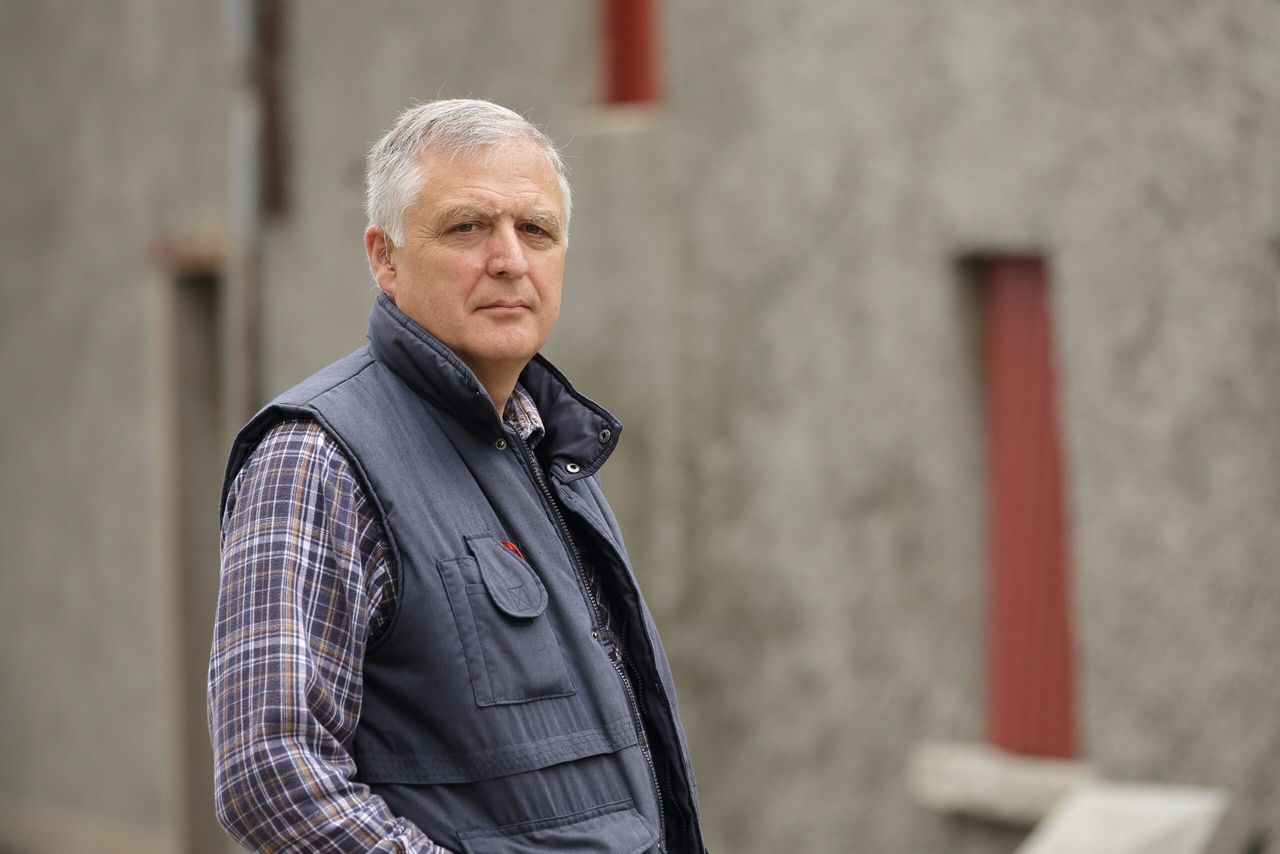
The Ulster Unionist Party’s (UUP’s) agriculture, environment and rural affairs spokesperson Robbie Butler has described anaerobic digestion (AD) as “a once in a generation opportunity”.
Ahead of the UUP motion on Clean Biomethane for Northern Ireland’s Energy, Food and Environmental Security in the Assembly on Monday (April 20), he said: “Northern Ireland quite literally is standing at a decisive crossroad.
“This time it is one that makes a significant, and often unpredictable difference to our daily lives and our pockets.
“If we can grasp the opportunity, it is one that will shape not only how we power our homes and businesses, but how we sustain our agri-food sector, protect our environment, and futureproof our rural economy.”
The Lagan Valley politician said Northern Ireland has long been exposed to global energy shocks, supply chain instability, and geopolitical volatility.
“We have become accustomed to being price-takers in an increasingly uncertain world.
“Yet, at the very time when energy security is rising to the top of the global agenda, Northern Ireland finds itself in a uniquely advantageous position rich in the very resources needed to take a different path,” he said.
He added that the time has come “for us to grasp that opportunity with both hands”.
‘System-wide opportunity’
Butler described how “significant volumes” of slurry, poultry litter and food waste are produced in Northern Ireland every year.
He said: “Historically, these have been viewed as environmental pressures, liabilities to be managed and controlled. But the evidence now before us tells a very different story.”
He outlined that research from Queen’s University Belfast and the Agri-Food and Biosciences Institute (AFBI), supported by the Centre for Advanced Sustainable Energy, has demonstrated that Northern Ireland has sufficient organic material to produce “enough biomethane to match the gas currently flowing through our distribution network”.
“That is not a marginal gain, it is a system-wide opportunity.”
The UUP agriculture spokesperson added that further analysis from local gas network operators suggests that biomethane production from existing and planned anaerobic digestion facilities could deliver around 3.5 terawatt hours of energy, “equating to almost 90% of current industrial and commercial gas demand”.
Butler continued: “In practical terms, that means locally produced renewable gas could power the backbone of our economy.
“This is nothing short of being transformative.”
He explained that anaerobic digestion (AD) allows for organic waste like manure, slurry, agricultural residues and food waste to be converted into biogas, which can then be upgraded to biomethane and “injected directly into our existing gas network”.
“Crucially, that network, representing over £1.2 billion of investment, is already in place and ready to accommodate renewable gas without requiring costly changes to infrastructure or consumer appliances.
“At a time when other regions are scrambling to retrofit systems, Northern Ireland has the ability to move quickly and decisively,” he said.
Nutrient management
Butler argued that the case for biomethane goes beyond energy production.
He said: “It offers a practical and scalable solution to one of our most pressing environmental challenges: nutrient management.
“By processing slurry through anaerobic digestion, we can stabilise nutrients, reduce emissions, and produce digestate, which is a more controlled fertiliser product.
“This has the potential to significantly reduce nutrient run-off and play a meaningful role in addressing the well-documented pressures on our waterways, including the ongoing challenges at Lough Neagh.”
He noted that over half of Northern Ireland’s AD capacity sits within the Lough Neagh catchment area.
“That presents a clear opportunity to align environmental improvement with energy production to turn a problem into a solution through smart, joined-up policy,” Butler said.
“This is what a circular economy looks like in practice: local waste turned into local energy, supporting local jobs and industries, while returning value back to the land in a more sustainable way.”
He argued that a regionally balanced biomethane sector would “strengthen farm viability, enhance food security, and provide a stable, indigenous source of energy”.
Governance
Butler added that the AD opportunity must be approached “with both ambition and caution”.
He said: “If we are to build a successful biomethane sector, it must be underpinned by robust governance, transparency, and accountability at every level.
“Stakeholders, including our farmers who own the vast majority of the nutrient asset need to be convinced that what we are sitting on works to the advantage of all of us and our precious environment.”
Butler went on to said that any future support scheme must be “fit for purpose, inflation-proofed, and carefully calibrated to avoid unintended consequences”.
“It must command public confidence, protect the taxpayer, and provide long-term certainty to investors and farmers alike,” he added
Backing
According to Butler “full political backing” across the Northern Ireland Executive and Assembly is now required.
“This cannot be treated as a niche initiative or confined to a single department.
He called for a “genuinely cross-departmental approach” bringing together the Department for the Economy and the Department of Agriculture, Environment and Rural Affairs to co-design and deliver a comprehensive strategy.
“Encouragingly, work has begun through the re-establishment of an interdepartmental biomethane group,” Butler said.
“But we must now accelerate that progress and match it with the urgency that this moment demands.
“This is a once in a generation opportunity.”
“We have the evidence. We have the infrastructure. We have the industry ready to invest. What we need now is the political will to act decisively and to ensure that this time, we get it right.”
The UUP representative said he would be leading the party’s motion for debate in the Assembly on Monday “to assess political ambition and appetite for real and sustainable energy and food security for Northern Ireland”.
“Northern Ireland can lead in green gas production. But only if we choose to take control of our own energy future,” Butler said.