Limiting the drop in milk fat during spring grazing

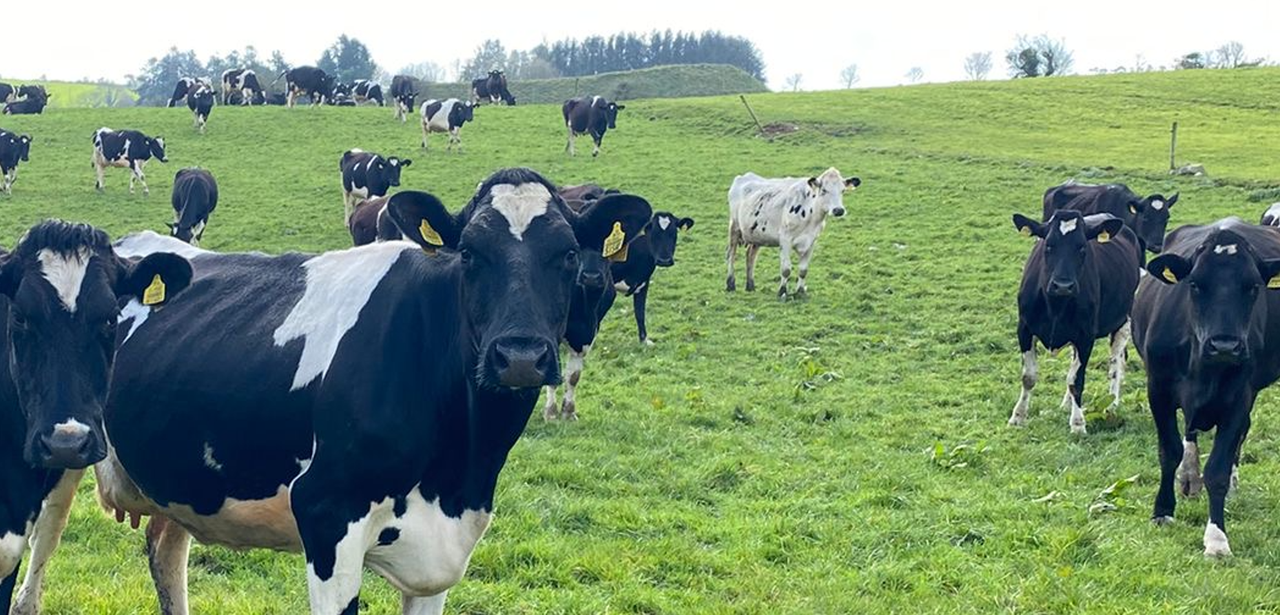
A lot of dry farms will be starting or will have already started their second rotation, meaning milk fat content may easily drop back again.
With some good weather promised next week, grass growth will be above the 40kg DM/ha mark, so cows will be out grazing lush high-quality grass which may lead to that drop in fat content.
This drop is typically related to specific fatty acids (CLA) derived from the digestion of quality grass in rumen.
These fatty acids can change milk fat content by reducing the activity of key enzymes, controlling fat synthesis in the udder.
If this drop does occur, farmers often feed silage or straw at milking as a rumen buffer, even when grass supply is sufficient.
However, responses to these measures are often poor in practice, as cows in most cases are often milking well with no indication of poor health and with a good appetite.
That is because typically fibre digestion and rumen health are not affected, and the temporary change in milk fat content on high quality grass diets occurs within the udder rather than the rumen.
Drop in milk fat content
At this stage of the lactation, we can expect milk fat content to drop by 0.4-0.5% from lactation average.
For example, if the herd is averaging 4.3% fat for the year, they may only be delivering 3.9% fat in late April to May while the herd hits peak milk production.
However herds that underwent milk recoding last week averaged 4.25% fat according to the Irish Cattle Breeding Federation (ICBF).
Meanwhile, farms that operate indoor systems or still have the herd housed as a result of poor grazing conditions should not be seeing any drop in solids, as the herd is more than likely on a high starch/low fibre diet.
If there is a drop in milk fat content within these herds, it may be an indication of excess lactic acid being produced by the rumen bacteria.
On a further note, if milk fat drops below 3.25%, it may be an indication of rumen acidosis, with negative consequences for herd health.
Diet
Either way, it is important to maximise the herd’s energy intake at this point of the lactation while cows are reaching peak milk.
Conditions are not great in many place, but ideally farmers should be aiming for 36-hour grazing allocations at pre-grazing covers of 1,400kg dry matter (DM)/ha and achieving a post grazing residual of 4-4.5cm.
Fibre content of the diet is still going to be important, as a minimum fibre content (NDF) of 33-35% of DM is met where grass is in deficit, whereas when grass quality is lush and optimal, a diet consisting of 37-42% NDF will provide adequate fibre of which 75% of the total NDF should come from forage.
When feed deficits arise, feeding a slower degradability concentrate like maize is an option that is preferable to barley or wheat, as the starch in it is degraded at a slower rate.
Soya hulls or beet pulp are also good sources of NDF, and are a popular choice for farmers trying to rectify feed deficits and milk fat content deficits.
Farmers should also limit the inclusion of high oil content feed ingredients in concentrates and ensure that cows are well covered for macro minerals in the diet such as salt, phosphorus, magnesium, and calcium.
If all of these diet requirements are met and milk fat is still low, just continue feeding, meeting the above criteria, as studies have shown that low milk fat cases eventually resolve themselves in two to three weeks.
When rumen conditions adapt and when grass composition changes, milk fat will eventually rectify itself and the cow should remain healthy throughout these milk composition changes.