

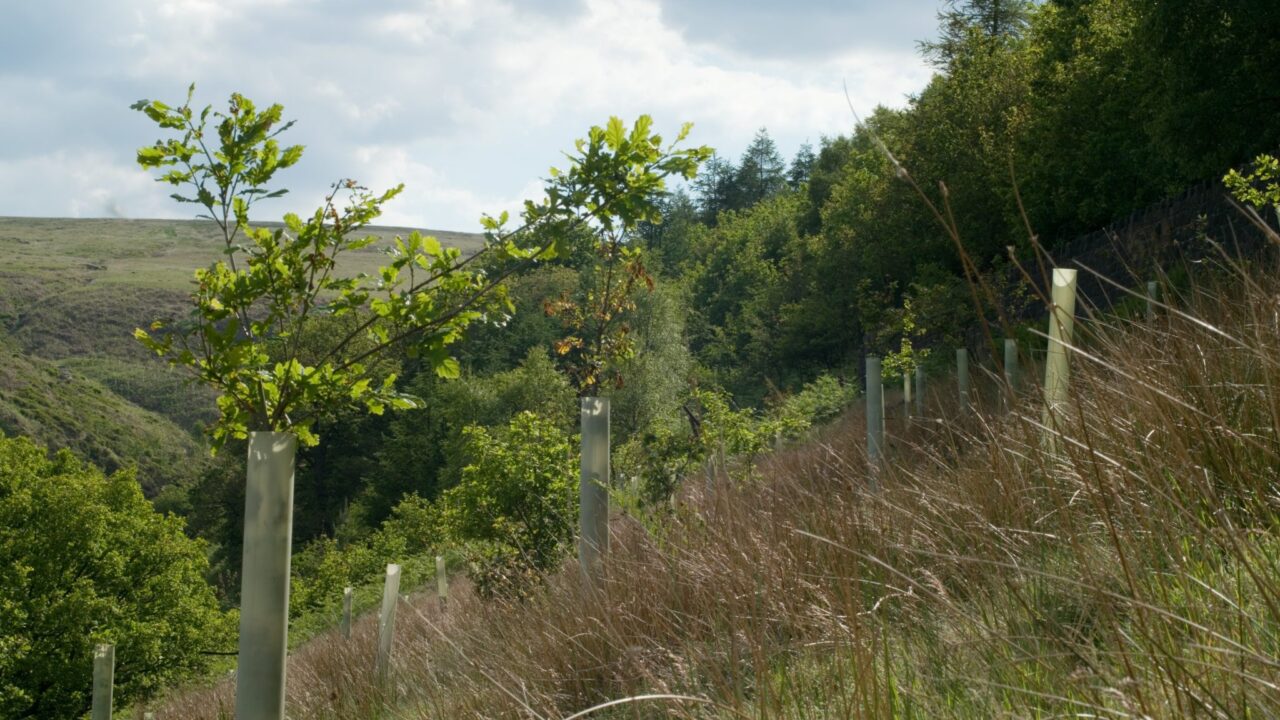
Scotland would have to plant several hundred thousand hectares of new woodland to achieve net-zero carbon emissions in the livestock sector by 2050 through afforestation alone, a new study has shown.
The study by The James Hutton Institute, which was recently published in the journal Science of The Total Environment, investigated how multi-functional afforestation and livestock reduction could contribute to helping Scotland achieve net-zero emissions in the livestock sector by 2050.
This goal aligns with the Paris Agreement on climate change.
Researchers have simulated a scenario in which approximately 30,000ha per year of new woodland and agroforestry were planted in Scotland between 2020 and 2025.
Researchers selected locations where trees would improve biodiversity and aid the wider ecosystem, and accounting for the carbon released from soils while planting trees.
It is often assumed such planting can only occur at the expense of grazing area, so the researchers coupled this planting effort with a linear decrease in livestock, with an estimated total reduction of approximately 50% of the present herd numbers.

According to The James Hutton Institute, under this scenario, annual carbon uptake by new woodlands would only start to offset annual livestock emissions around 2045.
This results in a net offset of annual emissions thereafter, but also in an annual surplus accumulating in the atmosphere between 2020 and 2045, leaving a substantial excess of carbon in the atmosphere over that period.
The model also predicted that the carbon offset from this afforestation effort would decline over time, with carbon absorption slowing down and levelling off as the forests matured.
These results also showed that, if solely relying on tree planting to offset emissions, an even greater planting effort would be needed to balance emissions at the present stocking levels.
Dr. Alessandro Gimona, a senior landscape scientist at the Hutton and lead author of the study, said: “This study shows that achieving and sustaining net zero emissions in the land use sector would require a transformation in patterns of land use.”
According to the study, to achieve multiple benefits from afforestation, tree planting efforts and livestock numbers cannot just be equated in terms of greenhouse gas (GHG) emissions.
The James Hutton Institute said long-term strategies needs to account for many other factors such as biodiversity, livelihoods from livestock, and to find other ways to mitigate or account for emissions.
