France expands €1 meals to all higher-level students and apprentices
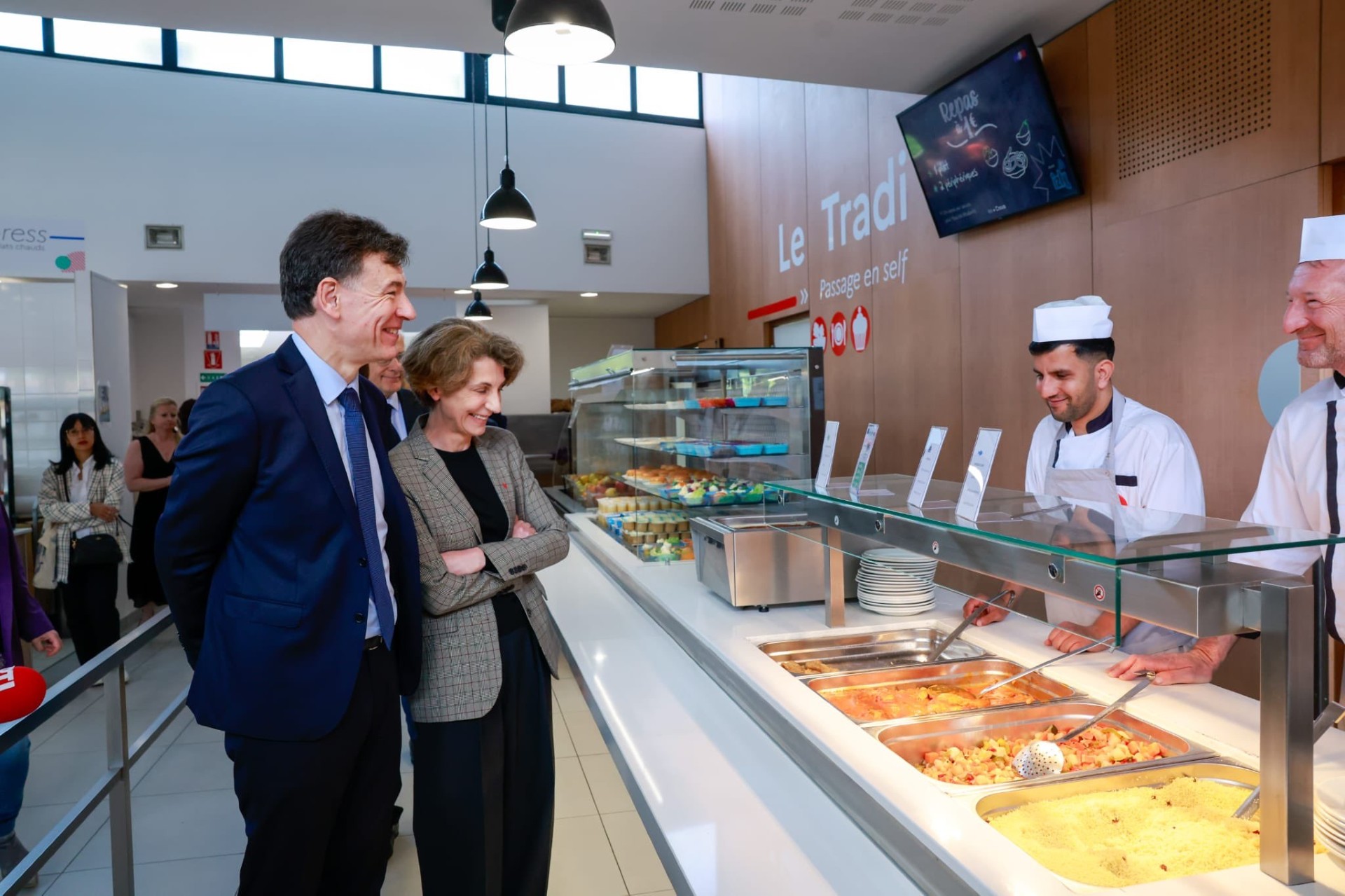
The French government has introduced a scheme that will provide higher-level students and apprentices with €1 meals.
The scheme is intended to “boost student purchasing power” and will be accessible to all higher education students, regardless of their income, to end the system which was once “differentiated by income.”
Until now, the €1 deal was reserved for scholarship students or those in “precarious situations”.
Before this extension, students paid €3.30 for the three-course meal.
The system will be put in practice across all university restaurant operator ‘Crous’ and “where possible, in other food service outlets” in its network.
The ‘Crous’ network of restaurants operates regional centres for university and school works.
Eligibility
The €1 deal will be accessible to “a wide range of students”, provided they can prove their student status, including:
- Students enrolled in higher education;
- Apprentices and trainees (who hold a ‘vocational’ or ‘trade’ student card);
- Doctoral students;
- Volunteers engaged in civic service.
The meal offered includes a main course and up to two side dishes (starter, dessert, cheese, fruit, etc.).
The French government’s website states: “Additional charges may apply, with costs varying depending on the establishment.”
Students will be eligible for only one meal at €1 per service (lunch or dinner).
Where university restaurants are open in the evening, this rate also applies to dinner.
Adaptation
To support this widespread implementation, Crous isdiversifying its distribution methods, including the uptake of takeaway sales, and are “adapting the offering to cope with increased visitor numbers”.
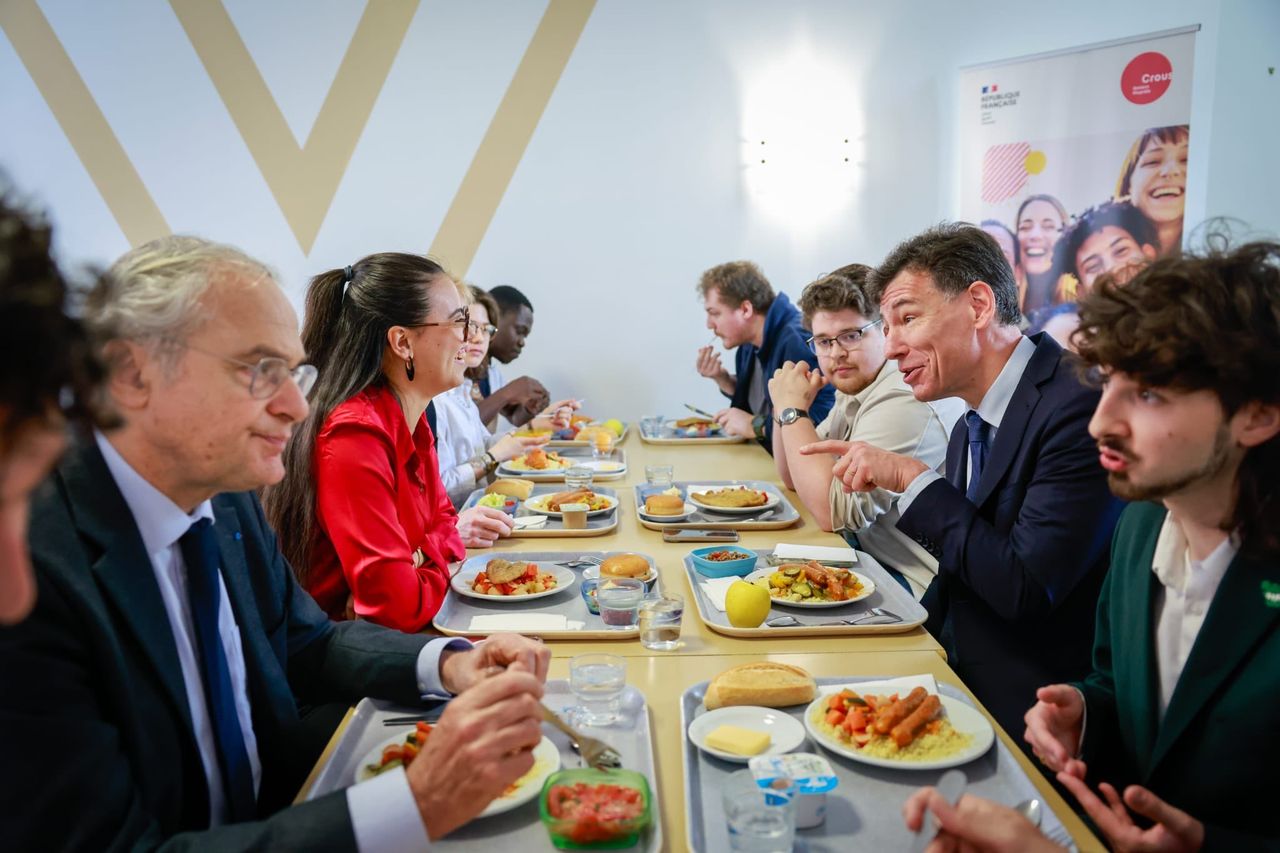
The Crous network has emphasised that these €1 meals will continue to meet quality requirements, including on-site cooking and the use of labelled, organic, or local products when possible.
Food poverty
This initiative comes into effect after various student union bodies called for the government to alleviate financial pressure for students.
Results from a recent French student union’s survey found 48% of respondents have gone without food for financial reasons and 23% of students do so several times a month.
According to Crous, around 667,000 students benefitted from the €1 lunch scheme in 2024, with the operator providing approximately 46 million meals to students served at both the discounted rate of €1 and meals at an average rate of €3.30.

The French Minister for Higher Education, Philippe Baptiste, has set €120 million to fund the scheme in 2027.
The minister stated on ‘X’ that the the programme (translated) “represents a significant shift: nearly three million students will be affected.
“€50 million has been committed starting 2026, and 204 additional full-time equivalent positions will be created to support the teams.
“The social measure was developed in collaboration with stakeholders on the ground,” he concluded.
Irish comparison
Meanwhile here in Ireland, various Irish universities have put food banks in place to help alleviate food price inflation for students.
University College Dublin (UCD) Students’ Union opened a food pantry in September 2025 to help combat “food poverty” for students.
The union said it was “a sad but necessary step” in response to “the cost-of-living crisis on campus” this academic year.
UCD, which according to its annual report recorded an income of over €905 million in 2025, advises its students to “prepare a personal budget for each year of study”.
UCD’s website details monthly estimates for living costs per student including accommodation, food and other expenses to range from a scale of:
- €1,735 – lowest;
- €2,445 – median;
- €4,035 – high.
Elsewhere, the University of Galway runs a ‘Student Pantry’.
The project, funded by its Student’s Union, was started by student Adam Mullins, where food is collected by FoodCloud and then distributed to students attending the university.
According to the university’s website, the collections consist of surplus food, food with damaged packaging, end of line items, and “food that is nearing its sell by and best before date”.

The Students’ Union at University College Cork (UCC) also runs a ‘Food Pantry’ in partnership with FoodCloud.
According to the union’s website, the pantry provides “essential food staples and everyday pantry items for all students, available for a contribution fee of €2.50”.
This initiative is designed to “ease financial pressure on students while ensuring good-quality food is redistributed rather than wasted”.
To further reduce food waste, the union allocates any remaining food to “all students for unticketed collection later in the day”.
Additionally, Dublin City University’s (DCU) ‘Office of Student Life’ operates ‘The Pantry’, where students can take six non-perishable food items free of charge, ranging from pasta, spices and canned food.
Students can avail of this service once a week.
The DCU ‘Office of Student Life’ also runs a free breakfast service for students across its campuses.