

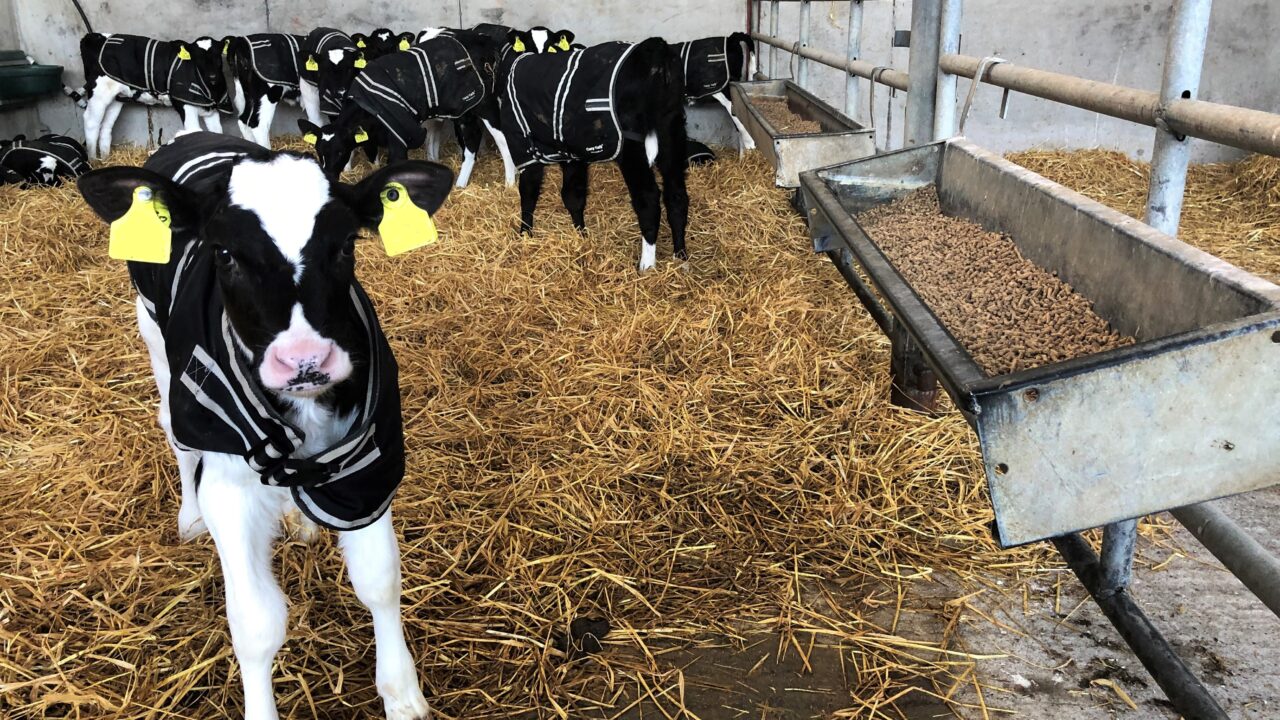
Calves should be introduced to starter ration or concentrates from around three days-of-age to aid rumen development.
Calves will not show too much interest in concentrates early in life as they thrive off a full milk diet.
However, offering them a handful of nuts/ration from their first week of life will get them used to the smell and taste of them early on, which will encourage early intake.
This should be offered alongside roughages such as hay or straw while making sure calves also have access to fresh water.
These practices will encourage rumen development leading healthy replacement calves for the farm and good sellers in the mart.
Coarse ration
Calves need to be willing to eat ration from a young age, so it goes without saying that the calf starter on the farm should be palatable.
Farmers will need a high quality ration that is highly digestible in energy and protein and contains the necessary amount of other nutrients, while still being competitively priced.
Feeders need to be topped up each day with fresh nuts, and older ration that has not been eaten need to be removed and given to the older calves.
The aim is to encourage the calf to eat the ration while not wasting the meal or overwhelming the calf.
Feeding concentrates should be added in a gradual process until the calf is eating more than 1kg/day at weaning.
Ration or pellets?
There are generally two main options when it comes to starter ration for calves – coarse or pellets.
Some farmers can be torn between the option and unsure of which to feed.
The simple answer is that both options work, and both have their place depending on the each unique farm system being operated.
However, Teagasc research has previously suggested that coarse ration is more palatable to calves than pellets.
Coarse ration encourages more chewing and saliva secretion, therefore calves that are fed coarse starter mix eat more than they would if feeding on pellets.
This leads to higher weight gains, which is especially important for beef calves on the farm this year considering the prices they are making.
The coarseness also benefits growth of the muscle layers in the rumen wall.
The coarse option may be more appetising at that age, however, after a few weeks, pelleted starters can be gradually introduced.
When selecting a concentrate for calves, ingredients that should be included are: flaked maize; rolled barley; peas; processed soya; beet pulp; linseed flakes; molasses; and a pelleted protein balancer.
Keep the feeding of concentrates consistent, carefully and gradually increasing the volume fed to ensure the feed is working efficiently and to avoid any upsets with the calf.