‘Serious contradictions’ in DAERA fertiliser and fuel supports – Sinn Féin

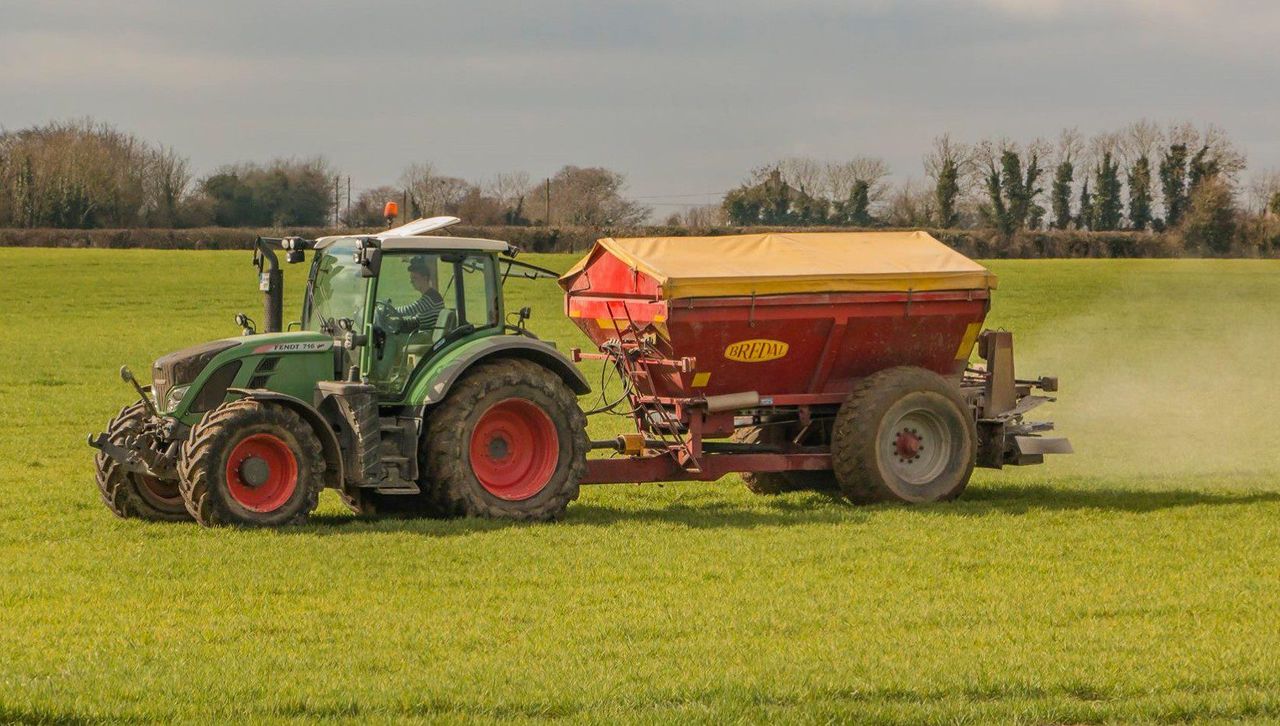
Sinn Féin MLA Declan McAleer has said ‘urgent clarity’ is needed regarding government support for fertiliser supply risks and rising farm input costs in Northern Ireland.
He has also addressed the issues of the need for farmer support and cross-border coordination to safeguard agri-food trade with Minister of Agriculture, Environment and Rural Affairs Andrew Muir.
These issues were addressed courtesy of written Northern Ireland Assembly questions submitted to the minister
The West Tyrone MLA said: ”Serious contradictions have emerged in the Department of Agriculture’s response to potential fertiliser supply disruptions linked to the war in Iran, raising concerns about preparedness and transparency.
”In response, the minister acknowledges that global pressures including rising energy and transport costs pose real risks to fertiliser supply chains and farm viability.
“Yet, despite this, the department confirms it has no additional contingency measures in place, no emergency financial support planned, and is not tracking fertiliser reserve levels.
“This presents a clear inconsistency.”
McAleer went on to speak about the supports available through the Department of Agriculture, Environment and Rural Affairs (DAERA).
He said: “On one hand, the department points to over £330 million in annual support through existing schemes, claiming these are designed to improve resilience and help farms withstand shocks.
“However, on the other hand, it admits that no targeted support is being considered for what is a specific, acute geopolitical crisis impacting input costs.”
The Sinn Féin representative believes that more concerning still is the admission that the department does not hold data on fertiliser reserves.
He said: “Without this basic information, it is unclear how officials can credibly assess supply risks, plan interventions, or reassure the farming community.
“The department also states that agri-food trade is stable and continuing as normal, yet simultaneously confirms it is monitoring a volatile international situation and engaging with counterparts about future challenges.
“Stability cannot simply be asserted while preparedness gaps remain.
“Farmers are effectively being told to rely on long-term environmental schemes and advisory services to navigate what may be immediate cost shocks and supply shortages.”
McAleer said this raises the question if “current policy tools are fit for purpose in a rapidly changing global context”.
”At a time when food security and farm sustainability are under pressure, the absence of concrete contingency planning, real-time data, and targeted support risks leaving the sector exposed.
”Urgent clarity is now needed on how the department intends to move from passive monitoring to active preparedness,” McAleer said.