

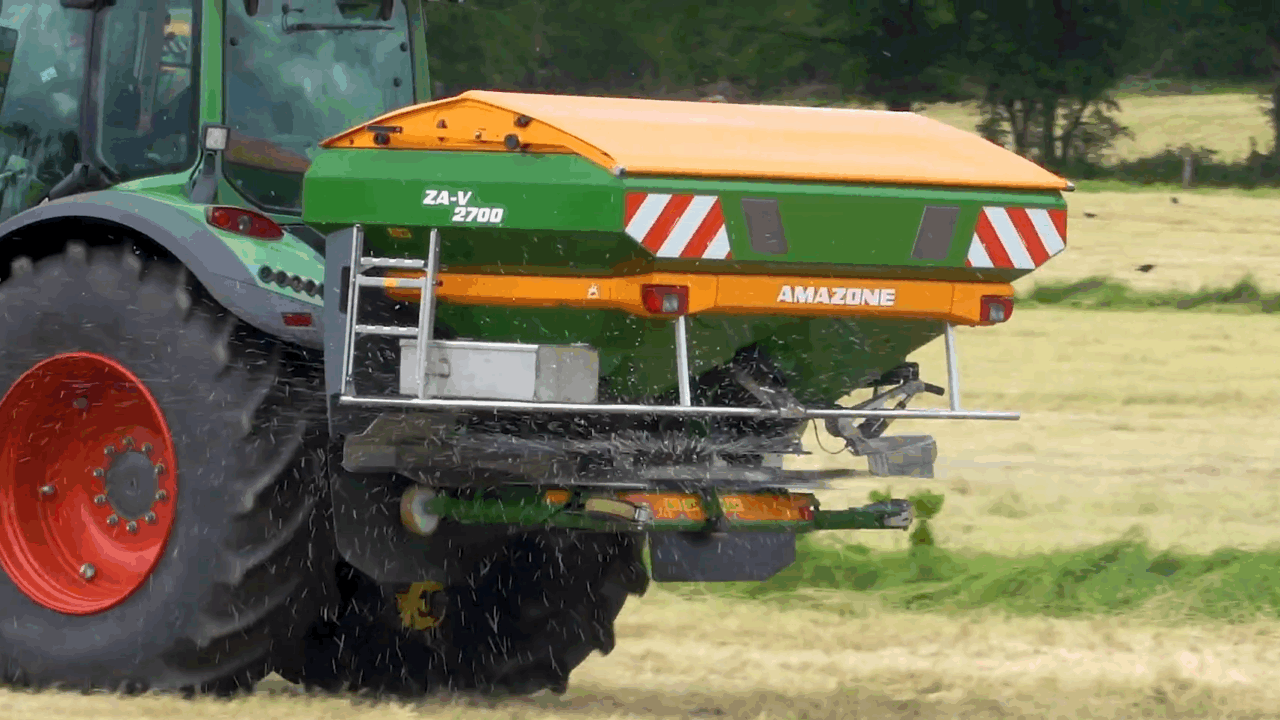
Slurry tanks are still full and fertiliser is still in the yard, yet May is only seven short weeks away.
The majority of farmers across the country typically aim to get the first cut of silage harvested in early to mid-May; however, the weather conditions have not allowed silage ground to get any nutrients yet.
This poses a problem as farmers ideally need to wait seven to eight weeks after spreading fertiliser before the blades of any mowers start spinning.
Cutting within the 50-day recommended period may mean nitrogen has not yet being fully utilised, which can lead to high nitrate levels in the silage as well as poor fermentation.
However, if silage is not cut before May 26, dry matter digestibility (DMD) starts to drop below the desired 72%.
Therefore it is crucial to bite the bullet and take any opportunity to get nutrients out on silage ground within the next week or two.
If silage ground is part of the grazing block, try to get cows in over the coming week to graze off the dead butt, ensuring that the paddock is closed by April 1.
Fertiliser
In terms of nitrogen (N), grass silage will take up on average 2.5kg/ha/day of N (2 units/day), which is why N should be applied at least 50 days before cutting to ensure full crop N utilisation.
That means 100kg N/ha or 80 units/ac are needed for high quality first cut silage.
Ideally, farmers should be aiming to get 3,000gal/ac of good quality cattle slurry (6% DM on hydrometer) out.
This will supply sufficient P and K levels, as well as roughly 30kg/N, after a week this can be followed with urea and sulphur (S) to make up the remainder of the N requirements.
If slurry cannot be got out, farmers could spread a product like 13-6-20 followed by urea or protected urea + S.
It is important that farmer do not overspread N, as this can cause lodging of the crop, which will negatively impact digestibility.
Before spreading slurry, check your allowances and cross reference them to soil sample reports to ensure you are getting the best value for money from your fertiliser.
Silage
Before spreading any fertiliser, farmers need to work out how much silage they will need for the 2026/2027 winter.
It’s always said ‘silage in the bank is money in the bank’, which can be seen this year with such a poor start to the spring, as surplus silage in 2025 saved farmers from buying fodder in.
There may not be much silage in the yard, but take whatever is there into account before completing a fodder budget based on the number of cows, replacement heifers and non-replacement animals, such as bulls.
Base the budget off what would be the normal housed period on your farm, and add an additional supply of about 10%.
Once you know how much silage is required, you should be able to calculate how many acres will be needed to achieve this over two to three cuts.
Aim to have 50% of the total silage harvested at a high quality for milking cow feed, while the remaining 50% can be slightly lower and used as dry cow feed.
Related Stories

Irish farmers facing ‘significant pressure’ on fertiliser availability

Milk prices down over 27% in year to January – CSO

FCI unable to predict contracting costs as diesel rises
.editor-styles-wrapper .wp-block-acf-related-stories-block {
max-width: 960px !important;
background-color: var(–color-gray-default);
padding-inline: 40px;
padding-top: 8px !important;
padding-bottom: 20px !important;
}
